


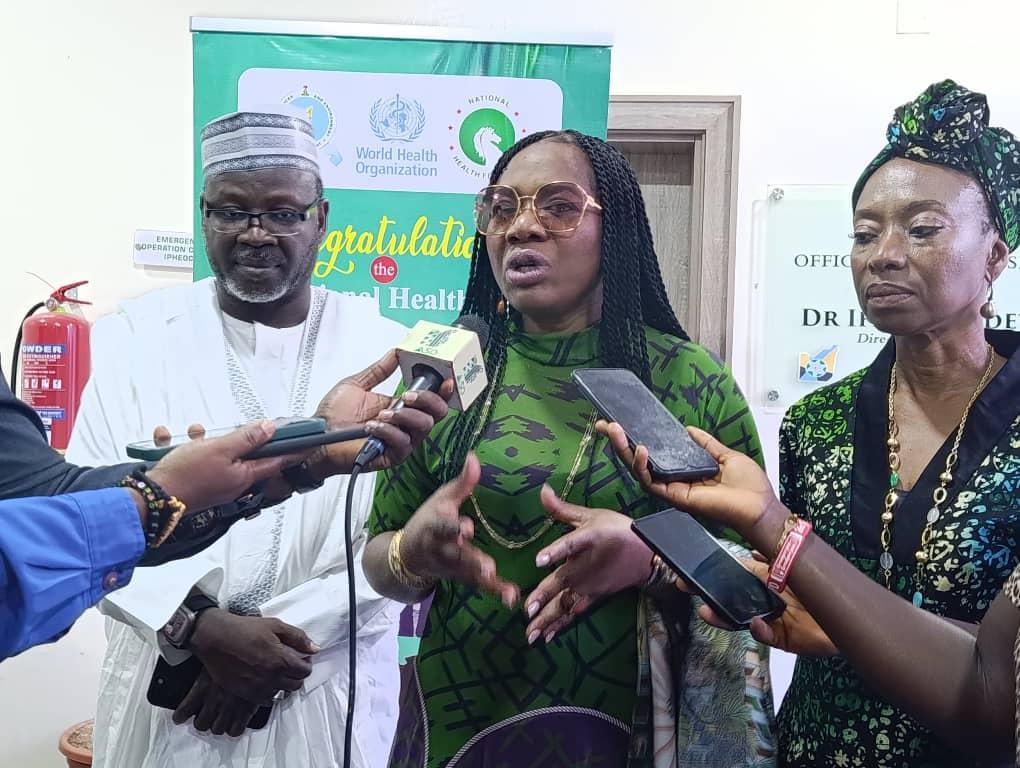
The Federal Capital Territory Administration (FCTA) has commended the National Health Fellows Programme for its contribution to strengthening healthcare delivery across the territory, noting that the initiative has enhanced manpower support, data management and service delivery at the grassroots.
The Mandate Secretary of the FCT Health Services and Environment Secretariat, Dr Adedolapo Fasawe, gave the commendation on Monday in Abuja during interviews for the second cohort of the National Health Fellows, noting that the programme has played a critical role in improving health planning through effective data collection and utilisation, while also addressing key gaps in the primary healthcare system.
She explained that the programme has also facilitated task shifting, with fellows now performing duties that would ordinarily require doctors, matrons or senior supervisors.
“We now know what more they can do. Some of the tasks we used to wait for doctors or senior officers to do are now being allocated to the fellows,” Fasawe noted.
According to her, the fellows undergo intensive training and are deliberately selected from within the communities they serve, a strategy she said has improved acceptance and impact.
“They know the terrain, the language and the health-seeking behaviour of the people. That has helped us achieve better results,” she added.
Fasawe expressed concern over the shortage of health personnel and called for an increase in the number of fellows in 2026.
“Human resources in health is a major concern. Initiatives like this gladden our hearts, but we need more to support primary healthcare delivery,” she said, while thanking President Bola Ahmed Tinubu, the Minister of Health and the FCT Minister for their support.
Also speaking, the Permanent Secretary of the FCT Administration, Health Services and Environment Secretariat, Babagana Adam, said the programme had begun to yield results but stressed that six fellows, one per area council were insufficient for the territory.
“The FCT is disadvantaged with only six fellows. Abuja Municipal Area Council alone is vast in landmass and population. Six fellows cannot adequately cover our 62 wards,” Adam said.
He disclosed that the FCT is advocating an expansion of the programme to at least 18 fellows to ensure broader coverage and greater impact.
“We believe in this programme. That is why we are asking for more fellows to serve the people better,” he said.
Adam also revealed that the FCT has made progress in upgrading primary healthcare centres, noting that over 300 PHCs exist across the six area councils, with ongoing improvements supported by the Basic Health Care Provision Fund.
On health insurance, he said the FCT has surpassed its enrolment target, registering more than 36,000 residents against an initial projection of 25,000.
Also Read: Experts Advocate Gender Equity in Healthcare Leadership
Meanwhile, the World Health Organization (WHO) Team Lead for Health Systems and Services, Dr Mary Brentwell, said the selection process for the National Health Fellows Programme is transparent and credible.
“We are here as observers. The panel is balanced, the questions are fair and the candidates have diverse skill sets that can contribute meaningfully to the health sector,” she said.
Earlier, the Acting Director of Health Planning, Research and Statistics and FCT SWAP Desk Officer, Dr Teresa Ekaete Nwachukwu, said the programme was designed to groom young leaders for primary healthcare delivery.
She described the selection process as seamless and free from godfatherism, explaining that candidates are selected strictly on merit.
Nwachukwu emphasised the transparency of the process, noting that applicants do not require political connections to succeed.
“For each local government, one fellow will eventually be selected. In the FCT, we have six area councils, so six fellows will emerge from 18 shortlisted candidates,” she explained.
According to her, the fellows are expected to identify gaps in primary healthcare delivery, collect and analyse data, and link community challenges with area councils, state and national authorities for timely intervention.
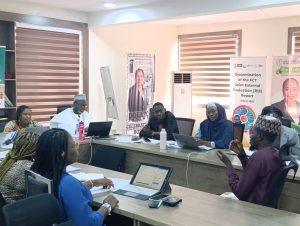
One of the candidates, Saidu Bello Karshi from the Abuja Municipal Area Council, described the interview process as seamless and expressed optimism about emerging successful.
The Abuja interviews form part of a nationwide exercise to select the second batch of National Health Fellows aimed at strengthening healthcare delivery, particularly at the primary level.