


Women with hearing impairments in Nigeria have been urged to take practical steps to protect themselves amid rising cases of online abuse and image-based violence.
This call was made in Abuja during an event marking the global 16 Days of Activism Against Gender-Based Violence.
Organised by the Lex Initiative for Rights, Advocacy and Development (LIRAD) in partnership with the Deaf Women Aloud Initiative (DWAI), the forum held under the theme “My Body, My Image, My Right,”brought together advocates, lawyers, partners and beneficiaries to address the urgent need for protection, awareness and accessible justice for Deaf women facing discrimination and digital harm.
Founder and Executive Director of LIRAD, Augusta Shahin, noted that many Deaf women remain vulnerable due to limited access to legal information.
She highlighted the rise in cases involving the non-consensual sharing of intimate images, particularly within the Deaf community.

“Over time, we have received several complaints around people sharing images of women from Deaf community. And because they do not have adequate information about the law or what their digital rights are, it’s often very difficult for them, so we put this together to educate them about their digital rights, to tell them about the amended cybercrimes act for them to know the position of the law as it comes to their digital right and also about digital violence,” Shahin said.
She said that “the amended Cybercrimes Act now explicitly criminalizes non-consensual image sharing, a major step forward, though gaps still remain.”
Shahin also noted that to bridge the accessibility divide, LIRAD has developed sign-language videos explaining digital rights, cybercrime offenses, and reporting procedures, ensuring Deaf women can finally access information that protects them.

In an address, Barrister Green Oge-Ali spoke on the deep psychological wounds caused by online harassment, shaming, and threats, especially against women.
Oge-Ali recounted examples of manipulated images, cyberbullying, sexual harassment, and the viral circulation of private videos, noting that many victims fall into depression, fear, or even self-harm.
“Digital violence is not just online drama.. What happens on the internet affects real lives. Many women are followed, threatened, or physically attacked because of something posted online. Some are shamed into silence. We must recognise this as violence,”She said.
Oge-Ali called on participants to refrain from sharing harmful content, including leaked videos, reminding them that even spectators become contributors to digital abuse.
Similarly, representing the Adeniyi Oyebade Foundation (AOF), Damian Ayowa reaffirmed the organisation’s dedication to inclusion and women’s empowerment.
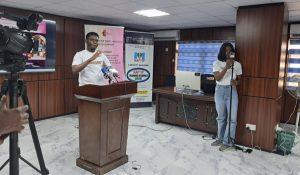
“This is more than a slogan. It is a declaration of autonomy, dignity and empowerment for every woman and girl, especially those within the Deaf community who continue to show resilience in the face of unique challenges,” Ayowa said.
He commended both DWAI and LIRAD for their leadership in ensuring Deaf women are not excluded from conversations on safety, digital rights, and justice.
He said; “We believe true progress comes when no one is left behind. This celebration is a reminder to you all that accessibility, protection, and empowerment for deaf women are not optional, they are essential.”
Also, the Executive Director of Deaf Women Aloud Initiative (DWAI), Hellen Beiyoku-Alase expressed pride in hosting the first cohort of 30 Deaf women trained on digital safety and regulation.
“This training is important because Deaf women can also be victims of gender-based violence. We want to make it accessible for deaf women to understand how they can get justice, report cases, and support others,” Beiyoku-Alase said.
She thanked partners, supporters, and the media for amplifying the voices of Deaf women and ensuring their stories lead to meaningful change.
Facilitators and participants shared real-life examples of digital violence within the Deaf community, from partners threatening to post nude images, to the stigma faced by women whose private photos were leaked, to cases where Deaf women were evicted or abused without any knowledge of where to seek help.