

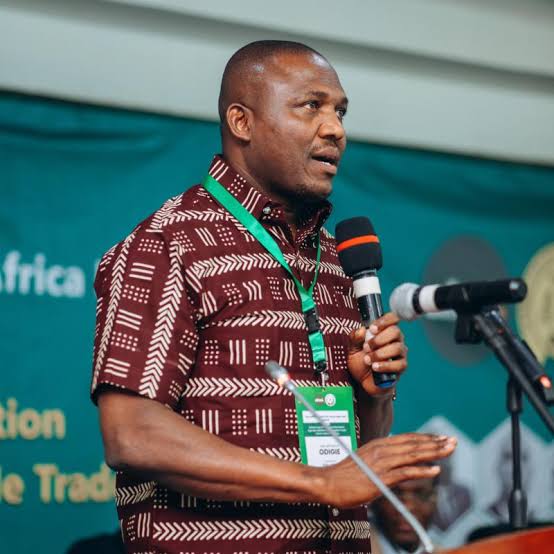
The International Trade Union Confederation (ITUC-Africa) has emphasised the need to mobilise technology for the greater good of humanity, urging that advancements, particularly in artificial intelligence (AI), be approached with responsibility and inclusivity.
Speaking exclusively to Voice of Nigeria at the two-day National Dialogue on “Promoting Sustainable and Responsible Business Practices for the Realisation of Decent Work in Nigeria” held in Abuja, the General Secretary of ITUC-Africa, Comrade Joel Odigie, affirmed that workers are ready to embrace new technologies.
Addressing the audience at the event, Odigie highlighted that organised labour sees the emergence of AI as a positive development. “This is where the rest of the world is heading, and labour must not shy away or live in denial,” he said.
When asked by Voice of Nigeria whether Africa’s workforce is truly prepared for AI, Odigie responded candidly:
“It’s right in front of us. We’ve been told that even smartphones have a limited future in the next few years, but they’ll evolve significantly. These changes are real and already part of our lives. We, as a movement, do not deny reality. If technology can be mobilised to serve humanity, then why not? That’s the key message. Let me be quoted clearly: ‘Mobilising technology for the advancement of humanity.’ Workers are central to humanity. If technology can be advanced in a way that benefits workers, there’s no issue. But when it leads to redundancy, increased poverty, and enriches only a small elite under the guise of intellectual property rights, then we have a problem.”
Odigie stressed that technology should be harnessed in a way that generates wealth for workers and ensures shared prosperity. “Technology should lead to better services, more income, and shelter for all, not exclusion,” he said.
On whether African workers, particularly in Nigeria, possess the intellectual capacity to engage with AI, Odigie was unequivocal:
“Let’s not be confused. AI is already here, and it’s taking jobs. Even you, journalists, are using AI today. You can feed this very interview into an AI tool, and it will produce a polished report. All you’ll do is adjust the narrative slightly. The point is, let’s stop living in denial. And for workers to truly be ready, opportunities must be equal.”
However, he acknowledged that the current technological landscape is skewed. “Opportunities are far from equal. Not just in Nigeria, but across Africa, our economies are not yet adequately prepared,” he noted.
Odigie called for the regulation of AI and other emerging technologies to address global tech inequalities.
“We’re seeing a digital world dominated by developed nations. That’s why regulation is essential. If these technologies are coming into our economies, they must be regulated, not allowed to extract profits without fair taxation to offset the job losses they cause.”
He stressed the need to re-skill workers and expand social safety nets.
“Through fair taxation and regulation, we can generate resources to close the gaps and address injustices that will emerge. These changes are inevitable. But if we provide protection and support, people won’t fall from employment into poverty. That’s what matters.”
On steps being taken to prepare workers, Odigie pointed out that ITUC-Africa has been proactive:
“Platform workers — many of whom are our members are already using AI tools. We’ve consistently advocated for broader training to equip them for the future.”
He emphasised the importance of a phased integration of AI into the workforce.
“If the adoption of AI is gradual and thoughtful, workers can adapt at each stage. They’ll embrace the change if they’re part of the process. Change is inevitable, but it must be managed well. Training and re-skilling are key, and we urge employers to invest in this.”
He concluded with a message of reassurance and solidarity:
“Workers are ready to learn. For those who can’t, they can be reassigned to roles where they can still contribute. There’s no need for panic or mental stress. We are speaking for our members and with them to demand effective regulation. But more than anything, we must approach this together, through collaboration.”
Oluchi Okwuego