

For decades, Nigeria’s economy has been largely dependent on oil revenues, which account for the majority of foreign exchange earnings and government income. However, fluctuating global oil prices, declining reserves, and environmental degradation have made diversification an urgent necessity.
One viable alternative lies in the marine and blue economy, a broad concept that encompasses the sustainable use of ocean and aquatic resources for economic growth, improved livelihoods, and environmental health.
The blue economy refers to economic activities that depend on oceans, seas, rivers, and lakes, including shipping, fisheries, aquaculture, tourism, offshore renewable energy, marine biotechnology, and seabed mining, among others.
Globally, the blue economy is valued at over $2.5 trillion annually, and Africa’s share, though underdeveloped, has the potential to transform coastal and inland economies.
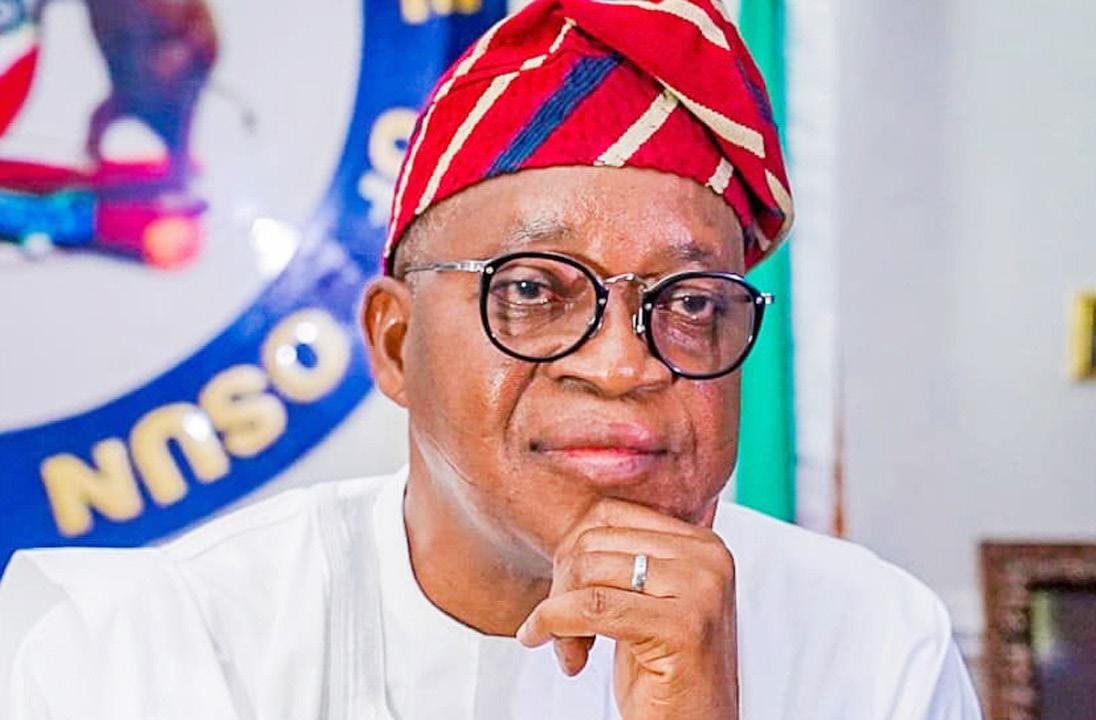
Nigeria’s Minister of Marine and Blue Economy, Adegboye Oyetola, at the 2025 World Maritime Day Celebration held in Lagos State, Nigeria, emphasised the vast potential of the blue economy globally. He said that the ocean produces up to 80 per cent of the earth’s oxygen, supports billions of livelihoods, and carries over 80 per cent of global trade.
In line with these developments, Martine analysts have called for the protection of the marine ecosystems while unlocking sustainable economic growth.
Truthfully, Nigeria boasts an 853 km coastline along the Atlantic Ocean and extensive inland waterways covering over 10,000 km. Data from the Nigerian Maritime Administration and Safety Agency projects the value of Nigeria’s untapped blue economy potential at a stunning $296bn.
These assets provide enormous opportunities for fisheries and aquaculture, employment generation, food security, maritime transport and logistics, as well as developing seaports and shipbuilding.
Others include repair industries that could enhance trade efficiency, marine tourism, leveraging coastal areas like Lagos, Calabar, and Badagry for eco-tourism and recreational activities and renewable ocean energy.
Apart from harnessing tidal and wave energy as part of Nigeria’s green transition, marine biotechnology, research and development in marine-based pharmaceuticals and bio-products are opportunities waiting.
Harnessing all these could lead to economic diversification, job creation, food security, trade facilitation and environmental sustainability, among others.
In these great outlooks, challenges of inadequate policy frameworks and institutional coordination, poor infrastructure in ports and coastal areas, pollution, weak research and data systems for ocean management and low public and private investment in blue economy ventures are hampering the growth of the sector.
For Nigeria to realise its potential in the $296 billion blue economy, the aforementioned challenges need to be overcome. Hence, there is a need to further strengthen the Ministry of Marine and Blue Economy with clear mandates and inter-agency collaboration, develop a national blue economy policy that aligns with the African Union’s Agenda 2063 and UN Sustainable Development Goal 14, and invest in maritime infrastructure like ports, shipyards, inland waterways, and cold chain logistics.
Other solutions that could take Nigeria’s maritime economy to the promised land include promoting public-private partnerships to attract investment and innovation, enhancing capacity building through training in marine sciences, ocean governance, and maritime engineering, as well as adopting sustainable practices in fishing, tourism, and energy to protect marine biodiversity.
Nigeria’s transition from oil dependency to a diversified, resilient economy depends on how well it harnesses its blue economy potential.
With strategic planning, investment, and sustainable governance, the sector would become the new frontier for national growth, creating jobs, boosting exports, ensuring food security, and preserving the environment for future generations.