


Gloria Essien, Abuja
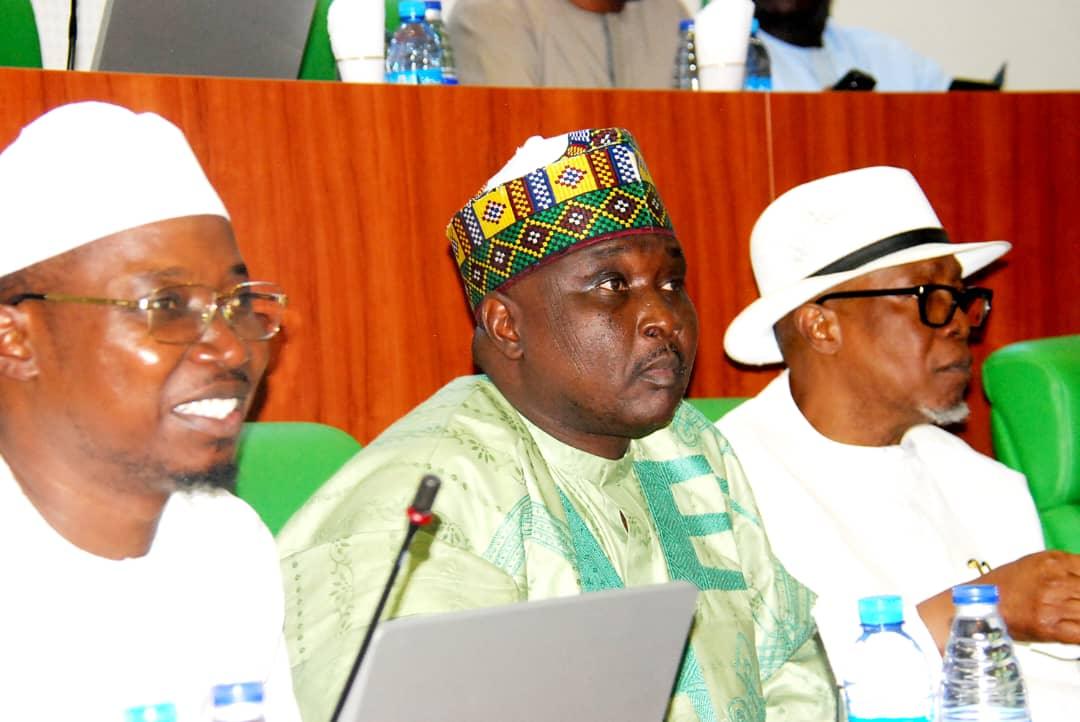
The House of Representatives Committee on Petroleum Resources (Upstream) has held a public hearing on a bill seeking the establishment of a National Commission for the Decommissioning of Oil and Gas Installations (NC-DOGI).
The Speaker of the House, Mr. Abbas Tajudeen, appealed to stakeholders to consider the bill objectively in the national interest.
He said the proposed legislation addresses the environmental damage caused by decades of abandoned oil and gas facilities across the country.
The Chairman of the Committee, Mr. Alhassan Ado Doguwa, said the hearing was convened to gather expert and stakeholder input that would help the National Assembly reach a fair and balanced decision.
“ This public hearing is part of the legislative process of the National Assembly, a process that ensures transparency, participation, and inclusiveness in law-making.
“The purpose of this engagement is to provide a formal platform for stakeholders to express their views, make observations, and offer recommendations that will assist the Committee and the House in reaching a fair and informed decision on the proposed legislation.
“ The NC-DOGI Bill, a House leadership-sponsored Bill, is a significant legislative proposal because it addresses matters that directly affect the welfare of our people, the protection of our environment, and the livelihood of host communities within oil-producing regions.
“ It reflects Parliament’s commitment to ensuring that the growth of the oil and gas sector aligns with environmental responsibility and sustainable community development.“
He pointed out that the Committee wishes to emphasise that the public hearing exercise is not an investigative hearing, nor is it intended to predetermine the outcome of the legislative proposal.
“ Our role is to listen objectively, collate all viewpoints, and evaluate them carefully before presenting our recommendations to the House,” he said.
Mr. Doguwa also said that “ Over the years, Nigeria’s petroleum industry has continued to face challenges in the decommissioning and abandonment of oil and gas facilities. These challenges have had environmental, economic, and social impacts, particularly on host communities.
“This therefore calls for a closer look at whether the existing regulatory frameworks are sufficient or need to be strengthened, and whether establishing a dedicated body, such as the proposed Commission, would better serve national interests.”
He noted that it is, however, important to acknowledge that the Petroleum Industry Act already provides for decommissioning and abandonment under Sections 232 and 233, assigning specific responsibilities to the NUPRC and NMDPRA, and also establishing a fund to ensure these activities are properly planned and financed in line with regulations.
“ It is for this reason that we have invited key stakeholders, including the Ministry of Petroleum Resources, the Federal Ministry of Environment, the Nigerian Upstream Petroleum Regulatory Commission (NUPRC), the National Oil Spill Detection and Response Agency (NOSDRA), the National Environmental Standards and Regulations Enforcement Agency (NESREA), as well as industry operators, civil society groups, and academia, to share their informed perspectives,” he said.
The Chairman encouraged all participants to engage constructively and present evidence-based submissions that can help the Committee shape a balanced, effective, and sustainable framework for managing decommissioning activities in the oil and gas sector.
The Nigerian Upstream Petroleum Regulatory Commission (NUPRC), however, opposed the proposed establishment of the National Commission for the Decommissioning of Oil and Gas Installations (NC-DOGI), describing it as unnecessary, duplicative, and financially burdensome.
A Director with the NUPRC, Mr. Emmanuel Macjaja, who represented the Chairman, Mr. Isa Modibbo, said that the creation of another commission would duplicate existing regulatory functions, increase administrative costs, and strain public finances since the Federal Government would still contribute to the existing Decommissioning and Abandonment (D&A) Fund.
He explained that the Petroleum Industry Act (PIA) 2021 already mandates the NUPRC and the Nigerian Midstream and Downstream Petroleum Regulatory Authority (NMDPRA) to manage decommissioning and abandonment activities through comprehensive frameworks that meet international standards.
Macjaja maintained that the PIA and the Nigeria Upstream Decommissioning and Abandonment Regulations, 2023, already cover all technical, financial, and environmental requirements, making the proposed Commission unnecessary.
Other stakeholders also made contributions to the Bill.