

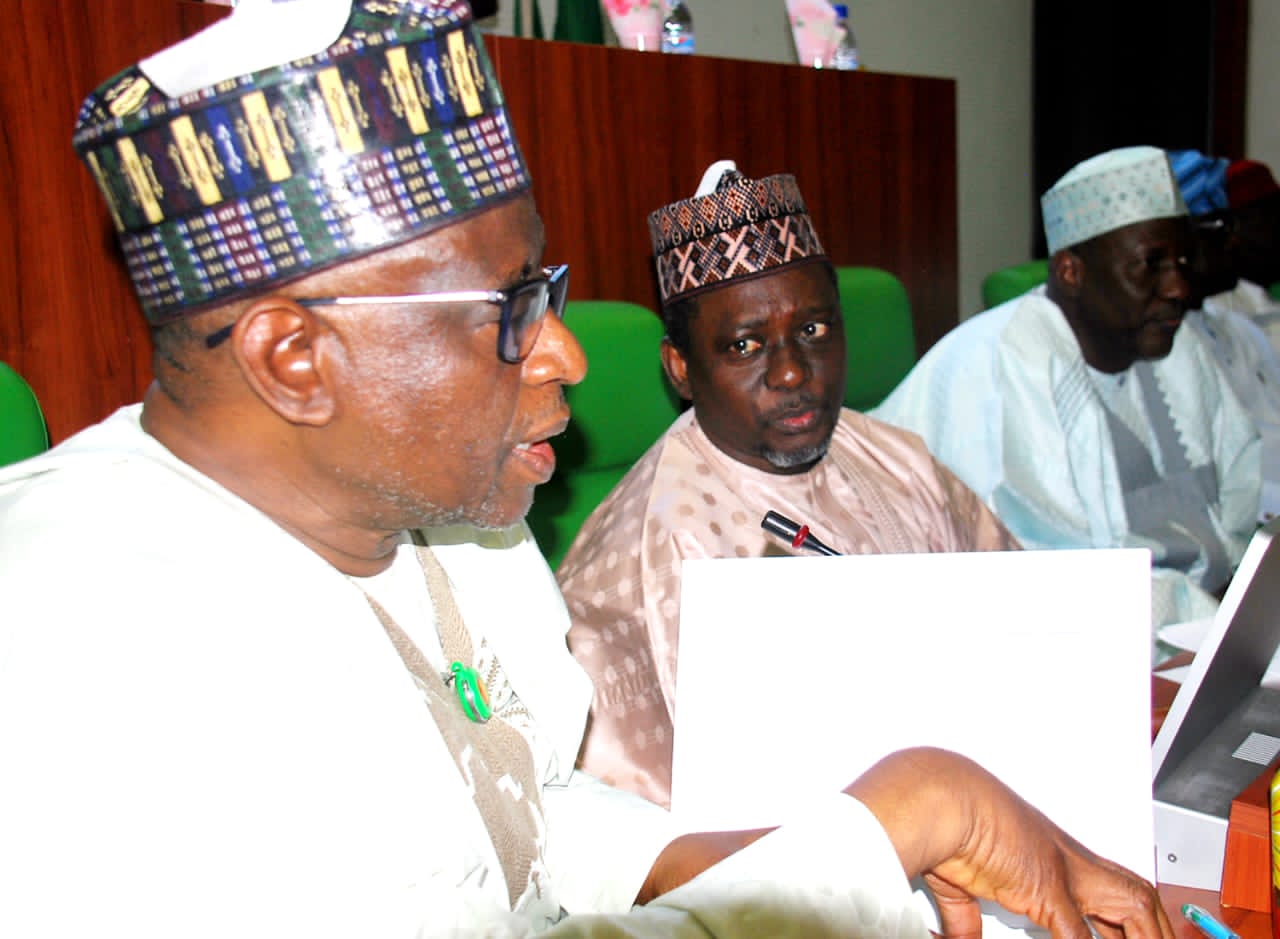
The House of Representatives has inaugurated an Ad-Hoc Committee on Border Security.
The committee is expected to come up with appropriate strategies and/or recommendations, which when implemented, will assist in the eradication of security threats or reducing them to the barest minimum level in Nigeria.
Inaugurating the committee, the Speaker of the House of Representatives, Mr Tajudeen Abbas said that “the National Assembly has constitutional mandate to ensure that agencies charged with safeguarding the borders do their jobs properly, especially now that the porous borders constitute both an economic and existential threat, eroding public confidence in the capacity of the state to protect its citizens and its territorial integrity.”
He also said that “the interactive session reflects the commitment of the House to run a People’s House, one that is responsive to the fears and aspirations of the people.
“Today, we inaugurate this committee with a clear and urgent mandate, to examine and strengthen Nigeria’s border security architecture in the interest of national safety and sovereignty. Since the security and welfare of Nigerians is at the heart of our legislative agenda, we are resolved to ensure that Nigerians, whatever their ethnicity or religion can afford to live peacefully wherever they choose.
This committee is therefore part of our efforts to provide concrete solutions to the violent attacks by fringe members of the society that have led to the misrepresentation of our country, and the distortion of the narrative of violence, which is fueled by greed, corruption and sheer avarice, rather than by any religious agenda,” Mr. Abbas said.
The Speaker also said that the task of securing the borders is a multi-dimensional and multi-agency responsibility.
” It demands synergy, transparency, and patriotism from all institutions of government involved. Border security cannot be achieved in isolation, it requires a whole-of-government and whole-of-society approach — one that harmonises the efforts of the military, paramilitary, intelligence, and law enforcement agencies; promotes intelligence sharing; and ensures that communities at the borders are active partners in safeguarding our nation”, he said.
Speaker Abbas therefore called upon all relevant agencies to foster greater co-operation, eliminate duplication of roles, and develop unified operational frameworks.
” Similarly, the welfare and training of personnel deployed at border posts must be prioritized, as no agency can perform optimally without motivated officers.
” The House of Representatives remains unwavering in its commitment to strengthen Nigeria’s border governance through effective legislation, rigorous oversight, and adequate budgetary support. We are determined to ensure that all appropriated funds meant for border security are judiciously utilised and that the principles of accountability, transparency, and efficiency are upheld. The findings and recommendations of this Committee will guide the House in initiating legislative reforms and policy interventions to modernize border security frameworks. This may include reviewing existing laws such as the Immigration Act, the Customs and Excise Management Act, and related statutes to reflect emerging global best practices and security realities”, he added.
The Chairman of the committee, Mr. Isa Mohammed Anka, said that the inaugural event is a demonstration of the House collective commitment to securing the sovereignty and ensuring the prosperity of Nigeria.
He noted that “it is alarming that despite significant government expenditure, which has exceeded 9 trillion naira over the past years, Nigeria is yet to attain commensurate gains in its security landscape.’
“In recent years, we have witnessed an escalation in illegal cross-border activities that threaten our national security such as illegal arms smuggling, human trafficking and drug smuggling etc. It is noteworthy, that our borders are porous, with many unofficial routes for smuggling goods.”
“We also need to ask ourselves some of the contributing factors leading to poor border security which includes:
- Inadequate Resources: Border security agencies suffer from inadequate funding, poor logistics, ineffective and outdated surveillance equipment and shortage of personnel.
- Difficult Terrain: A lot of our borders are located in difficult terrains like thick forests, distant rivers, mountains and deserts, making them tough to police effectively.
- Numerous Illega Entry Points: A recent report from Research Gate highlighted that out of Nigeria’s 1,978 entry points only 84 are officially manned by security operatives, leaving 1,894 illegal routes. This is a disturbing statistic and shows a gap in our defences.
- Negative Human elements: Negative behavioural attitudes of some of our border security officials are also a major setback that hinders their effectiveness in policing and controlling borders.
While the Nigeria Immigration Service serves as the agency responsible for border security as it relates to human movements, the Nigerian Customs controls the border security as it relates movement of goods and services.
The efforts of these agencies are being complimented by some others including, but not limited to, the Nigerian Navy, National Drug Law Enforcement Agency, the Police Force, Nigerian Army etc.” Mr. Anka said.
He said that the committee pledges to come up with resolutions that would help in securing Nigerian borders, safeguarding Nigeria’s sovereignty, territorial integrity and protecting the lives of every Nigerian.
“The challenges are immense, but so is our resolve. By combining strategic action with a commitment to regional and community-level partnerships, we can and will reclaim control of our borders and build a more secure future for all“, he added.
The Permanent Secretary of the Ministry of Interior Ministry, Mrs. Magdalene Ajani said that agencies under the ministry control in inward security in Nigeria.
She said that they conduct operations at the borders to combat illegal migration into Nigeria.
The Comptroller General of Immigration Service, Mrs. Kemi Nanna Nandap called for improved welfare of personnel who man NIgerian borders.
The representative of the Army,
Major General Ibrahim Idris said that “the Army is willing to contribute to strategies that would ensure the comprehensive coverage of Nigeria borders.”
Other Stakeholders promised to strengthen NIgeria’s borders, reaffirming their commitment to the safety and unity of the nation.