


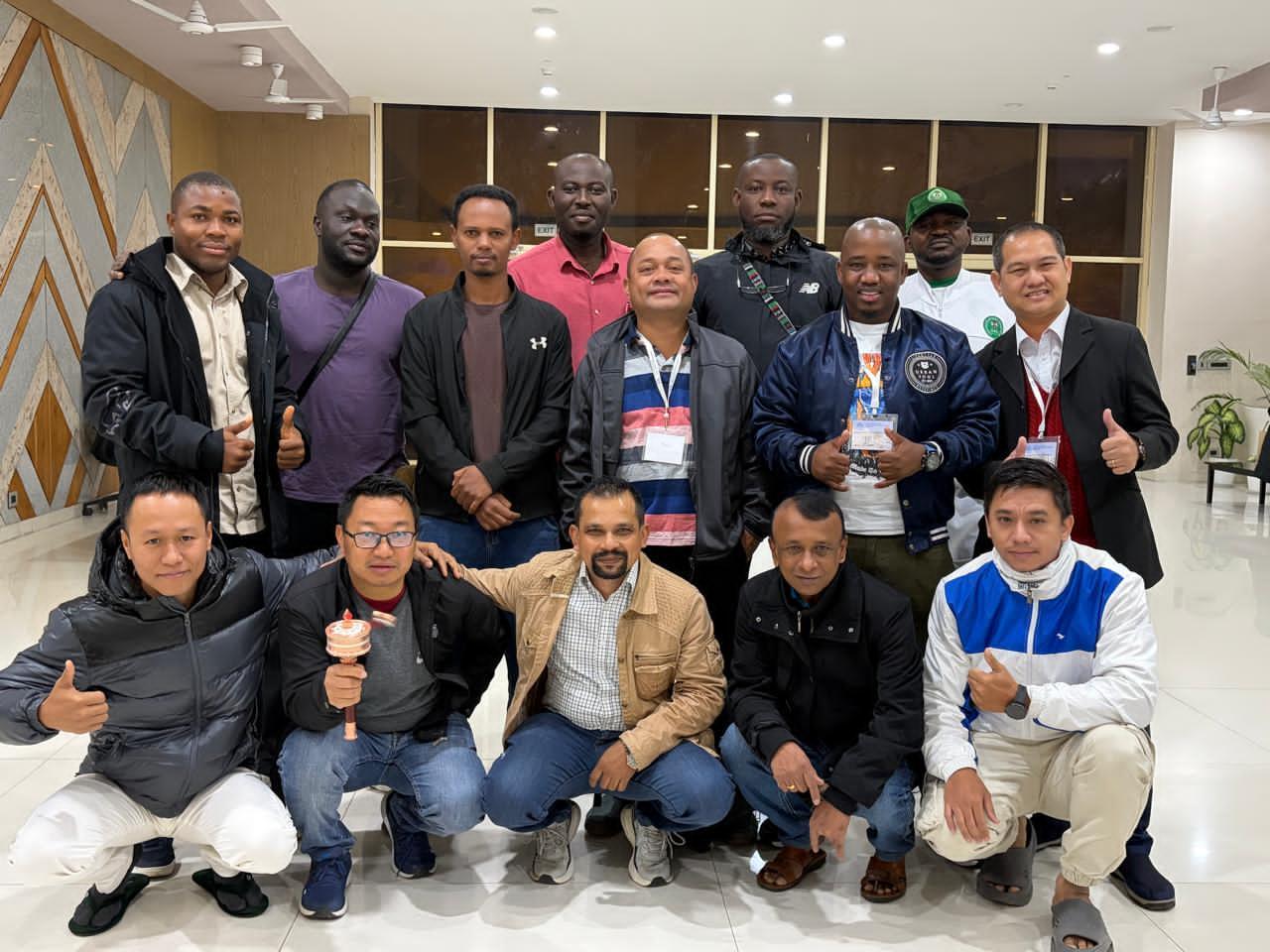
The Indian Institute of Management (IIM) Bodh Gaya has concluded a five-day international Management Development Programme on Leadership in a VUCA (Volatile, Uncertain, Complex and Ambiguous) World, aimed at strengthening leadership capacity among mid-career professionals drawn from across continents.
Organised in collaboration with India’s Ministry of External Affairs under the Indian Technical and Economic Cooperation (ITEC) framework, the programme focused on preparing leaders to navigate uncertainty, complexity and rapid global change.
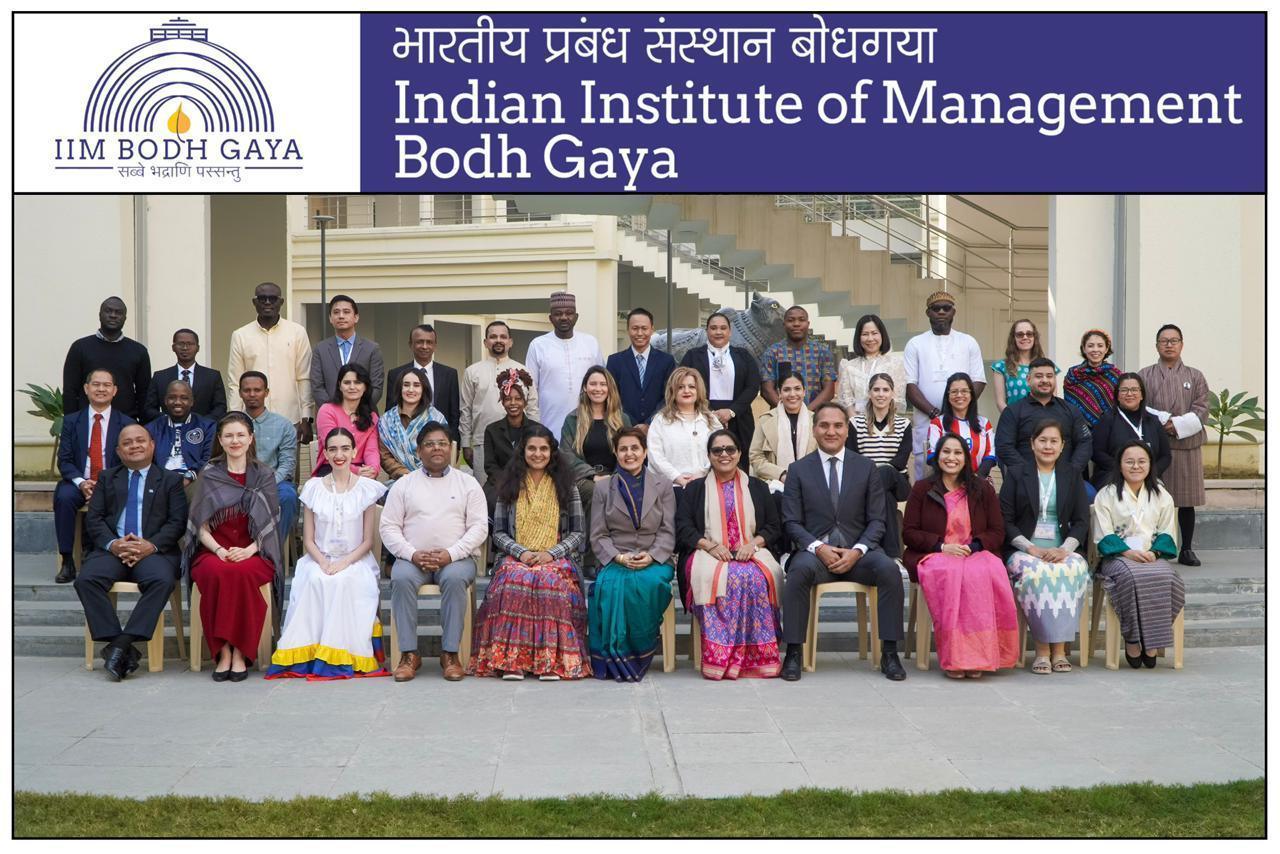
Voice of Nigeria Correspondent, Edward Samuel, in attendance, reports that participants from Africa, Asia, Europe and Latin America underwent intensive sessions on strategic thinking, ethical leadership, resilience and adaptive governance.
The programme was designed to provide practical leadership tools applicable to both public and private sector institutions.
Organisers said the diversity of participants enriched peer learning and deepened cross-cultural understanding.
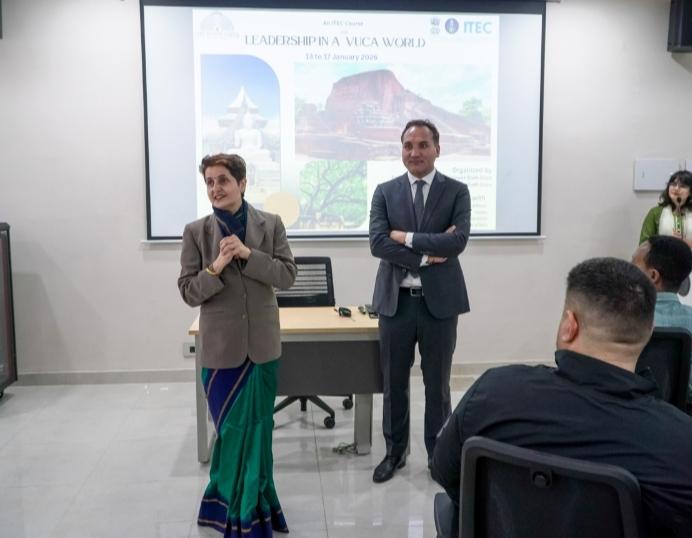
Facilitated by IIM Bodh Gaya faculty under the leadership of the Institute’s Director, Dr. Vinita S. Sahay, the training combined classroom engagement with experiential learning.
Participants also undertook study visits to the ancient Nalanda ruins and the Mahabodhi Temple in Bodh Gaya, linking historical wisdom with modern leadership practice.
According to the organisers, the blend of reflection, culture and strategy was intended to promote values-based leadership in a VUCA world.
At the closing session, programme coordinators underscored the importance of international cooperation in building leadership competencies for today’s complex global challenges.
They noted that the initiative aligns with the broader objectives of the ITEC programme to promote skills development, institutional capacity and sustainable partnerships among partner countries, including Nigeria.
 A participant from Paraguay, Ms. Teresita Maria Sol Arrua Ayala, described the programme as “an enriching and transformative experience,” praising its balance between technical leadership sessions and mindfulness-based learning.
Speaking with Voice of Nigeria, she said, “I am delighted to be in India and to share this experience with leaders from different parts of the world. It has opened my mind to new ways of thinking about leadership.”
Explaining her motivation for joining the programme, Arrua Ayala said she was keen to gain perspectives outside her region.
“I’m from Latin America, very far away from here, so I wanted to learn from this side of the world and also share with other leaders,” she noted.
She added that the practical components of the training were particularly impactful, as they allowed participants to apply leadership concepts beyond theory.
She highlighted the integration of mindfulness and yoga into leadership development as a unique strength of the programme.
“Sometimes we think one problem needs one specific solution, but it is about how we face the situation,” she said, stressing the need for leaders to approach challenges with clarity and balance.
Arrua Ayala expressed optimism about applying the knowledge gained to national development back home, adding confidently, “Yes, I want to run for the president of my country and become the first female president.”
Also speaking, a senior Bhutanese civil servant, Mr. Ughen Hendup, described the programme as “transformative,” noting that it strengthened global leadership through mindfulness, diversity and shared perspectives.
Hendup, who heads the Centre for Leadership Development at Bhutan’s Royal Institute of Management, said the training brought together participants from over 20 countries to jointly address contemporary global leadership challenges.
According to him, the programme stood out for focusing on leadership as a way of “being,” not just “doing.” “Unlike conventional trainings that focus mainly on models and frameworks, this programme encourages leaders to examine their inner strengths, emotions and consciousness,” he said.
Hendup added that the diverse cohort created a rich learning environment, where collaboration and inclusion emerged as practical solutions to leadership challenges in a VUCA world.
He further commended the experiential learning outside the classroom, particularly the visits to Nalanda and other historic sites, which he said connected ancient philosophies with contemporary leadership demands.
Hendup praised IIM Bodh Gaya and the Government of India for the initiative, recommending longer programme duration and sustained international collaboration, noting that the experience would support Bhutan’s broader vision of building mindful leadership for the future.