

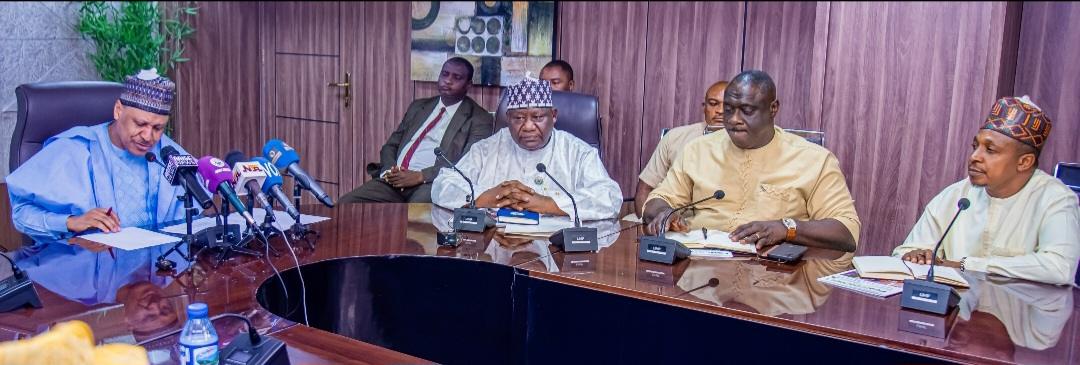
Nigeria’s Minister of Information and National Orientation, Mohammed Idris has reiterated commitment to deepen the already existed collaboration with the Bureau of Public Service Reforms (BPSR), to accelerate public sector reforms, strengthen transparency and boost digital capacity across government institutions.
He also stressed that communication is central to the success of any reform programme.
The Information Minister stated this in Abuja, when he received a Delegation from the Bureau of Public Service Reforms, led by the Director General, Dr. Dasuki Arabi, on a courtesy visit.
Idris said; “As Ministry of Information and National Orientation, we firmly believe that reform must not only be implemented, it must also be effectively communicated. Where reforms are not properly understood, it creates a big problem of understanding for people. Our duty is to ensure Nigerians understand that these reforms are designed for their greater good. Collaboration with BPSR is essential so that Nigerians understand that this is for the greater good of all of them.”
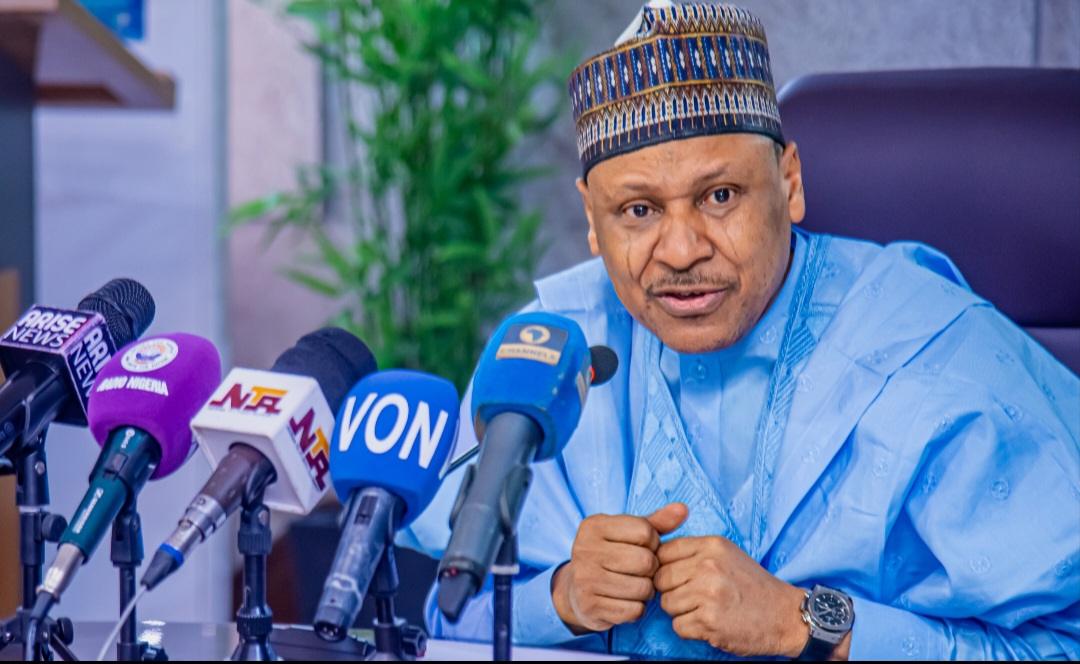
While commending BPSR for sustaining institutional reforms across the public service, the Minister described reform as ‘essential to national development.’
He noted that Nigeria’s public financial management system is now fully digitised and paperless, describing the development as ‘proof that Nigeria can actually be made to work.’
Highlighting the impact of digitisation, Idris said; “the era of contractors rushing to ministries at year-end to collect cheques was over. Checks are no longer involved, He likened the system to banking operations.”
“Today, the entire public financial management system has been digitised. Nobody carries a paper again to get paid. And Nigerians have done it. If you put your money in a bank in Abuja, you go to a village in Niger, provided there is a banking institution there, you withdraw that money. So why is it that public service cannot work that way?. We need to collaborate to ensure that while technology is essential, we must become literate in the way these technologies are used,” he explained.

According to him, the end of paper-based financial processes has improved transparency, blocked leakages and strengthened accountability across Ministries, Departments and Agencies (MDAs).
“Gone are the days when contractors rushed ministries at year-end to collect cheques. Today, the system is digitised. If the banking sector can operate seamlessly across Nigeria using technology managed by Nigerians, then our public service can work efficiently too,” he said.
Idris further underscored the importance of attitudinal change in public service, linking it to President Bola Ahmed Tinubu’s decision to rename the ministry.
He explained that “the inclusion of National Orientation in the Ministry’s mandate reflects the Federal Government’s resolve to promote patriotism, civic responsibility and shared ownership of public institutions.”
The Minister also disclosed ongoing efforts to modernise and digitise Nigeria’s archival system to preserve institutional memory and prevent policy gaps.
He stressed the importance of media and information literacy in tackling misinformation, deepfakes and artificial intelligence-driven manipulation.
Commendation
Speaking earlier, the Director-General, Bureau of Public Service Reforms, led by the Director General, of (BPSR), Dr. Dasuki Arabi, commended the Minister for aligning with the National Strategy on Public Service Reforms and outlined milestones achieved since the bureau’s establishment in 2004 following the Kuru Declaration.
He explained that “the reform strategy rests on four pillars, including governance environment, national development planning and digitisation of public financial management.”
Dr Arabi attributed the achievement to initiatives such as IPPIS, GIFMIS, the Treasury Single Account and BVN integration, stressing that ghost workers had been reduced by 99.9 per cent.

He said; “We are happy to say with all sense of pride and satisfaction that public financial management in Nigeria is 100 per cent paperless. No ministry, department or agency uses pen or paper to manage resources. Gone are those days that people have one month to retire and go and change their date of birth. At the point of entry into the service now, your biometrics are taken… government knows how many people are on the payroll.”
Dr Arabi also raised concerns about low digital literacy levels in the public service.
He said; “We have conducted a survey that shows that less than 30 per cent of public servants are IT literate. Failure to upskill workers could see critical services outsourced abroad. If we are not able to retrain and upscale people, somebody is ready to render that service for us from India.”
Dr Arabi called for stronger collaboration with the ministry on freedom of information compliance, website transparency, citizen engagement and the proposed National Citizens Experience Conference in 2026.
“All this work that we are doing is centred around our citizens. We will not go to rest until the common man is able to directly feel the impact of the work we are doing as ministries, departments and agencies of government,” he added.
Both officials pledged closer cooperation to deepen reforms, improve communication and ensure that Nigerians see tangible evidence of transformation across the public service.