
 has launched its 2025 Strategy for Nigeria, urging all stakeholders)
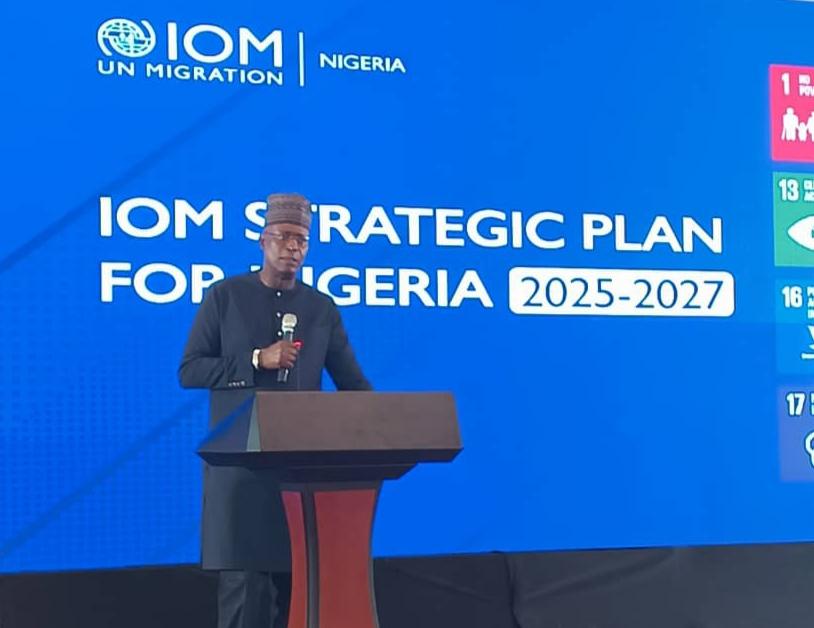
The International Organisation for Migration (IOM) has launched its 2025 Strategy for Nigeria, urging all stakeholders to adopt workable solutions and ensure full implementation to promote safe, regular migration and durable integration.
The strategy is designed to address Nigeria’s migration challenges while leveraging opportunities that come with orderly and well-managed migration.
Speaking at the launch in Abuja, the United Nations Resident and Humanitarian Coordinator, Mohammed Fall, said the declining resources available to humanitarian actors should be viewed not only as a crisis but also as an opportunity.
“This strategy is not just a humanitarian imperative. It will help address displacement, which is central to building peace and stability across Nigeria. It focuses on bringing relief to displaced people while also prioritizing durable solutions that restore dignity. This roadmap is both a call to action and an opportunity to learn from past lessons,” Fall noted.
He further emphasised the need for localisation, stronger government leadership, and the use of technology and digital solutions to make humanitarian operations more effective.
Shared Vision
IOM’s Chief of Mission in Nigeria, Ms. Sharon Dimanche, described the strategy as a shared vision built on inclusive consultations and aligned with Nigeria’s national priorities. She stressed that implementation is key.
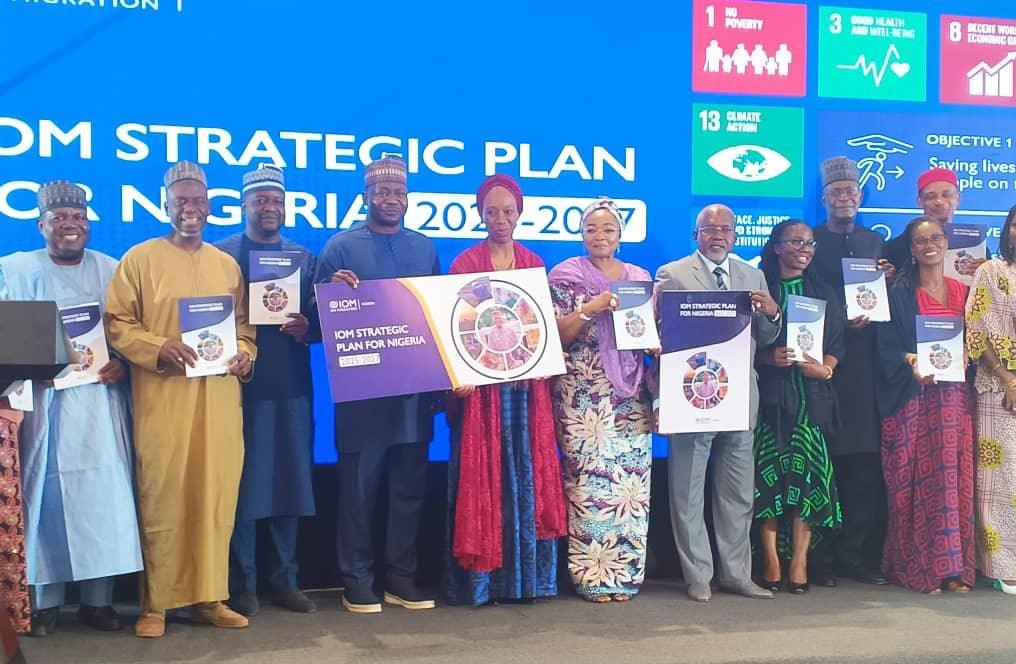
“We are not just launching this strategy to leave it on paper. But I’m counting on each and every one of you to implement the strategy together so that when we sit down, In three to five years, we can hold each other accountable and maybe give an account of each of our time. we must be able to look back and say we made a real difference”, she said.
Meanwhile, IOM’s Deputy Director General, Ugochi Daniel, commended the Nigerian government for its leadership in shaping migration governance and reaffirmed IOM’s global and national commitment.
“This strategy reflects our pledge to save lives, address displacement, and expand pathways for regular migration in line with Nigeria’s development aspirations. The strategy that we are launching today is how we as IOM are translating in concrete terms our commitment in achieving the vision, the national development aspirations of the federal government of Nigeria, in partnership with all of you represented here.
“I firmly commit to championing everything that is within the federal government’s vision at the global level, and ensuring that you have the full support of IOM,” she noted.
The Chief of Defence Staff, General Christopher Musa, underscored the security-migration nexus, stressing that conflict and instability remain major drivers of displacement.
He said that the Armed Forces would continue to uphold human rights while safeguarding displaced populations and creating conditions for safe return and reintegration.
Representing beneficiary states, the Acting Governor of Katsina State, Mr Lawal-Jobe, pledged subnational support for the strategy, citing ongoing efforts to reclaim communities from bandits and resettle affected populations.
Stakeholders at the launch emphasised that constructive partnerships among government, security agencies, the private sector, civil society, and international partners are essential to building a future where migration is safe, orderly, and dignified—while reinforcing both security and development.
Hauwa Abu