

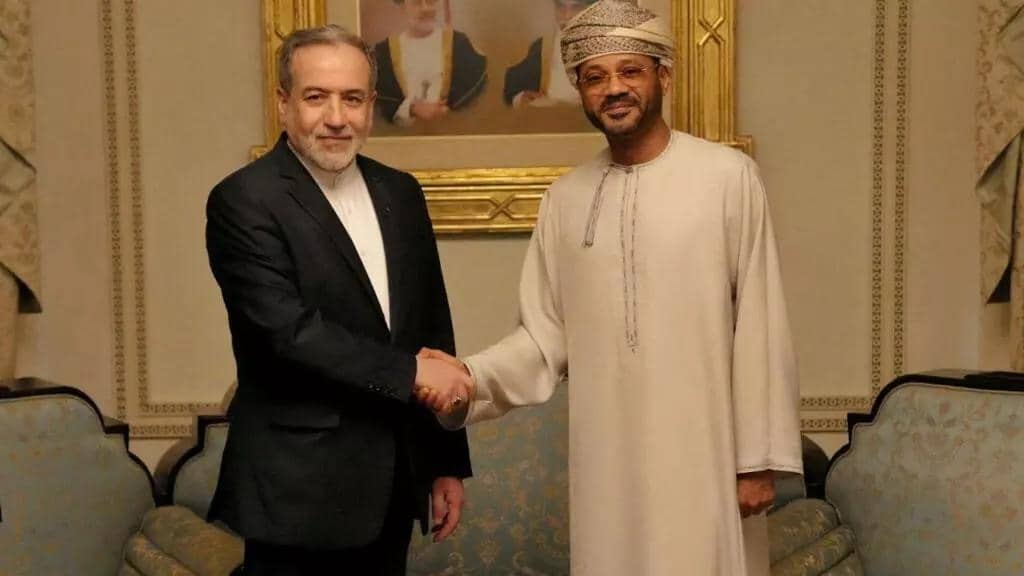
Iran and the United States have commenced high-stakes negotiations via Omani mediation on Friday to try to overcome sharp differences over Tehran’s nuclear programme, though dispute over widening the agenda risks derailing diplomacy and setting off another Middle East war.
An Iranian official told Newsmen the talks had not officially started, although Iran’s demands had been conveyed to the U.S. via Oman.
The official said indirect negotiations “possibly” would begin after a meeting between the top U.S. negotiator and Oman’s foreign minister.
Previous Iran‑U.S. talks have adopted a shuttle diplomacy approach.
While both sides have indicated readiness to revive diplomacy over Tehran’s long-running nuclear row with the West, Washington wants to expand the talks to cover Iran’s ballistic missiles, support for armed groups around the region and “treatment of their own people“, U.S. Secretary of State Marco Rubio said on Wednesday.
Iranian officials have repeatedly said they will not discuss Iran’s missiles — one of the biggest such arsenals in the region — and have said Tehran wants recognition of its right to enrich uranium.
For Washington, carrying out enrichment inside Iran is a red line.
Read Also: US, Iran to Seek De-Escalation in Nuclear Talks – Official
Iran Warns US, Israel Against Intervention
An Iranian diplomatic source told Newsmen that any “presence of CENTCOM (U.S. Central Command) or any regional military officials in the talks can jeopardize the process of indirect nuclear talks between Iran and the United States” in Oman.
Iran has said it wants its Foreign Minister Abbas Araqchi and U.S. Middle East envoy Steve Witkoff to discuss only the nuclear issue in Oman’s capital Muscat.
President Donald Trump’s son-in-law Jared Kushner, who helped mediate in Gaza ceasefire talks, is also due to take part in the discussions.
Tehran’s clerical leadership remains deeply worried that Trump may still carry out his threats to strike Iran after a military buildup by the U.S. Navy near Iran.
In June, the U.S. struck Iranian nuclear targets, joining in the final stages of a 12-day Israeli bombing campaign. Tehran has since said its uranium enrichment work has stopped.
Heightened tension
The U.S. naval buildup, which Trump has called a massive “armada”, has followed a bloody government crackdown on nationwide protests in Iran last month, heightening tensions between Washington and Tehran.
Trump has warned that “bad things” would probably happen if a deal could not be reached, ratcheting up pressure on the Islamic Republic in a standoff that has led to mutual threats of air strikes.
“While these negotiations are taking place, I would remind the Iranian regime that the president has many options at his disposal, aside from diplomacy, as the commander-in-chief of the most powerful military in the history of the world,” White House Press Secretary Karoline Leavitt on Thursday told reporters.
Reuters/Victoria Ibanga