

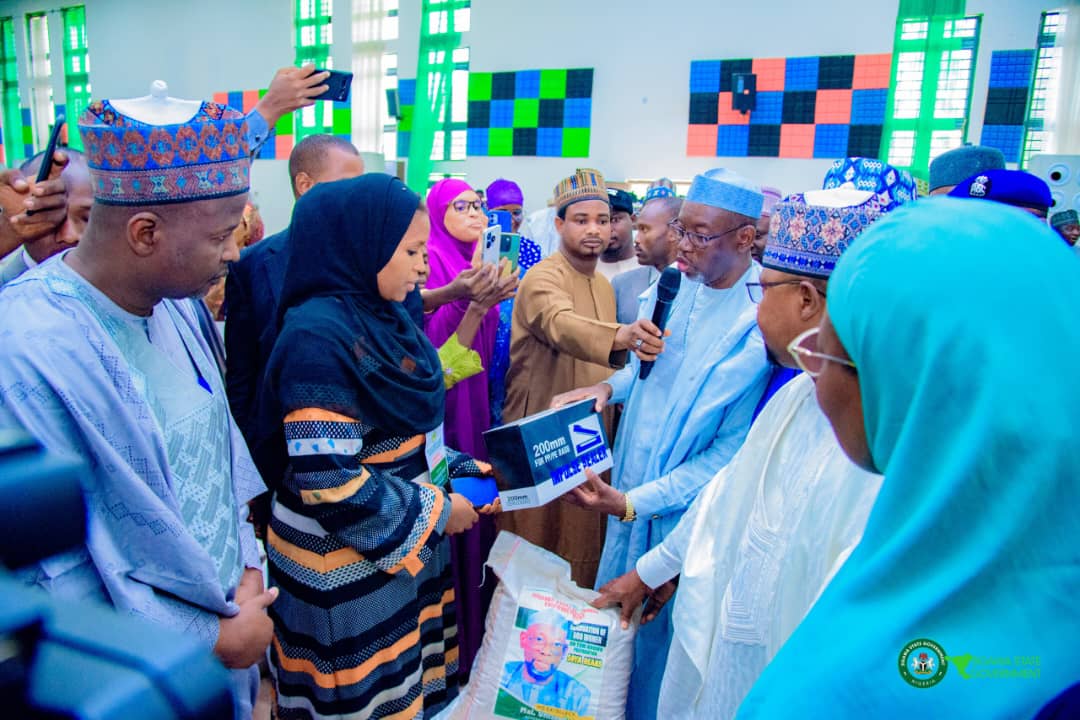
In a strategic initiative to reduce child malnutrition and promote women’s economic empowerment, the Jigawa State Government has trained and graduated 600 women in the production of a locally formulated complementary food for children (Tom Brown).
The graduation ceremony, held at the Government House in Dutse, was presided over by Governor Mallam Umar Namadi, who described the programme as a vital, two-pronged intervention targeting both public health and economic resilience.
According to him, “this initiative is a homegrown solution tailored to address the pressing issues of malnutrition among children and economic challenges faced by women.”
“It empowers women with a means of income and also offers an effective remedy for moderate acute malnutrition in children.”
The Tom Brown formula, also known locally as Kwashpap, is a blend of millet, groundnut, and soybeans, rich in nutrients essential for child development.
Governor Namadi noted that the formula has proven effective in reducing cognitive impairments linked to malnutrition. He explained that the initiative is part of Jigawa’s broader nutritional improvement agenda, which is already showing results.
According to the 2024 National Demographic and Health Survey, the state’s stunting rate has dropped from 64% in 2018 to 55%.
Each beneficiary of the training received a starter pack, which includes sealing machines and raw materials, to support small-scale Tom Brown production.
READ MORE:Jigawa: 30,000 Farmers Get Bio-fortified Seeds to Tackle Climate Change
Local government councils and primary healthcare centres will partner with the women to integrate their products into state-run child nutrition programs.
“Our goal is not only to maintain our current momentum but to accelerate progress in improving all nutrition indicators critical to child survival and development,” the governor emphasised.
Governor Namadi further announced Jigawa’s ongoing participation in the World Bank-supported Accelerating Nutrition Results in Nigeria (ANRiN) project.
The programme aims to expand access to affordable, high-quality nutrition services for women and children under five.
“We believe the ANRiN project will complement our local efforts and significantly fast-track our journey towards achieving nutrition security for all children in Jigawa,” he added.
The state government also reiterated its commitment to reducing dependence on imported therapeutic food supplements by investing in sustainable, community-based solutions.