


Gloria Essien, Abuja
Political leaders, lawmakers, tax authorities, and civil society groups in the nation’s capital, Abuja, have commended President Bola Tinubu’s tax reforms.
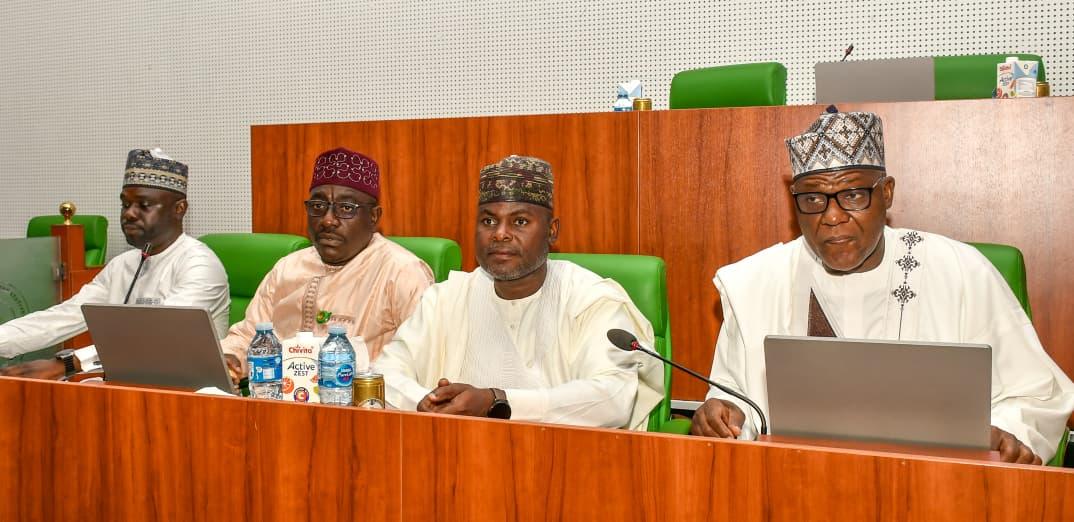
The Former Speaker of the House of Representatives, Mr Yakubu Dogara, described President Bola Tinubu’s tax reforms as the most audacious overhaul of Nigeria’s fiscal framework in decades.
Speaking at the Maiden Distinguished Parliamentarian Lecture organised by the House of Representatives Press Corps, he urged the government to ensure transparency and sustained implementation to secure public trust.
His lecture, titled “Navigating Tax Reform in Nigeria: Insights on President Tinubu’s Policies”, examined the origins, scope, and expected impact of the tax reforms encapsulated in the Nigeria Tax Act (NTA) 2025 and related legislation.
The former Speaker said President Tinubu took office at a critical time, inheriting an economy burdened by challenges such as high deficit financing through Ways and Means, dual exchange rates that favoured a few, and crude oil forward sales linked to foreign loans.
He stressed that the structural distortions made urgent reforms inevitable.
“From day one, it was clear that something urgent, nay revolutionary, must be done to prevent our economy from imploding,” he said, stressing that the President had acted with courage despite fierce opposition.
Mr Dogara outlined the key provisions of the reforms, which consolidate 16 federal tax statutes into four principal Acts:
“Nigeria Tax Act (NTA) 2025: Consolidates multiple tax laws into a unified framework, expands the tax base to cover digital services and virtual currencies, and introduces a 15% minimum effective tax rate for large companies.
“Nigeria Tax Administration Act (NTAA) 2025: Modernises assessment, collection, and compliance rules, introduces simplified filing for low-income earners, mandates the use of unified Taxpayer Identification Numbers (Tax IDs), and establishes a Tax Ombudsman’s office.
“Nigeria Revenue Service (Establishment) Act (NRSEA) 2025: Establishes the Nigeria Revenue Service to replace the FIRS, with expanded powers and mandatory transparency reporting.
“Joint Revenue Board (Establishment) Act (JRBEA) 2025: Harmonises federal-state revenue sharing and coordinates dispute resolution through a Tax Appeal Tribunal and Ombudsman”.
According to him, the reforms, which will be fully operational by January 2026, are designed to simplify Nigeria’s complex tax regime, broaden the tax net, encourage compliance, and align domestic rules with global standards.
Quoting the report of the Presidential Committee on Fiscal Policy and Tax Reform chaired by Prof. Taiwo Oyedele, Dogara said the reforms were conceived to “protect the poor, empower businesses, encourage investment, and ensure fairness across society.”
He noted that among the reliefs introduced are exemptions for small companies with a turnover of N100 million or less, rent reliefs for salaried workers, tax credits for upstream oil operators, and a full income tax exemption for individuals earning N800,000 or less annually.
The reforms also abolish multiple sectoral levies, replacing them with a single 4% development levy, while new provisions bring digital gains, crypto assets, and foreign exchange earnings into the tax net.
Speaker Abbas, who was represented by the House Spokesperson and Chairman, Committee on Media and Public Affairs, Mr. Akin Rotimi Jnr., said that the establishment of the Presidential Committee on Fiscal Policy and Tax Reforms and the harmonisation of tax collection processes was set to take effect in January 2026.
He described the tax act as: “A significant intervention that promises to re-engineer our tax administration architecture for greater efficiency, fairness, and transparency.”
According to him, the National Assembly has devoted considerable energy to diligently processing the far-reaching legislation transmitted by the executive, through robust debates, stakeholder consultations, and committee work.
“Indeed, what we now have before us is one of the most significant steps of building our Fourth Republic, with the greatest potential to transform our economy and fiscal institutions,” he said.
The Chairman Federal Inland Revenue Service (FIRS), Mr Zacch Adedeji, used the occasion to clarify that not all funds deposited in individual bank accounts will be subjected to taxation. He countered widespread misconceptions surrounding the recently passed tax reforms.
He also explained that Nigeria operates a self-assessment tax system, which places the responsibility on individuals and businesses to declare their income and file tax returns.
According to the Chairman, while taxable income such as salaries, business earnings, and professional fees must be declared and taxed, deposits such as gifts, money held on behalf of third parties, or transfers for non-commercial purposes do not attract tax obligations.
He reaffirmed the agency’s commitment to press freedom and called for stronger collaboration between the media and tax authorities in deepening public understanding of ongoing fiscal reforms.
According to him, the FIRS is ready to support the media with technical information and resources that will enable them to provide accurate and balanced reporting.
“This engagement is very important to us. We want you to listen, take something back home, and continue to educate Nigerians. On our part, we are happy to support you with the necessary information and resources,” he added.
The Civil Society Legislative Advocacy Centre (CISLAC) threw its weight behind ongoing tax reforms in Nigeria, urging the government to ensure transparency, accountability, and fairness in their implementation.
Executive Director of CISLAC, Mr Auwal Ibrahim Musa Rafsanjani said the reforms, if properly implemented, would strengthen Nigeria’s fiscal position and ensure that taxes serve the interests of citizens rather than being diverted through loopholes and weak enforcement.
He noted that women and vulnerable groups often bear the brunt of unfair tax practices, stressing that a fairer and more equitable regime would address such imbalances.
Commending the House of Representatives for initiating dialogue on the reforms, Rafsanjani urged the Senate to organise a similar engagement to deepen public awareness.
According to him, many Nigerians still lack adequate understanding of the provisions of the new tax laws, which makes sensitisation and education critical.
A member of the House of Representatives, Hon. Jafaru Leko, has expressed support for the Federal Government’s ongoing tax reforms, describing them as a welcome development that will simplify taxation, boost revenue, and promote fairness in the system.
He stressed the need for regional balance in implementing the reforms to ensure no part of the country feels shortchanged.
According to him, the public hearings conducted during the passage of the bills allowed citizens to understand both their rights and responsibilities under the new system.
He assured that lawmakers would continue to back policies that promote good governance and national development, pledging his commitment to supporting the implementation of the reforms.
The theme of the Parliamentarian Lecture was ” Navigating Tax Reforms in Nigeria: Insight on President Bola Tinubu’s Policies”.