

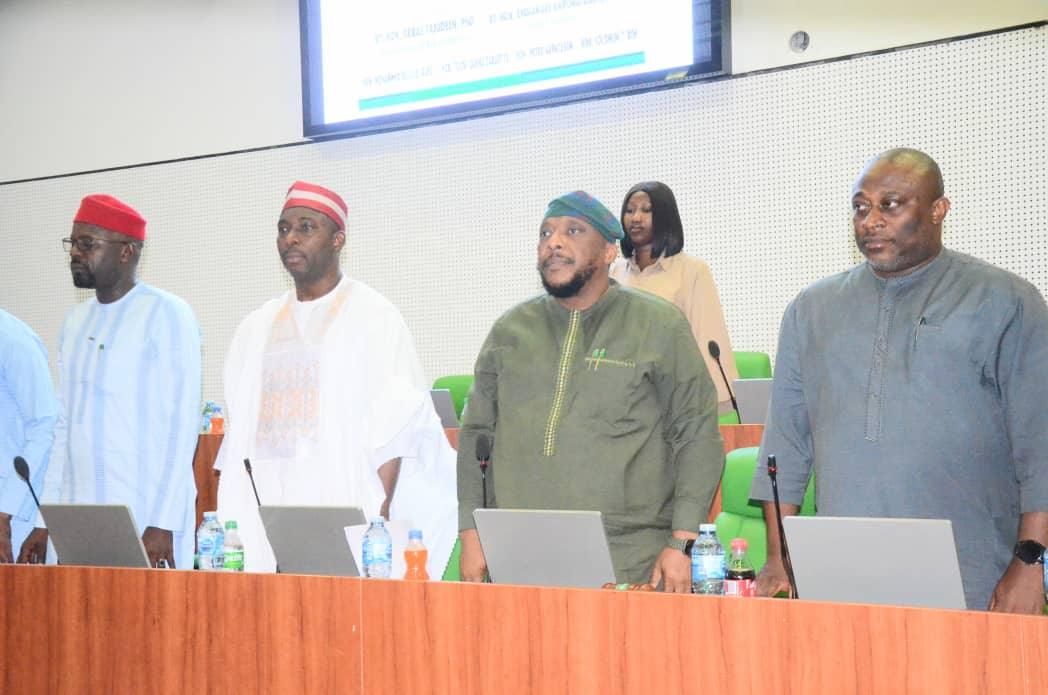
The House of Representatives has moved to regulate the Fintech Industries in Nigeria.
This is as the House holds a public hearing on “A Bill for An Act To Provide for the Establishment of the Nigerian Fintech Regulatory Commission and for Related Matters (HB.2389).”
Declaring the hearing open, the speaker of the House of Representatives, Mr. Tajudeen Abbas said that the “It is to get inputs from stakeholders and the general public, in order to ensure that the laws we pass are enforceable, relevant, and consistent with the Constitution of the Federal Republic of Nigeria.
” I want to thank the Committees on Digital and Electronic Banking, Banking Regulations, Science and Technology, and Communications for working together to ensure that this event takes place. The crucial nature of this hearing is further emphasized by the way the issues at play intersect different sectors of the economy, requiring a legislation that is able to address current regulatory overlap, duplication and inconsistencies.
” This Hearing marks a significant step in the effort to position Nigeria as a leading financial technology hub in Africa, and a major player in the global fintech industry. In the last few years, our country has seen consistent growth and innovations in digital payments, blockchain technology, digital assets, crowdfunding, and other forms of embedded finance. Fintech has therefore become a major tool for advancing financial inclusion in a country with one of the largest unbanked populations in the world. It has created thousands of new jobs for our youth, brought in appreciable investment, and supported small and medium enterprises in line with President Tinubu’s Renewed Hope Agenda for inclusive growth.
” Sadly, regulation has not been able to keep pace with the speed of innovation in the sector. The absence of a single coordinated framework for fintech oversight has led to fragmented regulations, compliance difficulties, and general uncertainties for investors and consumers alike. It therefore becomes necessary to establish a Commission that will act as a coordinating body and eliminate duplication, streamline processes and remove the barriers that stifle innovation”, Abbas said.
He noted that the proposed Nigerian Fintech Regulatory Commission is expected to act as a statutory body that will oversee licensing, regulate and supervise fintech services, and replace the existing multi-regulatory approach with a one-stop model.
” As part of its mandate, it will be responsible for developing performance standards, creating a level playing field, and fostering investment in the fintech sector. The purpose of this public hearing therefore is to receive submissions from stakeholders, regulators, operators, investors, consumer protection groups and the general public over the legal, economic and institutional implications of establishing the Nigeria Fintech Regulatory Commission. This process will also help determine the appropriate scope, powers and limitations of the Commission and ensure that the proposed framework aligns with existing laws and institutions to avoid conflict, duplication, or regulatory challenges”. He said.
The Speaker pointed out that since Fintech is a relatively new financial system, it is essential that the Commission is able to protect investors and consumers, monitor cybersecurity risks, and promote consumer education, data privacy and national security.
He charged the committee to be mindful and providing clear guidelines to guard against regulatory proliferation.
” There must be no duplication of licensing processes or conflicting practices. The Commission is not in competition with existing institutions nor is it meant to replace or them. Its work must not undermine the work of the Central Bank of Nigeria, the Securities and Exchange Commission, the National Information Technology Development Agency of Nigeria or the Nigeria Deposit Insurance Corporation. Rather, it is supposed to operate as a complementary mechanism and to defer to primary regulators in their core mandates as already established by law”. He added.
The Chairman of the House Of Representatives Committees On digital and electronic banking, banking regulations; science and technology; Communication; and capital market and Institutions, Mr. Emmanuel Ukpong-udo, said that the engagement reflects the commitment of the House of Representatives to building a responsive and forward-looking legal framework that keeps pace with the rapid evolution of financial technology in Nigeria.
“The House recognises that financial technology is no longer a peripheral segment of the Nigerian economy.
” It is a central pillar of financial inclusion, youth entrepreneurship, innovation, and economic competitiveness. Nigeria has emerged as one of Africa’s leading fintech hubs, attracting significant domestic and foreign investment, driving digital payments adoption, and expanding access to credit and financial services. However, this rapid growth has also exposed regulatory fragmentation, compliance uncertainties, consumer protection gaps, and supervisory overlaps. HB. 2389 seeks to address these challenges in a structured and comprehensive manner.
” The Bill before us today is designed to establish the Nigerian Fintech Regulatory Commission as a specialised and independent regulatory authority with the mandate to provide coherent oversight of fintech activities. Importantly, this Bill must be carefully harmonised with the mandates of existing financial sector regulators to avoid duplication, conflict of jurisdiction, or unnecessary regulatory burdens. As we deliberate, we must consider institutional coordination, transitional licensing arrangements, proportionate compliance requirements for start-ups and emerging innovators, and the fiscal sustainability of the proposed Commission. Our objective is to craft a law that promotes innovation while safeguarding systemic stability.
“The House firmly believes that effective legislation must be shaped by robust stakeholder engagement. This Public Hearing provides a vital platform for regulators, fintech operators, deposit money banks, payment service providers, consumer advocacy groups, cybersecurity experts, academia, and development partners to present evidence-based submissions and practical recommendations”. Ukpong-udo said .
He added that the public insights will guide the refinement of this Bill to ensure that it is implementable, inclusive, and responsive to the realities of the market.
The sponsor of the Nigerian Fintech Regulatory Commission Bill, Mr. Fuad Kayode Laguda explained that he sponsored the bill to enhance businesses and operational activities of fintech operators and service providers in the country.
” I discover that Nigeria has no single regulatory authority regulating businesses, practices, and operations of fintech operators and service providers despite their impact on national growth and development.
” Creation of this Regulatory Commission will enhance profitability of fintech businesses and security of fintech users. Currently, Nigerian fintech sector is regulated by these organisations namely: CBN, SEC, NITDA, NOTAP and FIRS. This industry is governed by fragmented regulatory frameworks which threaten the confidence of fintech stakeholders. Rather than interfacing with multiple regulators, fintech stakeholders will only interface with the NFRC thereby enabling ease of doing business for them:”. Laguda said.
He said that ” As of January 2024, Nigeria has 250 fintech companies while the market value of Nigerian fintech industry was projected around $230 billion according to McKinsey & Company report. As of January 2026, nine (9) of the fintech firms have a combined valuation of $10.6 billion with over 430 fintech firms in 2025. Nigeria’s fintech industry had over 108 billion mobile money transactions amounting to over $1.6 billion in 2024.
“Nigerian Fintech Regulatory Commission, if established, will enforce standards, rules, and codes of practices for operators and investors. For the customers, the Commission will adequately protect them from digital frauds and build their trust in digital platforms. Generally, this Commission will sufficiently protect the interests of fintech investors and customers by implementing policies and measures that safeguard them from fragmented regulations and ensure they enjoy reasonable rates.”
Players in Nigeria’s fintech sector expressed differing opinions on the proposed creation of a Nigerian Fintech Regulatory Commission.
While some support the move, others warn it could create overlapping mandates and duplicate the roles of existing regulators.