


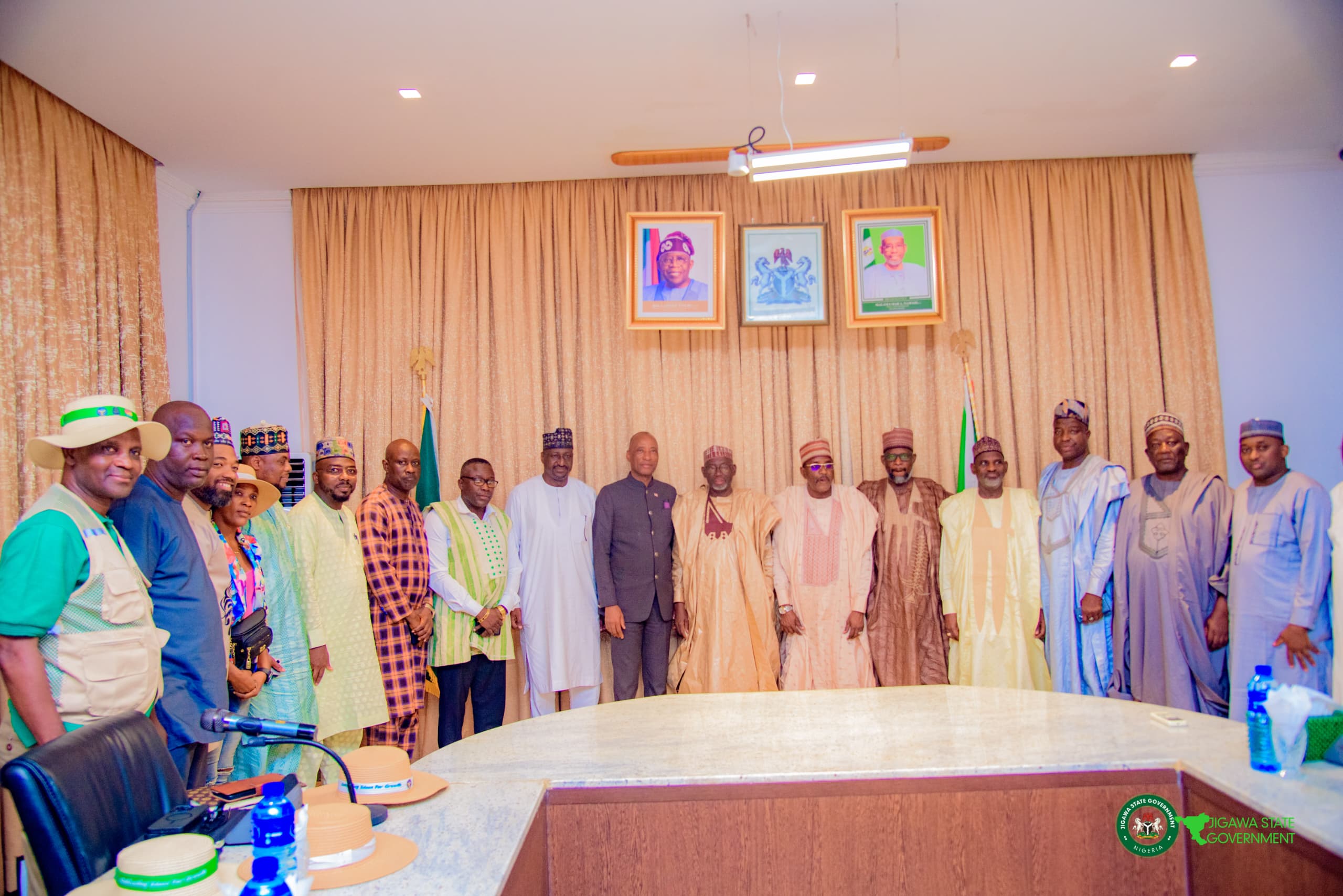
The Liberian Government has expressed readiness to partner with Jigawa state in North West Nigeria in the area of rice farming in order to boost value chain—knowledge on large scale production.
This was revealed when the Jigawa State Governor Umar Namadi hosted Liberia’s Deputy Minister of Agriculture, David Akoi, on a study tour aimed at learning from the state’s success in rice production.
Jigawa is recognized as Nigeria’s leading rice-producing state.
During a courtesy visit to Government House, Dutse, Mr. Akoi said the mission was to gain practical insights into rice cultivation and the entire value chain—knowledge which he hopes will help reduce Liberia’s heavy reliance on rice imports.
READ ALSO:Jigawa Farmers Urge Measures Against Fake Fertilisers
According to Mr Akoi, “In Liberia, rice is our staple food, we eat it morning, afternoon, and night. It’s not just food, it’s a political commodity. In 1979, our president was overthrown following protests over a proposed rice price increase.”
“Today, we import 70% of our rice. Our government wants to reverse that by producing at least 70% of what we consume. Instead of looking overseas for solutions, our president sent us to Nigeria specifically Jigawa to learn from your experience in overcoming challenges and building a strong rice value chain.”
Governor Namadi commended Liberia’s choice of Jigawa for the study tour, stressing the value of exchanging ideas to strengthen agricultural productivity in both countries.
“Agriculture is the backbone of our economy. From the start of our administration, we resolved to boost livelihoods by transforming agriculture,” he said.
He noted that Jigawa increased rice cultivation from 60,000–70,000 hectares in 2023 to over 200,000 hectares in 2024, with a target of nearly 300,000 hectares this year. By 2030, the state aims to supply 50% of Nigeria’s rice needs.
The governor also outlined measures to combat climate change’s impact on farming, including a shift from rain-fed to irrigation agriculture. The state has revived 10 irrigation dams, adding more than 4,500 hectares to cultivated land.
To further boost production, Jigawa has acquired 300 tractors with full implements, 60 combine harvesters, 150 planters, and other equipment. Each of the state’s 30 constituencies now has at least 10 tractors available for smallholder farmers at subsidized rates.
Details of the engagement was contained in a press statement by the Governor’s spokesperson Hamisu Gumel.