

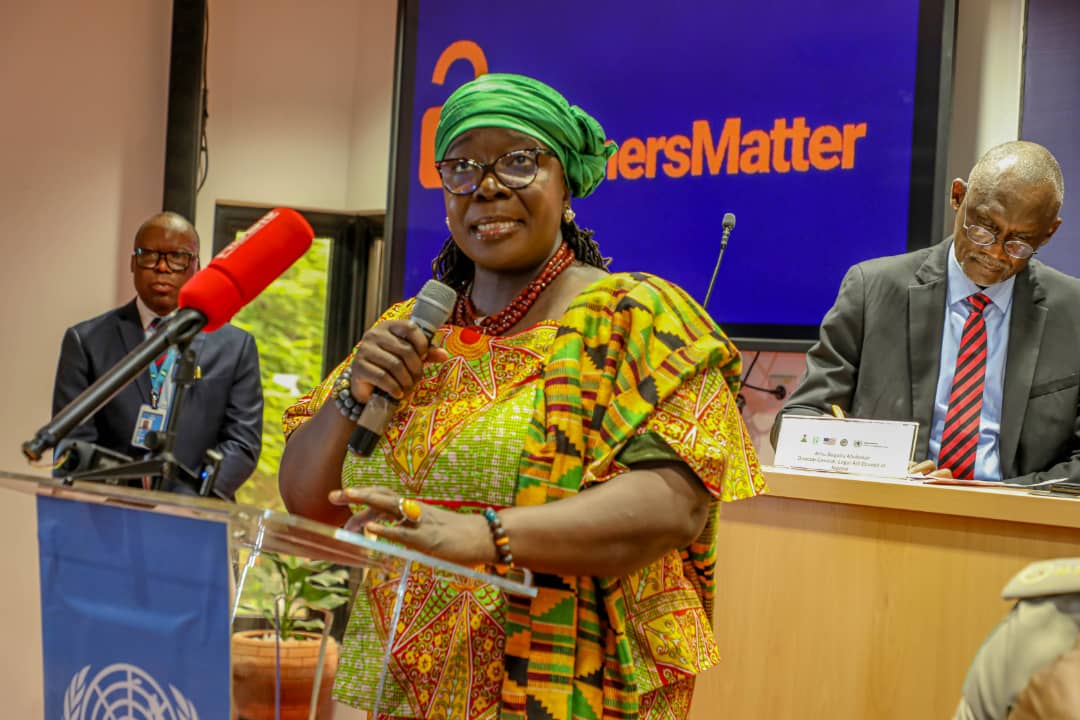
The United Nation has underscored the need to uphold the values of dignity, fairness and humanity on how all people are treated, and most especially those deprived of liberty.
This, the Acting-UN Resident/Humanitarian Coordinator in Nigeria, Ms Elsie Attafuah stated during one-day dialogue centered on UN Office on Drugs and Crime (UNODC)-National Human Rights Commission (NHRC) 2024 Prison Audit, in Commemoration of the 2025 Nelson Mandela International Day.
According to her, these values are at the heart of the United Nations Standard Minimum Rules for the treatment of Prisoners, known today as the Nelson Mandela Rules.
“This year’s commemoration holds deep relevance for Nigeria with an inmate population of over 81,000 as of July 2025, two-thirds of whom are awaiting trial. It is clear that advancing access to justice and improving correctional services is a shared priority, while the official capacity of Nigeria’s custodial centers stands at 50,153.
The current numbers show the pressing need for scalable, sustainable solutions that serve both justice and humanity, but numbers alone do not tell the full story. Globally, the United Nations continues to advocate for justice systems that are inclusive, restorative, and rights-based.
The UN Secretary-General, António Guterres, has consistently emphasized the importance of human dignity in justice systems. Through the work of UNODC, UNDP, OHCHR, and other agencies, the UN in Nigeria is supporting reforms that advance legal aid, alternative sentencing, and reintegration programs. These efforts aim to leave no one behind, including those behind bars,” he said.
The Acting UN Resident Coordinator in Nigeria, decried that with Nigeria’s inmate population of over 81,000 as of July 2025, two-thirds of whom are awaiting trial, it is clear that advancing access to justice and improving correctional services is a shared priority.
She however commended Nigeria for transforming and strengthening rehabilitation pathways.
“While the official capacity of Nigeria’s custodial centers stands at 50,153, the current numbers show the pressing need for scalable, sustainable solutions that serve both justice and humanity. But numbers alone do not tell the full story.
They invite us to ask: How can we create a correctional system that protects dignity, promotes rehabilitation, and reinforces the rule of law? This is where Nigeria has demonstrated meaningful leadership in transformation, expanding non-custodial measures, promoting prison audits, strengthening rehabilitation pathways, and institutionalizing accountability. These reforms embody a future-oriented approach, focused not just on managing incarceration, but on restoring lives. The Nigerian Correctional Service has been instrumental in this shift, from punitive detention to a rehabilitative model that supports reintegration and social cohesion,” she said.
The Acting UN Resident Coordinator has said that globally, the United Nations has continued to advocate for justice systems that are inclusive, restorative, and rights-based.
The Resident Coordinator of UNODC, Cheikh Toure, narrated the Nelson Mandela Rules forged in 2015 to have renewed UN’s Standard Minimum Rules for the Treatment of Prisoners.
“As we dive into these truths, remember: rebuilding lives and weaving them back into society isn’t just the warden’s burden, it’s our collective call to rally businesses, schools, and neighborhoods.
Together, we carve jobs and futures, arming the released with tools to reinsert himself to society as a law abiding citizen. Let’s weave a web of welcome that shatters prison walls, nurturing forgiveness for those chasing second chances.
This year’s global theme, ‘It’s still in our hands to combat poverty and inequality,’ together with UNODC’s campaign message #PrisonersMatter, serves as a powerful reminder that humane detention and effective rehabilitation are not just moral imperatives, they are essential to breaking entrenched cycles of marginalisation. By aligning correctional practices with international human rights standards and investing in the social reintegration of offenders, Nigeria takes meaningful strides toward achieving Sustainable Development Goal 1 on ending poverty and Goal 16 on promoting peaceful, just, and inclusive societies.”
He explained the rules forged rights-driven blueprint for corrections everywhere, rooting every moment of imprisonment in respect, responsibility, renewal and return to society.
“They entail openness, unbiased watchdogs and safeguards for the fragile, the United Nations Common Position on Incarceration, liberty’s loss must forever be our absolute last choice.These Rules pulse with demands for vigilant oversight to hold every facility accountable under unyielding, fair eyes. Boldly, Rule 83 commands routine checks by skilled and neutral guardians, Rule 84 builds strong self-policing within each prison’s core and Rule 85 empowers outside voices for surprise entries and urgent calls to change,” he stated.
On his part, Nigeria’s Minister of Interior, Dr Olubunmi Tunji-Ojo, who was represented by the Director, Joint Services, Ministry of Interior, Nasiru Usman, reaffirmed commitment to upholding the rights and dignity of all persons in prison custody, in line with the Nigerian Constitution and international obligations.
According to him, the celebration is in recognition of the former South African President’s contribution to culture of peace, freedom, justice, dignity and humanity, central to how we treat those behind bars.
“Today’s presentation of the prison audit report marks critical milestone and evidence-based assessments, which are essential for shaping effective and humane correctional reforms. Let me reaffirm government’s commitment to upholding the rights and dignity of all persons in custody, in line with the Nigerian Constitution and international obligations. The Nelson Mandela Rules which is the United Nations Standard Minimum Rules for the Treatment of Prisoners remains a central reference point for our correctional policies and reforms.”
The Interior Minister while commending the UNODC’s broader interventions in the nation’s correctional system, urged stakeholders to keep working together to transform Nigeria’s correctional system into one that reflects the values of justice and humanity.
“As we move forward, I urge sustained multi-sectoral collaboration. Correctional reform cannot be achieved by government alone. It requires coordinated action across civil society, the private sector, and legal institutions. We must invest more in rehabilitation programmes, community-based alternatives to incarceration, and reintegration support, i call on all stakeholders present to continue working together to transform our correctional system into one that reflects the values of justice and humanity. Let us treat every inmate not as a burden or statistic, but as a human being capable of reform and reintegration,” he said.
The Ministry remains fully committed to enhancing custodial conditions, promoting data-driven decision-making, digitizing inmate records, and ensuring proper classification and case management, especially for vulnerable groups such as women, juveniles, and persons with mental health challenges.
The highpoint of the event was the presentation of finding of the joint 2024 Prison Audit Report by UN Office on Drugs and Crime (UNODC)-National Human Rights Commission (NHRC), delivered by Head, Monitoring Department and Special Assistant to the Executive-Secretary, National Human Rights Commission (NHRC), Dr Benedict Agwu.
The findings of the audit revealed as of July, 2025, Nigeria’s custodial centres hold 81,686 inmates with 66 percent, approximately 53,713 inmates still await trial.
The figure reflect decline from 70 per cent in July 2024, underscored the impact of enhanced legal aid, expanded use of non-custodial options and improvements in case management.
Nelson Mandela International Day, is celebrated every 18th of July to ignite a shared vow to justice, dignity, and human rights, especially in the shadows of prisons.
Lateefah Ibrahim