Media professionals, climate advocates, and civil society leaders have called for stronger climate journalism, gender-responsive reporting, and greater public accountability as Nigeria prepares for deeper engagement in global climate governance processes.
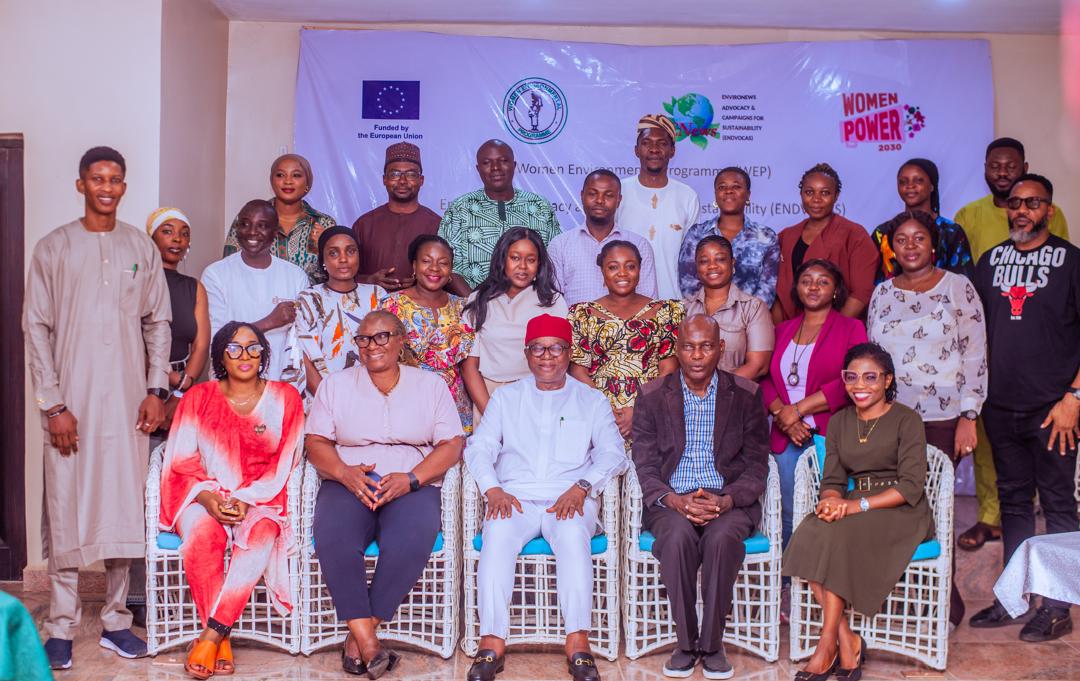
The call was made on during a two-day media training conference on “Climate Governance and Gender Mainstreaming in the UNFCCC and Minamata Conventions,” organised in collaboration with the Women Environmental Programme (WEP) held in Abuja.
Speaking at the opening ceremony, Publisher of EnviroNews Nigeria and Executive Director of Advocacy and Campaigns for Sustainability (Endvocas), Michael Simire described the conference as timely.
He stressed that climate impacts across Nigeria are becoming more severe and demand informed public engagement.
READ ALSO: Nigeria Urges Gender Inclusion in Global Energy Transition
According to Simire, journalists play a central role in shaping public understanding of climate change, environmental governance, and sustainability policies.
“Journalists are not just storytellers, they are agenda-setters, watchdogs, educators, and catalysts for change.
“When the media is empowered with knowledge, context, and clarity, society benefits from better governance, stronger advocacy, and more inclusive decision-making,” he explained.
Deepen Media understanding
Simire noted that the training aimed to deepen media understanding of the United Nations Framework Convention on Climate Change (UNFCCC) and the Minamata Convention on Mercury while strengthening gender-sensitive environmental reporting.
Simire emphasised that women and girls remain disproportionately affected by climate change and mercury pollution, yet continue to be underrepresented in environmental policy spaces.
“Integrating gender perspectives into climate and environmental reporting is not optional t is essential for justice, equity, and effective solutions,” he stated.
He commended WEP for prioritising gender inclusion in environmental governance and urged participants to utilise the training to strengthen investigative reporting, data-driven storytelling, and policy analysis.
Delivering the keynote address on behalf of the National Network Coordinator of Climate and Sustainable Development Network (CSDevNet), Doose Joanna Hannu said climate change is no longer a future threat but a present-day crisis affecting livelihoods and vulnerable communities across Africa.
“We are gathered because the future is being written in real time and the media will decide how that future is understood,” she said.
Hannu stressed that while governments negotiate policies and scientists generate data, the media remains responsible for translating technical climate issues into language the public can understand and act upon.
Founder and Global Lead, Women Environmental Programme, Dr Priscilla Achakpa, says the role of the media in addressing these challenges cannot be overstated.
She explained that the media serves as a bridge between scientific knowledge, policy discussions, and public understanding.
“As we engage over the next two days, I encourage us all to use this platform to build stronger partnerships, deepen our knowledge, and renew our commitment to environmental justice and sustainable development. Together, we can amplify the voices of those most affected, promote gender-responsive climate solutions,” she said.
Also speaking, former member of the House of Representatives, Sam Onuigbo, highlighted the importance of climate journalism in driving accountability and public mobilisation.
Counter Misinformation
According to him, climate reporting goes beyond covering international summits and weather conditions, encouraging journalists to investigate climate financing, expose environmental corruption, amplify vulnerable communities, and counter misinformation.
“Journalism is the bridge between scientific knowledge and public consciousness,” Onuigbo said.
He called on media organisations to invest in climate literacy, investigative reporting, and specialised environmental desks capable of sustaining informed public engagement.
Speaking on inclusion, he stressed the importance of women and youth participation in climate action, noting that both groups remain disproportionately affected by climate-related disasters despite playing leading roles in environmental advocacy and community resilience efforts.
He warned that delayed action and poor policy decisions which could undermine Nigeria’s climate progress, stressing that climate action now requires collective responsibility from government, the media, businesses, civil society, and citizens.
The conference brought together journalists, civil society organisations, climate advocates, and development stakeholders to strengthen media capacity for effective climate governance reporting and gender mainstreaming in environmental policy discussions.