


Nigeria’s Minister of Communications, Innovation and Digital Economy, Dr Bosun Tijani has highlighted the significance of Artificial Intelligence Powered telemedicine initiatives in bridging long-standing gaps and improving the quality of health services within the country.
Dr Tijani disclosed this at a Public and Private Stakeholders Engagement roundtable organised by the UNICCON Group in Abuja, Nigeria’s capital.
The engagement also saw the official Launch of MySmartMedic which is an integrated digital first, community powered health system that combines telemedicine, AI triage, community health workers(CHWS) and solar powered digital hubs.
The Minister lauded UNICCON group for the landmark initiative and expressed optimism that “the concept will close the gap between patients and doctors especially in regions where hospital infrastructure is strained.”
Dr Tijanni outlined how some of the ministry’s initiatives can help MySmartMedic flourish by providing digital solutions to rural and unserved communities.
He said; “How many of us were here for the 7-7-4 project? So what 7-7-4 project is saying is for technology like this to really have that transformation, we must have connectivity. And we still have about 20 million Nigerians that have no access at all to internet. So what project 7-7-4 is doing is, every local government should have at least an internet.
“And we’re leveraging on that, combining with NIGCOMSAT, we could basically beam internet to locations, because Nigeria is just one of the nations in West Africa that we have our own satellite. Now we can push capacity to that. So project 7-7-4 is actually going to facilitate use of this.”
The Minister said that, “The second part I would like to talk of is, when you’ve done this, there’s another aspect where you need to be aware of what the government is doing. Interoperability and data governance platform.
“MySmartMedic should integrate with our emerging national health information and efficient data, so that this will become efficient. But before we can do that, we must build a data exchange.”
He was represented at the event by the National Director of the National Centre for Artificial Intelligence and Robotics (NCAIR), Olubunmi Ajala.
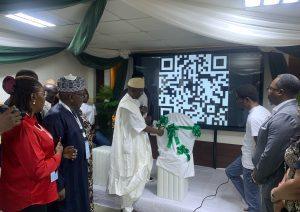
In his remarks the Chairman of UNICCON Group and founder of MySmartMedic, Dr Chuks Ekwueme explained how the initiative would improve the quality of health services despite the challenge of understaffed medical personnel.
“So we are taking the bull by the horn to say that it’s possible to bridge this gap of understaffed medical personnel from one to 4,000 to even the recommended one to 600 patients by digital healthcare assets.
“We’ve trained our AI model to understand the medical history record or pattern of Africans and can advise, can bridge that gap of advisory. Because every individual seek medical attention, not necessarily to get surgery or get medication.
“Sometimes it’s advisory. So we’re bridging that gap of advisory of about 60%, maybe 40% without humans. Human doctors on the platform that can consult from the comfort of their home.
“They can be in Sokoto and seeing a patient in Abuja. So the rural areas that, oh, nobody wants to go to the local or rural areas. Let the doctors remain in the urban centres, but yet they are carrying out what is needed,” Ekwueme explained.
He said; “The AI analyses the patterns, the history and predicts your well-being, predicts your health. We also included the hardware because no doctor will see a patient without knowing the vitals. So we have the hardware that can have a mini medical check-up like it’s enough to give prediction and predict your well-being.”
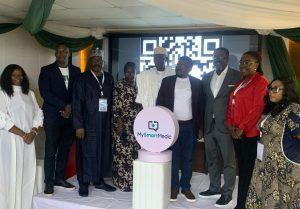
On connectivity to rural areas, Ekwueme said, “So this device, we have built it in such a way that there are native aspects of it, which generates from the device, the edge computing. So the device to somewhat, even you suddenly lose network, there is ability to still access or compute. Then we also have other enhanced connection using satellites whenever they have access to it.
“But at every point in time, they can access this digital solution pending whenever they have connectivity to update records that have been saved locally. So, but a bit as it may, if satellite, GSM are not working, satellite or cellular mode are working, then our team have a way of extracting this device, updating it and returning it back. So depending on the peculiarity of the region and the connection, so at least there can be miles of city away or like a short mile, some kilometre to gain connection and return back.”
The National Commissioner, National Data Protection Commission (NDPC), Dr. Vincent Olatunji represented by Alexander Onwe, said telemedicine holds transformative promise.
He said that innovation without trust leads to resistance while trust without innovation leads to stagnation.
Olatunji said that Digital health platforms—telemedicine, electronic medical records, AI-powered diagnosis, remote monitoring, and mobile outreach, have become essential tools in bridging healthcare access gaps. They offer speed, scalability, affordability, and reach.
“But with this transformation comes a profound responsibility: To ensure that the very data powering digital healthcare does not become a threat to the dignity, privacy, or security of the individuals we are trying to serve.
“As Africa accelerates digital health innovation, trust becomes the currency that determines adoption, sustainability, and long-term impact,” Olatunji said,