Lagos State Governor, Mr. Babajide Sanwo-Olu has launched a $25m education fund as part of renewed efforts to tackle the problem of out-of-school children in the state.
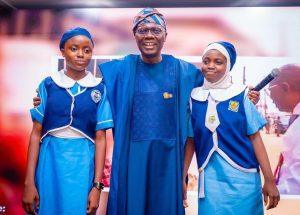
He also announced plans to issue an executive order prohibiting school-age children from roaming the streets during school hours.
The Governor, who was speaking during the launch of the Lagos Education Access Fund (LEAF) and the inauguration of the board of the Lagos State Universal Basic Education Board (LASUBEB) in Lagos, said that the proposed executive order would strengthen enforcement measures to ensure that children of school age remain in classrooms during official learning hours.
“No child should be seen outside between 8:00 a.m. and 4:00 p.m. unless there is a very good reason, that child is not in school,” he said.
According to him, the directive would also increase accountability among parents, communities and institutions responsible for ensuring that children attend school regularly.
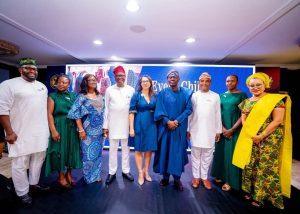
The Governor also announced the launch of the Lagos Education Access Fund, a $25 million outcomes-based financing initiative aimed at improving both access to education and learning results across the state.
He said the programme, implemented in partnership with the Education Outcome Fund (EOF) and other development partners, would support more than 200,000 children statewide.
Sanwo-Olu explained that the initiative would enrol over 50,000 out-of-school children aged six to 14 into the formal education system through targeted community outreach and interventions designed to remove barriers to school attendance.
In addition, about 150,000 pupils already in school will benefit from programmes aimed at strengthening literacy and numeracy outcomes to ensure that classroom attendance translates into meaningful learning.
“This initiative is not just about funding education; it is about ensuring every investment translates into real learning, real opportunity and measurable outcomes for our children,” he said.
The Governor noted that LEAF builds on Project Zero, an intervention introduced in 2021 to address the challenge of out-of-school Children in Lagos.
According to him, the programme has already helped identify, track and enrol more than 36,000 children back into formal education across the state.
Sanwo-Olu added that beyond returning children to school, the state had also supported more than 360 parents and guardians with vocational training in areas such as fashion designing, soap making, catering and hairdressing to improve family livelihoods and sustain school attendance.
He further highlighted his administration’s investments in education infrastructure, stating that more schools and classrooms had been built in the last seven years than were delivered in the previous two decades.
“In one school complex alone, we are handing over 35 schools with capacity for close to 20,000 students,” the Lagos Governor stated.
Sanwo-Olu emphasised that meaningful progress in education requires collaboration between government, communities and development partners.
He thanked the Children’s Investment Fund Foundation, the Federal Ministry of Education, the Ministry of Foreign Affairs of Japan and the EOF for supporting Lagos in advancing education reforms.
Earlier, the Chief Executive Officer of the Education Outcome Fund, Amel Karboul, described Lagos as a model of bold leadership for adopting an accountability-driven education financing system.
Karboul, a former Tunisian Minister, said governments often spend heavily on education inputs such as buildings and materials but fail to achieve real outcomes like improved learning and retention.
“The most important infrastructure any nation can build is educated minds,” the Chief Executive Officer emphasised.
She explained that EOF was created to enable governments and partners to pay for measurable results rather than simply funding services or materials.
Karboul added that Lagos was not merely launching a programme but creating a blueprint that other states and countries could replicate in reforming education financing.
At the event, Sanwo-Olu also inaugurated the LASUBEB board, appointing Hakeem Shittu as chairman.
Other members of the board include Saheed Ibikunle, Sijuade Idowu-Tiamiyu, Sherifat Adedoyin, Owolabi Falana, Adewale Babatunde, Babatunde Williams and Hakeem Lamidi.
In his acceptance speech, Shittu pledged that the board would expand access to education, strengthen school governance and ensure that public spending delivers measurable learning outcomes.
“It is not enough for children to sit in classrooms. They must learn. We will support LEAF implementation and ensure education investment produces measurable outcomes,” he said