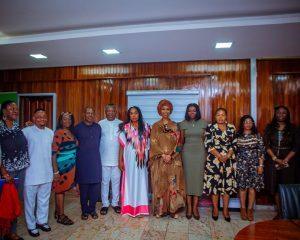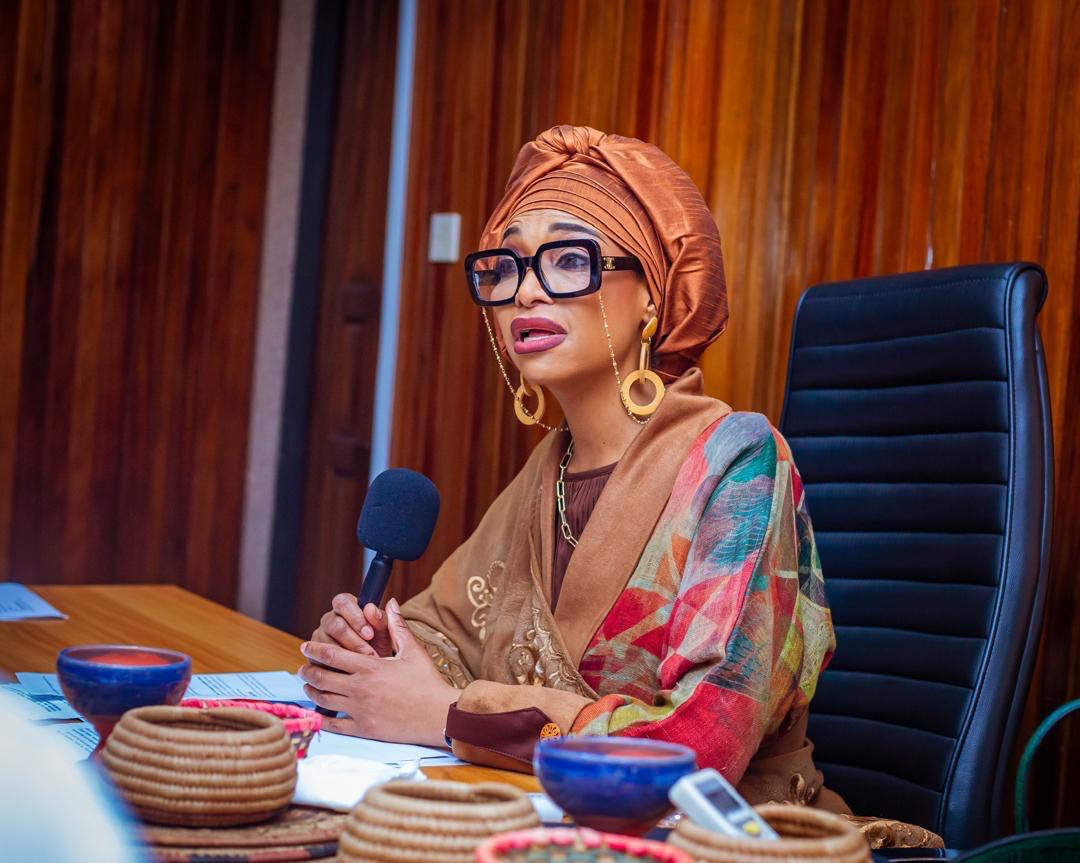
The Nigerian Minister of Art, Culture, Tourism, and Creative Economy, Hannatu Musawa, has inaugurated four drafting committees to develop policies and financing frameworks aimed at strengthening Nigeria’s arts, culture, tourism, and creative sectors.
The committees include policy and strategy, programmes and implementation, stakeholder engagement, and monitoring and evaluation to design policy and financing frameworks for Nigeria’s arts, culture, tourism, and creative economy.
Speaking during the inauguration ceremony held in Abuja, Musawa said the initiative was part of efforts to reposition the creative economy as a major driver of national development despite its current contribution of about 2.3 percent to Nigeria’s Gross Domestic Product, GDP.
She noted that the sector continues to face challenges, including fragmented governance structures, weak enforcement of intellectual property regulations, and limited access to financing.
The Minister explained that under President Bola Tinubu’s Renewed Hope Agenda, the Ministry was targeting a significant expansion of the sector’s economic impact, with projections of a ₦100 billion contribution to GDP and the creation of two million jobs for Nigerian youths by 2030.
READ ALSO: Minister Highlights Nigeria’s Commitment to ECOWAS at VON Forum
She, however, charged members of the committees to approach their assignment with a strong sense of national responsibility.
She said, “You are charged with reviewing our existing institutional architecture and proposing a coherent governance framework that eliminates fragmentation, clarifies responsibilities, and positions the creative economy as a pillar of national development. The creatives, entrepreneurs, and young Nigerians who rely on this sector deserve nothing less than your utmost dedication.
The Minister added that the committees were expected to submit their terms of reference alongside a 90-day work plan by April 21, 2026, while quarterly public briefings will be held to ensure transparency and accountability.
She also expressed appreciation to development partners, including the Nigerian Economic Summit Group, NESG; UNESCO; and the United Nations Development Programme, UNDP, for their technical support toward the initiative.
In his remarks, the Chief Executive Officer of the Nigerian Economic Summit Group, Dr. Ikenna Nwosu, described the creative economy as a critical growth frontier capable of driving innovation, job creation and export expansion.
“The creative economy is a powerful economic frontier. Across the world, nations are leveraging their creative industries to drive innovation, create jobs, expand their exports, and strengthen their global influence. Nigeria, with its immense talent, rich heritage and global cultural footprint, is uniquely positioned to lead this transformation on the African continent,” he said.
Nwosu emphasised that the newly inaugurated committees must go beyond advisory roles to produce practical, evidence-based strategies that unlock investments and drive implementation.
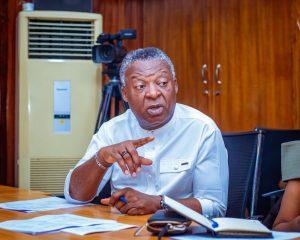
He identified key constraints affecting the sector to include funding gaps, weak intellectual property protection, infrastructure deficits and policy fragmentation, urging the committees to develop clear priorities, timelines, financing strategies and implementation responsibilities.
According to the Ministry, the committees will work simultaneously across key focus areas including governance reform, development of a comprehensive national creative-economy policy, financing mechanisms to bridge investment gaps, and planning for an international creative-economy summit to position Nigeria as a global investment destination.
The Ministry reiterated its commitment to working with stakeholders to develop policies that will unlock investments, stimulate innovation and support Nigeria’s economic diversification through the creative industries.