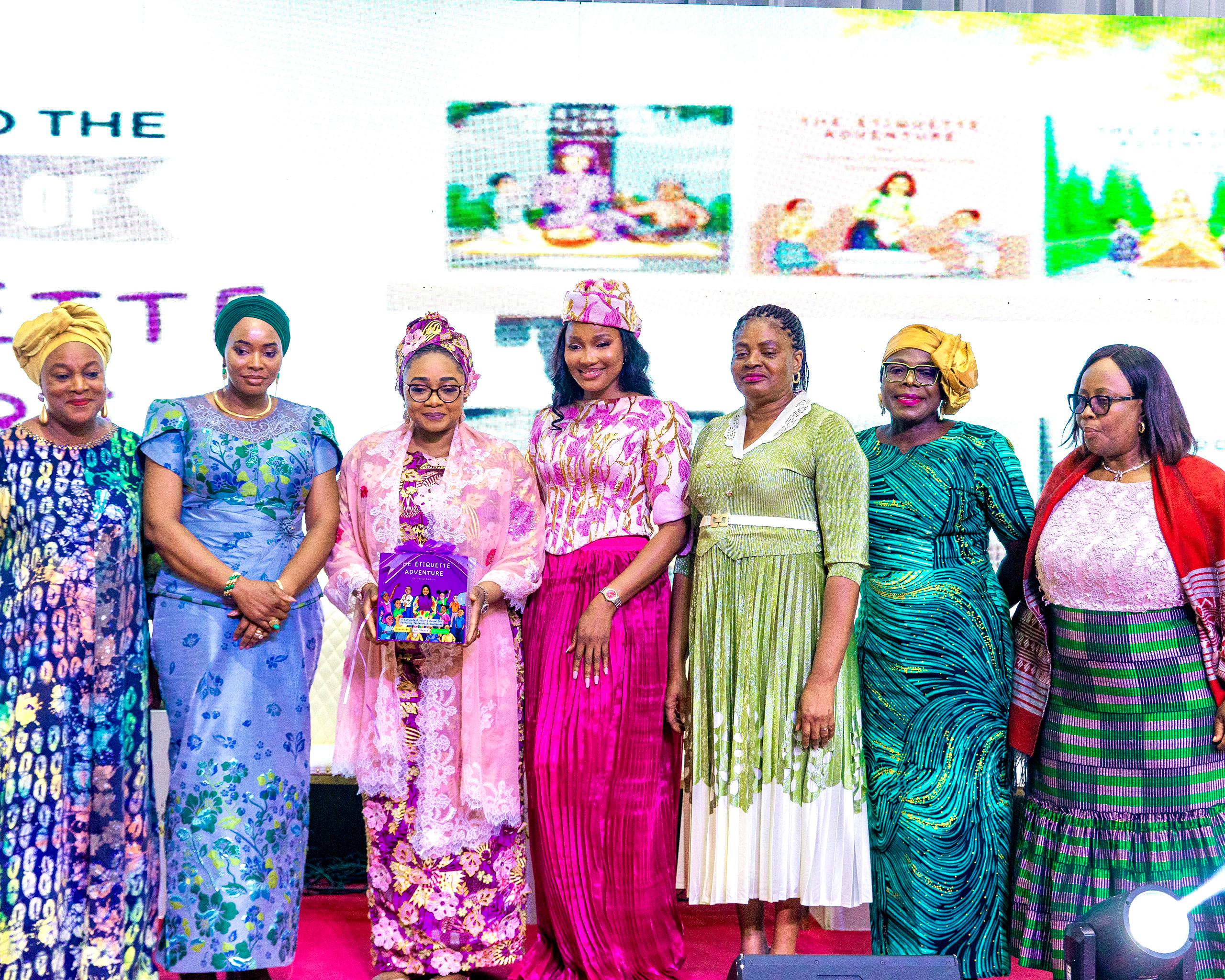
Stakeholders at the National Care Summit 2026 have called for structured investments in women, children and caregiving systems as pathways to national growth.
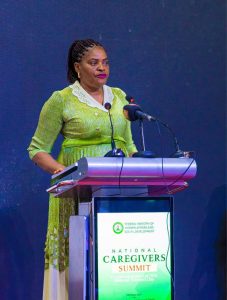
Permanent Secretary, Ministry of Women Affairs and Social Development, Mrs Nko Asanye Esuabana, speaking at the Summit organised by the Federal Ministry of Women Affairs and Social Development in collaboration with UN Women, UNICEF, Caring Africa and Etiquette Africa Initiative said the summit and activities marking Children’s Day 2026 were designed “to sensitise the Nigerian public and entire global world that we really love our children.”
Speaking on caregiving and the emerging care economy, she stressed that caregiving must no longer be viewed solely as unpaid domestic labour.
“Everyone might think that it is just a woman’s job, from the pregnancies to the lactating, making sure that she looks after the child, to grow, to go to school, and to come and play football the way they have done this morning, but we are going to take this as a serious source of economy to rake revenue for us into the future.”
She described care investment as “the formula to unlocking Nigeria’s workforce, families, and economic growth”, noting that about 47 per cent of Nigeria’s population are children.
Esuabana highlighted the indispensable role of women across sectors and communities.
“Everywhere you look, women are at the forefront, leading with excellence and compassion. In Nigeria, women give every single day. They give their time. They give strength. They give skills. They give resilience.”
According to her, organised support systems for women and caregivers would deliver measurable national benefits.
“When women are organised into structured groups and supported with financial leadership, saving platforms and enterprise pathways, the results become measurable and durable,” she stated.
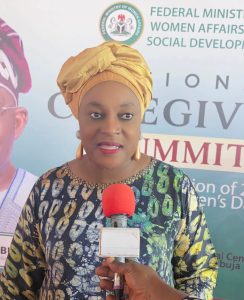
In a goodwill message, Communications Specialist Eugenia Abu described the summit as a defining moment for Nigeria’s social development architecture.
“What a time it is to be alive when the National Care Summit is taking place in Nigeria. There is no better time to look at the care issues that we have.” She said
Abu commended the development of a national care policy framework and linked caregiving to values, etiquette and intergenerational responsibility.
“Between the national care policy and also etiquette”, she said, society must intentionally raise children with discipline, empathy and responsibility.
Drawing lessons from Malta’s ageing and care systems, she noted that societies that prioritise care infrastructure create stronger support systems for both children and older persons.
“Now we have an ageing policy. Now we have a care summit. No better time,” she lauded.
On the economic impact of caregiving, Abu said women already shoulder the bulk of unpaid domestic work globally and that formalising caregiving structures could significantly strengthen Nigeria’s economy.
“You know, a lot of the time most international organisations will say across the world, women work at least 60% of the work around the house, and it’s unpaid. If we now begin to translate that into caregiving, you can imagine what that means because we already have experience.”
While linking the summit to President Bola Tinubu’s declaration of 2026 as the Year for Family and saying the initiative “galvanises everything else”, Abu praised the Ministry of Women Affairs for creating platforms for caregivers and advancing conversations around fair wages and structured support.
“As a people, we care for each other, and so it’s powerful what the Ministry of Women Affairs has done to open this door. I believe that this is the door opener for many great things to come,” she said.
Reviewing “The Etiquette Adventure Series”, unveiled at the event, Director of Chalkwork School, Olutara Ogunwumiju, described the six-volume children’s series authored by Etienying Akpan Usong as a practical contribution to character education and social refinement.
“What I particularly appreciate about The Etiquette Adventure is that it presents etiquette not as a performance or simply a set of rules, but as an expression of care,” she said.
“True etiquette teaches children to care about how their words, actions, and behaviour affect the people around them.”
She noted that the books teach children “respect, kindness, consideration, and proper behaviour” through relatable stories set across Nigerian cities, including Abuja, Uyo, Enugu, Kano, Bauchi and Lagos.
“In today’s world, where many children are exposed to limited behavioural guidance and social values, this series is a timely and valuable contribution to character education,” Ogunwumiju added.
In an exclusive interview with Voice of Nigeria, author of “The Etiquette Adventure”, Etienying Akpanusong, said the summit merged conversations on the care economy with etiquette education for national development.
“The Care Summit is a fusion of the promotion of the care economy and etiquette education in Nigeria,” she said.
According to her, “The Etiquette Adventure” series is being positioned for possible adoption into the national curriculum for primary schools.
“The Etiquette Adventure is a book series that I have written, positioning it for possible adoption as a textbook for the national curriculum,” she explained.
The books, she said, are aimed at teaching “proper, polite behaviour, helping them build confidence in themselves, grooming them in effective communication, building social skills, emotional intelligence, and so on”.
Akpanusong, who is also the Founder of Etiquette Africa Initiative and ETI Global Academy, added that the fictional series was inspired by real-life experiences from Etiquette Africa Initiative tours across the country and designed to help “build a better, more refined society for Nigeria and Africa at large.

Stakeholders say the National Care Summit 2026 has positioned caregiving, etiquette education and family-centred development at the heart of Nigeria’s social and economic transformation.