


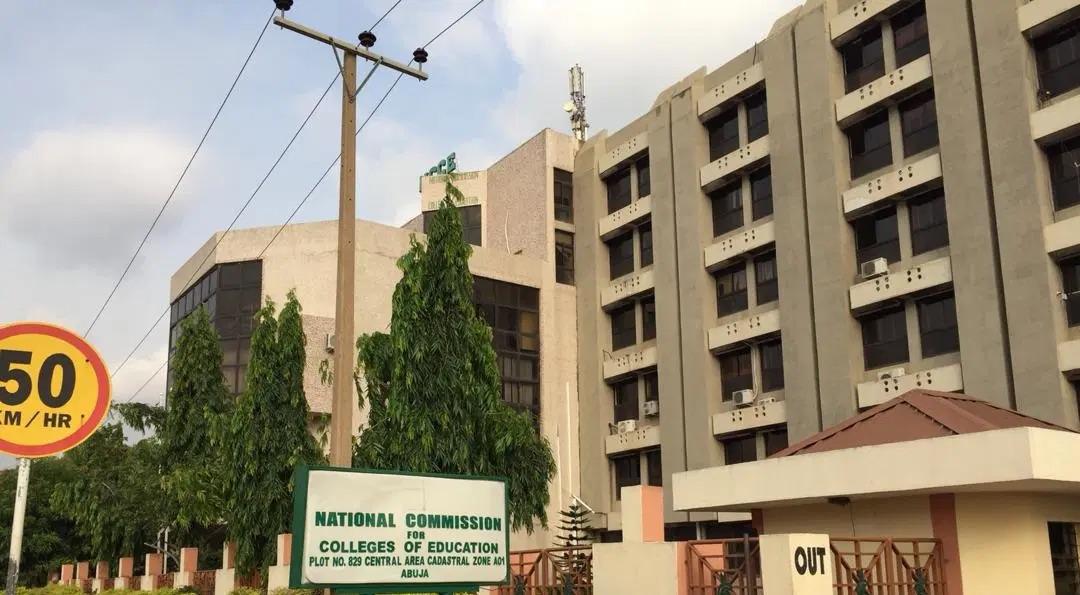
The National Commission for Colleges of Education (NCCE) has commenced a comprehensive review of the curriculum for colleges of education, as well as the 2020 Edition of the Nigeria Certificate in Education (NCE) Minimum Standards, to enhance the quality of teacher education in Nigeria.
The Executive Secretary of NCCE, Professor Paulinus Chijioke Okwelle, speaking during the flag-off of the review exercise at Nasarawa College of Education, Akwanga, said the initiative would address identifiable gaps in line with emerging national priorities, global education trends, and the practical realities confronting teacher preparation institutions across the country.
According to him, the review process has brought together a broad spectrum of stakeholders, including teacher educators, policymakers, practitioners, and development partners, whose expertise will enrich the outcomes.
Okwelle emphasised that the new curriculum framework emerging from the review would integrate Artificial Intelligence (AI) and related digital competencies, in line with global trends in education and the future of work.
“The revised NCE Minimum Standards will embed AI awareness, ethical use of emerging technologies, data literacy, and adaptive digital pedagogy to ensure that future teachers are not only consumers of technology but effective facilitators of AI-enabled learning.
“This forward-looking approach will position Nigerian teachers to operate confidently in technology-rich classrooms and align teacher preparation with international best practices and national development aspirations,” he stated.
Also Read: TETFund Reaffirms Commitment to Modernising Nigeria’s Higher Education
He recalled that the National Policy on Education (2013, revised) establishes the NCE as the minimum qualification for entry into the teaching profession at the basic education level in Nigeria, stressing that the relevance, quality, and effectiveness of the NCE Minimum Standards are of paramount national importance.
“The goal of the NCCE is to produce Minimum Standards that are academically robust, practically implementable, globally relevant, and responsive to the needs of contemporary classrooms.
“Over the last few years, the NCCE has pursued a deliberate and far-reaching reform agenda aimed at strengthening teacher education and repositioning Colleges of Education for relevance, quality, and sustainability.
“Central to this effort has been the successful implementation of major policy reforms, most notably the operationalisation of the Dual-Mode mandate.
“Under this framework, Colleges of Education are now legally empowered to award Bachelor’s Degrees in Education in their own right, without affiliation to universities.
“This landmark reform aims to expand access, enhance institutional autonomy, improve enrolment, and restore public confidence in Colleges of Education as credible and competitive centres for professional teacher preparation. Against this backdrop, the review of the NCE Minimum Standards is both apt and timely,” he stated.
Okwelle commended the Executive Governor of Nasarawa State, Engr. Abdullahi Sule, for his efforts in promoting teacher education and for his presence at the flag-off of the review exercise.
He noted that the future of Nigeria’s schools hinges on the quality of its teachers, while urging stakeholders to engage constructively and collaboratively during this critical exercise.
He emphasised that the success of the review would significantly enhance the quality of teachers produced and, ultimately, the quality of foundational education delivered to Nigerian children, thereby securing the nation’s future.