The Nigerian Air Force 115 Special Operations Group, 115 SOG of the Air Component of Operation Delta Safe, (OPDS) has reaffirmed its commitment in safeguarding Nigeria’s critical oil and gas infrastructure across the Niger Delta, South-South Nigeria.
The Commander of the 115 Operations Group, Group Captain Abdulafeez Opaleye made this known when a team of Defence Correspondent on Media Tour visited the Unit Base in Port Harcourt.
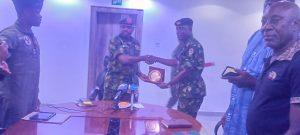
Opaleye said that “the is tasked with battlefield mobility, force protection, close air support, and interdiction missions aimed at disrupting illegal oil bunkering, pipeline vandalism, and other forms of economic sabotage”.
According to him, the Unit conducts air operations jointly with surface forces to deny oil thieves freedom of action.
“These efforts have consistently shaped the operational theatre, compelling saboteurs to abandon numerous illegal refining sites” he added.
He noted that between January 25 and May 25, 2025, the 115 SOG conducted 172 missions, accumulating a total of 268 hours and 40 minutes of flight time, while consuming 87,938 litres of JET-A1 fuel.
“The operations resulted in the destruction of 49 illegal cooking tanks, 16 boats, and 20 reservoirs and drums used in crude oil theft”, he said.
According to him, the unit, as the air element of OPDS, also deploys ground troops in collaboration with other sister security agencies for Internal Security operations within the state.
He noted that the operations serve as a standby force to combat criminal activities in the state and surrounding areas.
“Our internal security teams are routinely deployed to both known and suspected hotspots based on intelligence, and their operations are characterized by fluidity, flexibility, and intelligence-driven decision-making”, he said.
Giving a vivid x-ray of their operations on how targets are identified and selected for airstrikes the Group captain noted that some of these locations are initially scanned, and even when access is difficult due to potential resistance or ambushes, our aircraft can reach and strike those targets with accuracy.
He added that “using onboard surveillance cameras, we can identify and measure targets precisely to minimize collateral damage.”
According to him, the end result of the operation is to protect oil and gas infrastructure without causing additional harm or damage.
He noted that they enjoy flying more at night because it’s a lot easier for them to operate at night and more effective not minding the challenges of numbers of platforms and all that.
Olusola Akintonde