


Nigeria is advocating for effective labour migration governance through a collaborative approach that prioritises the rights and dignity of migrant workers.
The Chairman/CEO of the Nigerians in Diaspora Commission (NiDCOM), Abike Dabiri-Erewa, stated this in Abuja while speaking at a workshop on the Trade Union Migration Forum.
Dabiri-Erewa said Nigeria would tap into the knowledge and experiences of its diaspora communities to help build effective labour migration policies.
“As we work towards aligning with the ECOWAS common approach and national migration frameworks, it’s crucial to leverage the experiences and expertise of diaspora communities. By fostering strong partnerships and knowledge-sharing, we can promote safe, orderly, and well-governed labour migration that benefits both individuals and the region,” Dabiri-Erewa.
She suggested three main areas of partnership: Giving Nigerians in the diaspora a role in shaping migration policies, strengthening cooperation among ECOWAS countries to better protect migrant workers’ rights, and providing training for journalists and other stakeholders to improve how migration issues are reported.
Dabiri-Erewa stressed that the movement of workers is a reality that requires collective responsibility.
“It behoves stakeholders to ensure that this movement is safe, orderly, and regular. It is to ensure that labour migration works for the workers, not just for the economy,” she stated.
Director of the ILO Country Office for Nigeria, Ghana, Liberia, Sierra Leone, and Liaison Office for ECOWAS, Dr. Vanessa Phala, noted that labour migration remains a significant phenomenon within the ECOWAS region, driven by economic disparities and the search for employment opportunities.
Phala said Nigeria plays a central role as a country of origin, a key transit hub, and an important destination for migrant workers.
“The ECOWAS Free Movement Protocol, which allows citizens of ECOWAS member States to travel, reside, and establish businesses without visas, exemplifies the region’s commitment to fostering integration and economic cooperation.
“The Protocol is particularly significant for Nigeria, ECOWAS’ largest economy and population centre. Yet, like several member states, Nigeria continues to face challenges in implementation, ranging from administrative bottlenecks to gaps in stakeholder coordination,” Phala said.
Phala emphasised that addressing these challenges requires popularising the Protocol, embedding it into Nigeria’s national labour migration frameworks, and strengthening the capacity of trade unions, employers, and government institutions.
This, she noted, will be critical to realising the full benefits of free movement for both Nigeria and the region.
On his part, NLC’s Focal Person on Migration, Comrade Eustace James, said the workshop was designed to improve the knowledge of trade union members on migration issues.
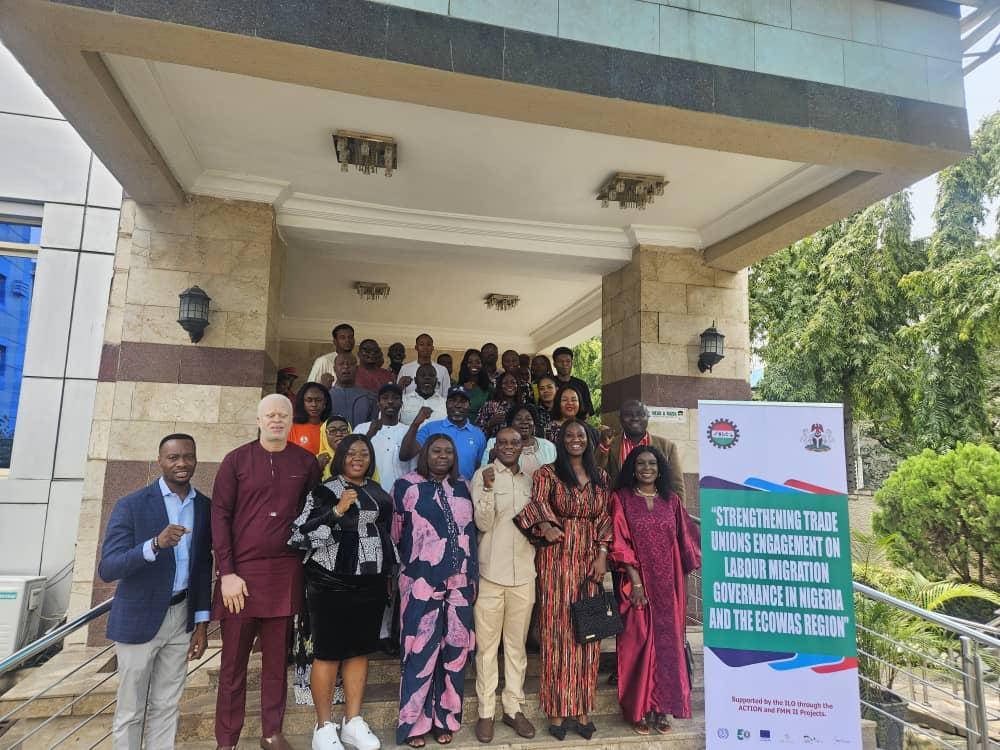
The three-day workshop, themed “Strengthening Trade Unions‘ Engagement on Labour Migration Governance in Nigeria and the ECOWAS Region,” was organised by the Nigeria Labour Congress (NLC) with support from the International Labour Organisation (ILO) through the Action and FMM2 Projects.