

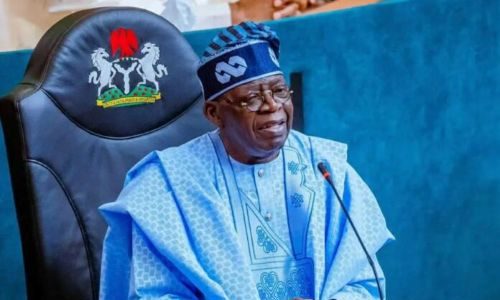
The Presidency has disclosed that President Bola Tinubu’s international diplomatic engagements have attracted over $50 billion in Foreign Direct Investment (FDI) to Nigeria since he assumed office two years ago.
Senior Special Assistant to the President on Foreign Affairs and International Relations, Ambassador Sola Enikanolaye, made this known in a statement while giving a mid-term assessment of the President’s foreign policy achievements.
Enikanolaye, who disclosed that the President has embarked on 36 foreign trips since May 29, 2023, listed the countries across Africa, Europe, Asia, the Middle East, and the Americas.
These countries include Benin Republic, Chad, Ghana, Senegal, Guinea, Equatorial Guinea, Kenya, Ethiopia, South Africa, Tanzania, France, the United Kingdom, Germany, the Netherlands, the Vatican, the United States, Brazil, Qatar, the UAE, Saudi Arabia, India, and China.
He added that several additional visits have been approved for the rest of the year, all aimed at engaging, deepening, and strengthening Nigeria’s bilateral relations with other nations.
He stated that these diplomatic efforts have not only enhanced Nigeria’s profile globally but have also translated into tangible economic gains.
Read Also: Nigeria Seeks $25 Billion Investment For European Gas Pipeline
He outlined Investments attracted through these foreign engagements to include commitments from Sunil Bharti, ExxonMobil, TotalEnergies, Indorama, Jindal Steel, Coca-Cola, Apple, Maersk, Arise, Shell, Afrexim Bank, companies from the Netherlands, and a waste-to-wealth industrial facility in Lagos.
“The total value of these commitments amounts to over $50 billion,” he revealed.
Enikanolaye added that the inflows are a result of the administration’s economic reforms and effective foreign policy, noting that while the financial figures are significant, the skills and technology transfer that come with them are equally important but cannot be quantified.
He also highlighted Nigeria’s relationship with China, which he said has been elevated to the level of a Comprehensive Strategic Partnership under Tinubu’s administration.
This relationship includes key infrastructure projects, currency swap agreements, and other collaborative efforts.
On climate diplomacy, Enikanolaye noted that Nigeria has remained active in global climate change conversations.
He lauded President Tinubu’s consistency in speaking on the country’s environmental concerns, such as rising sea levels, the shrinking of Lake Chad, unpredictable rainfall, flash floods, and threats to food security.
“The President has also continued to advocate for increased access to climate finance through mechanisms being developed internationally.”
The Presidency also announced that Nigeria has gained 16,300 square kilometers of maritime territory under the United Nations Convention on the Law of the Sea, expanding the country’s continental shelf deep into the Atlantic Ocean.
Enikanolaye described this as a major achievement that offers enormous potential for maritime security and the exploitation of blue economy resources.
Dismissing criticism over the President’s frequent international travels, Enikanolaye said such engagements are vital to national development and global positioning.
He expressed optimism that the outcomes of the President’s foreign trips will be fully implemented to positively impact the lives of Nigerians.
“It is therefore ludicrous for anyone to criticize the participation of Mr. President at various international engagements, whether statutory or invitational. What is needed now is the full implementation of the positive outcomes of these foreign engagements, so their benefits are felt more directly in the lives of the Nigerian people,” he added.