


Glory Ohagwu, Abuja
Nigeria’s Minister of Foreign Affairs, Ambassador Yusuf Maitama Tuggar, has called for a decisive shift from aid-driven development to investment-led growth, anchored on inclusive economic diplomacy that empowers women, youth, and marginalised groups.
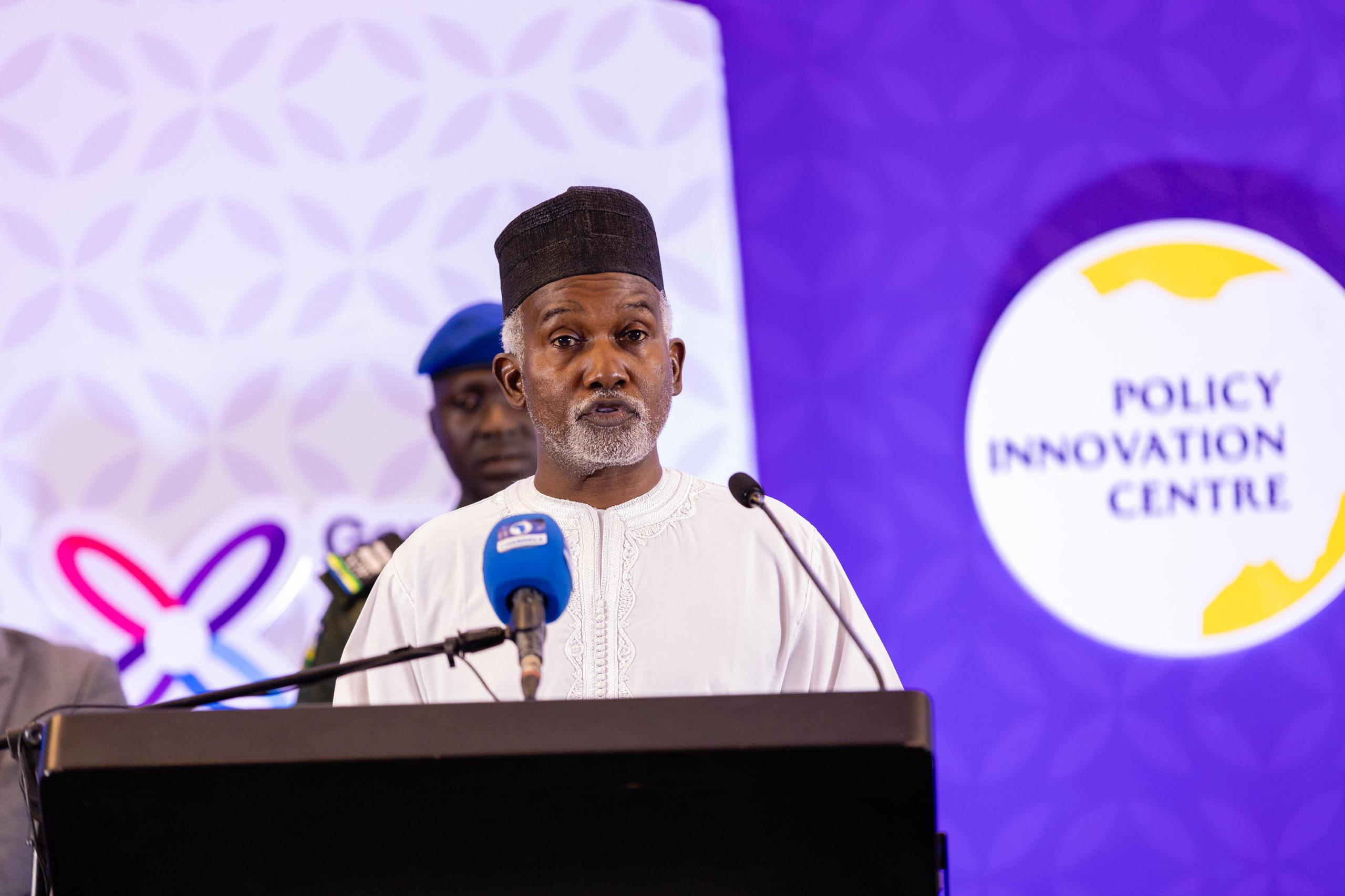
Delivering a keynote address at the Policy Innovation Centre, 2025 Gender Summit in Abuja, Tuggar praised organisers for convening the dialogue at a “a pivotal point in our continent’s development.”
“This High-Level Plenary has clear goals: to show how economic diplomacy can drive inclusive growth by removing barriers for women, youth, and marginalised groups; to shape a Gender and Inclusion Framework for Economic Diplomacy; to promote stronger collaboration among governments, business, and civil society; and to present practical recommendations that strengthen governance and empower vulnerable communities,” he said.
Africa’s Strengths
The Minister, highlighting Africa’s strengths, noted its combined GDP of $2.8 trillion and projected population of 2.5 billion by 2050, but warned that these resources could not be fully harnessed without inclusion.
“Nigeria, one of Africa’s largest economies, with a GDP of N372.8 trillion, approximately $243 billion USD, occupies a strategic position in shaping this trajectory,” Tuggar explained.
He cited structural barriers, including Africa’s low intra-continental trade of only 18per cent compared to Asia’s 59per cent and Europe’s 69 per cent.
He also noted education gaps, pointing to UNESCO’s 2024 reports, which revealed that “7.6 million Nigerian girls are still out of school, with the Northwest and Northeast accounting for nearly half of that number.”
On governance, Tuggar decried women’s underrepresentation, saying: “African women hold just 27.3% of parliamentary seats, and fewer than a quarter of executive positions in the banking and finance sector.
In Nigeria, the percentage of women in the National Assembly is even lower, with just 4.2% representation.”
Gender Equity
The Minister cited a 2019 Council on Foreign Relations report that forecast Nigeria’s GDP could rise by 23 percent; about $229 billion, if women participated equally in the economy.
“The data further reminds us of a simple truth: growth without inclusivity is fragile and prosperity without equity is unsustainable,” Tuggar cautioned.
Tuggar said Nigeria has recalibrated its foreign policy through President Bola Tinubu’s 4-D Diplomacy Agenda, centred on development, Demography, Diaspora, and Democracy.
“This framework reimagines Nigeria’s global engagement, ensuring each pillar prioritises the inclusion of women and youth,” the Minister explained.
Aligning to the vision, he said Nigeria has launched the Regional Partnership for Democracy (RPD), a flagship initiative promoting stronger institutions, accountable governance, and equitable participation of women and youth.
Ambassador Tuggar recalled Nigeria’s leadership at the West Africa Economic Summit (WAES) in Abuja earlier this year, where heads of state and industry leaders resolved to prioritise women’s economic empowerment saying : “The summit resolved to create an enabling environment for women’s economic empowerment, dismantling barriers to finance, markets, and cross-border opportunities, while mainstreaming gender-responsive policies across all regional integration efforts.”
While celebrating milestones such as the African Continental Free Trade Area (AfCFTA) and the Pan-African Payment and Settlement System (PAPSS), Ambassador Tuggar cautioned that these systems could entrench new inequalities.
“The very systems designed to boost continental trade can become new barriers if women lack access to Development Finance Institution funding, financial literacy, and market networks,” he warned. “AfCFTA must not be a club for the few — it must be an open door for women, youth, and marginalised groups who are the true drivers of Africa’s markets.”
The Foreign Minister also spotlighted Nigerian women breaking barriers in finance, with several serving as CEOs of major banks such as Access, First Bank, GTCO, and Zenith.
“Our financial institutions have expanded across the continent and beyond, financing cross-border trade, enabling digital banking, and laying the arteries of integration. Increasingly, Nigerian women are breaking barriers in this sphere… yet there is room for improvement, and this trend should be accelerated,” he observed.
Ambassador Tuggar pointed to Nigeria’s commitment to equity through institutional reforms.
“In 2012, the Central Bank introduced the Nigerian Sustainable Banking Principles, which recommend that at least 30 per cent of board seats and 40 per cent of management positions in Nigerian banks be reserved for women. It was a clear signal that sustainability in finance must also mean inclusion,” he said.
He added that the National Gender Policy (2021–2026), the National Women’s Economic Empowerment Policy and Action Plan (2023–2028), and the INEC Gender Policy (2021–2025) collectively embed gender mainstreaming across governance, finance, and politics.
On youth inclusion, he listed Nigeria’s initiatives: the Technical Aid Corps deploying young professionals abroad, the Nigeria Youth Investment Fund for entrepreneurs, the new Student Loan Act expanding access to education, and the Three Million Technical Talent (3MTT) programme training young Nigerians in AI, cybersecurity, and digital skills.
Ambassador Tuggar similarly stressed that sustainable transformation must be driven by the private sector, adding that investment should target high-growth informal sectors such as artisanal trades, food processing, and the creative industry.
“True economic transformation depends on inclusive value chains, driven by the private sector. This means moving beyond aid to investment that channels capital into women- and youth-led enterprises,” he said.
The Minister concludes, made a clarion action call for Africa’s leaders.
“We must all work towards increasing and promoting the meaningful participation of women in politics. A 4.2% share of parliamentary seats is unacceptable,” he declared.
He also urged commitment to the proposed Gender and Inclusion Framework for Economic Diplomacy (GIF-ED) and the Purple Book of Action Plans 2025.
“Equity is not optional. Inclusion is not charity. They are the foundations of a prosperous, stable, and sustainable Africa,” Tuggar affirmed.
The Foreign Minister reaffirmed that Nigeria remains committed to leading Africa in advancing inclusive diplomacy and building an economic future that benefits all.