


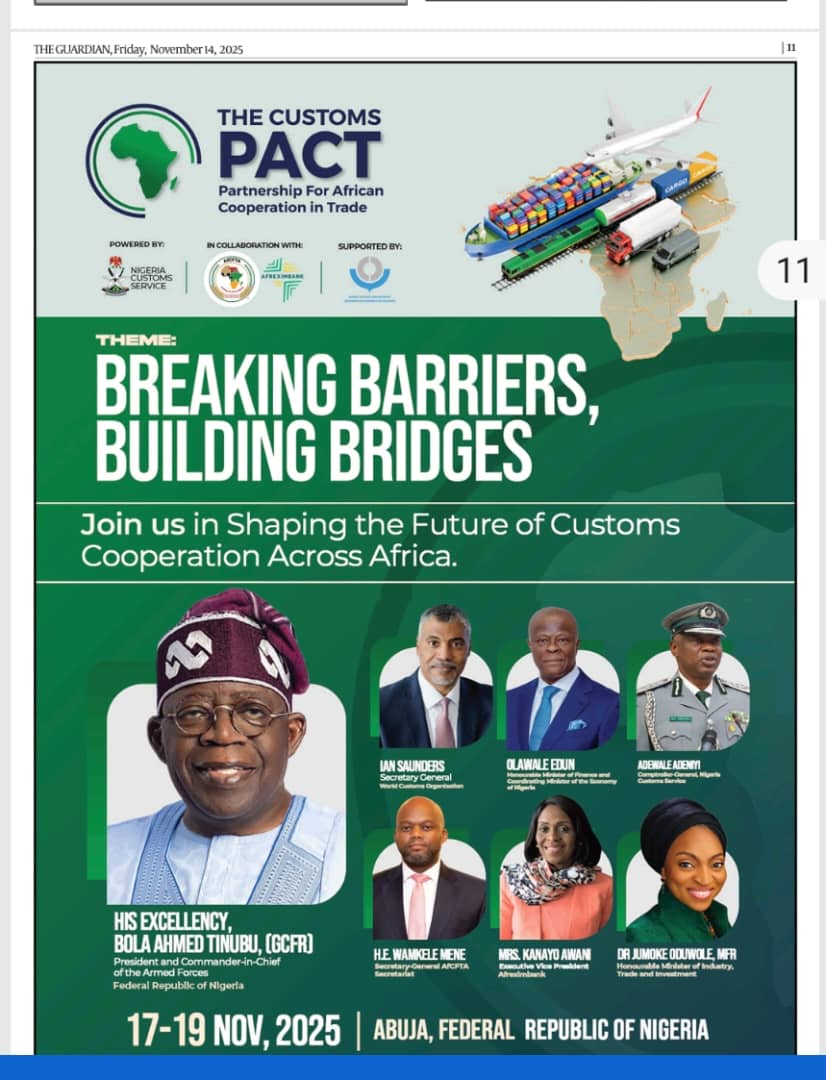
Nigeria is championing a new Partnership for African Cooperation in Trade, aimed at strengthening collaboration among customs administrations to enhance trade efficiency and drive deeper economic integration across the continent.
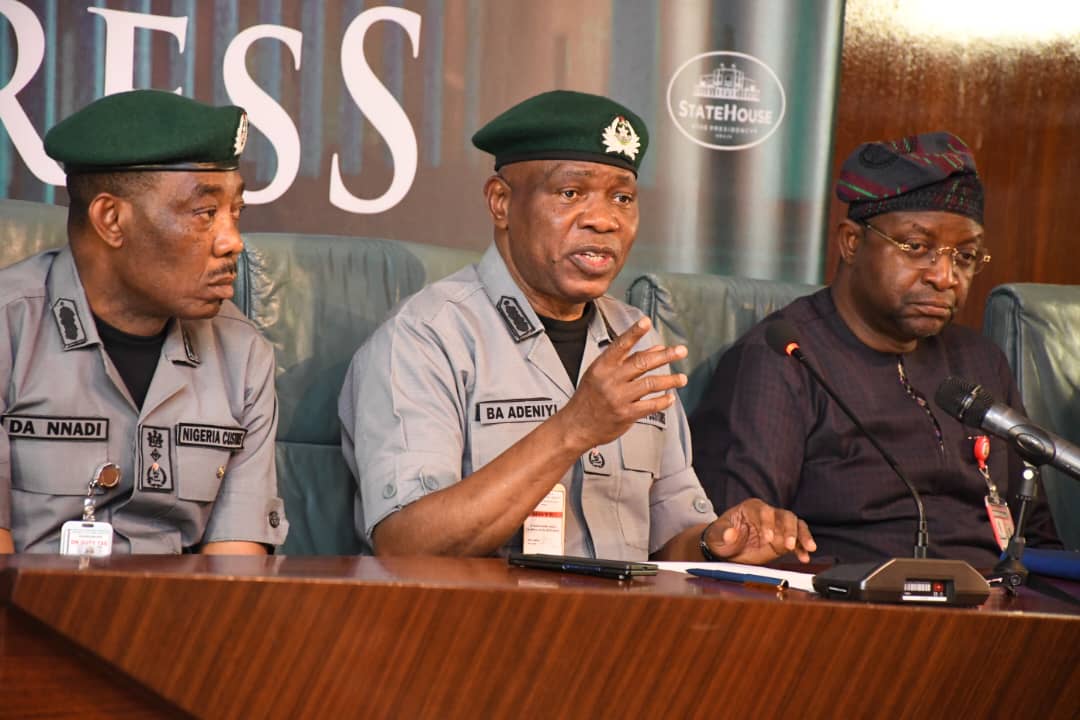
Building on this vision, the Comptroller-General of the Nigeria Customs Service (NCS), Adewale Adeniyi, said Nigeria is re-establishing itself as a major trade hub in Africa through far-reaching reforms that will modernise port operations and ease cross-border commerce.
Adeniyi made these known during the November edition of the Meet-the-Press briefing at the State House, Abuja on Friday.
He also announced that Nigeria would host a major continental conference, from November 17–19, 2025, under the Customs PACT framework.
Adeniyi stressed that “for Nigeria to fully maximise its trade potential, urgent steps must be taken to decongest the nation’s seaports, strengthen logistics efficiency, and modernise cargo processing systems.”
He said that “achieving this requires Nigeria to join the league of countries fully leveraging the national single window platform—an integrated digital system that streamlines all trade-related processes, eliminates delays, reduces human interface, and curbs revenue leakages.”
“In the document conveying that extension, specific KPIs were highlighted, including the implementation of the African Continental Free Trade Area (AfCFTA). President Bola Ahmed Tinubu has made it clear that his administration intends to use trade as a tool for economic development and poverty alleviation, recognising the vast opportunities available. The policy thrust document outlines clear strategies geared toward promoting trade.
“Nigeria is re-establishing itself as a regional trade hub. The policy thrust emphasises the need to decongest our port areas, increase investment in port infrastructure, and join the league of customs administrations leveraging single-window systems. These are all elements pointing to one key priority: the urgent need to give greater attention to trade,” the Customs boss explained.
According to Adeniyi, the administration of President Bola Ahmed Tinubu’s policy thrust highlights the need for greater investment in port infrastructure to reduce bottlenecks and improve turnaround time for goods.
He stressed that while Nigeria has remained an active and committed participant in the ETLS, the same cannot be said of many other ECOWAS member states, a situation that has slowed the pace of economic integration in West Africa.
Adeniyi further explained that “under such agreements, countries are expected to gradually reduce and eventually eliminate customs duties on qualifying goods produced within the region to allow seamless intra-African trade. However, inconsistent implementation across participating countries has undermined the objectives of these programmes.”
Adeniyi added that Customs PACT is designed to address those gaps by enhancing cooperation, promoting uniform standards, strengthening capacity, and ensuring that African countries are better equipped to meet their responsibilities under the African Continental Free Trade Area (AfCFTA).
He said; “Customs is now ready to play its role to fulfill its mandate in the implementation of the regional economic programme. Basically when customs implement a free trade agreement, just like any other integration agreement, there are issues that has to do with implementing the rules of origin, or the trade preferences, suspending customs duty on trade between members of the same economic block this time we are talking of the rest of the continent of Africa.
“So it requires capacity building. It requires a very strong political will on the side of the various countries to implement the trade agreement because it involves suspension of customs duties. Countries will have to give up some part of customs duties. They’ve to gradually reduced them until it comes to zero, so that goods produced within Africa can be traded between African countries.”
“What our experience has been over the years is that even at the regional level, the economic integration initiative has been bedeviled with some implementation challenges. I know that Nigeria is an active participant in the ETLs programme, economic ECOWAS, trade liberalisation scheme, but we cannot say the same for the 14 other countries of ECOWAS as well,” Adeniyi stated.
Describing the Customs PACT as a policy dialogue, the Customs boss said; “the programme is expected to further and also stimulate regional economic development by positioning trade as a catalyst for poverty reduction, investment, and industrial growth.”
Customs PACT
At the core of the customs PACT initiative, according to the Customs Chief, is the harmonisation of customs procedures across African countries to reduce delays, lower trade costs, and eliminate bottlenecks at borders.
The conference structured as a private-sector-driven forum targets to facilitate smoother movement of goods, supporting the objectives of the African Continental Free Trade Area (AfCFTA).
Adeniyi noted that the high-level continental conference, deliberately designed to be operator-led, has so far attracted more registrations from private-sector players than from government representatives.
He explained that “the forum—aimed at improving information sharing and strengthening joint enforcement to curb smuggling, revenue leakages, and illicit trade—will feature broad participation from stakeholders across the shipping, aviation, ports, manufacturing, banking, and logistics sectors.”
He highlighted a major challenge the initiative aims to address: goods granted AfCFTA preferences at their point of origin often lose those concessions upon arrival at destination ports.
The strategic policy forum designed to strengthen technical capacity through shared training, modernised systems, and the adoption of international best practices will span West, Central, East, Southern, and North Africa.
He added that at least 30 African Customs administrations have confirmed their participation in the conference, with 22 delegations led by their Comptroller-Generals or Directors-General.
The Secretary-General of the World Customs Organization (WCO), Ian Saunders, is expected to deliver the keynote address at the Conference.
Mercy Chukwudiebere