

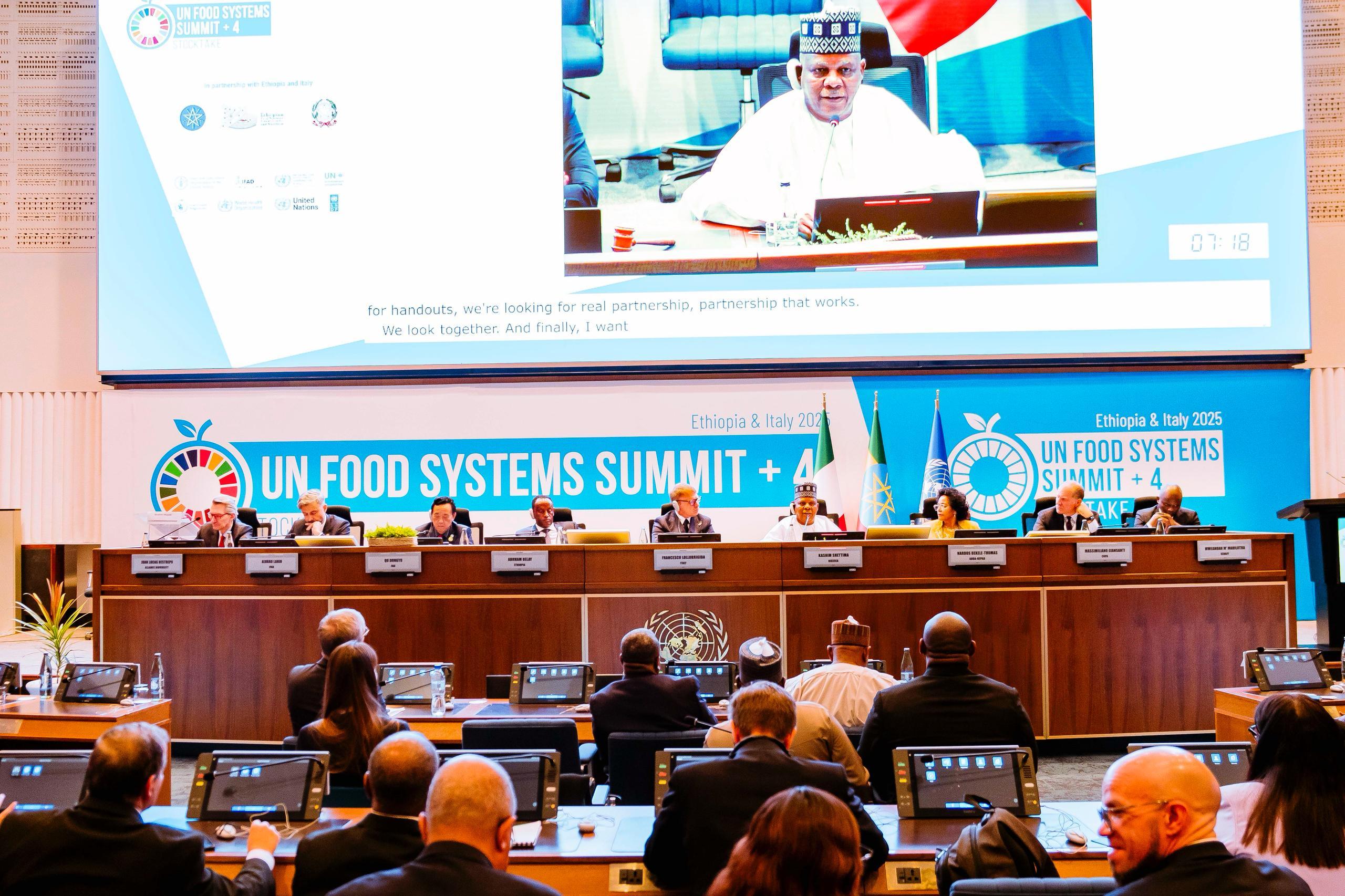
Nigeria has so far committed $538m to the floating of Special Agro Industrial Zones across the country.
Vice President Shettima disclosed this while addressing the Plenary Session on Transforming Food Systems in Complex Settings at the ongoing UN Food Systems Summit in Ethiopia.
He disclosed that Nigeria has already committed $538.05 million to the first phase of the Special Agro-Industrial Processing Zones (SAPZ) programme, a flagship initiative aimed at boosting agricultural productivity, improving rural livelihoods, and accelerating industrialisation.
“The SAPZ programme in Nigeria is being implemented in partnership with the African Development Bank (AfDB), the International Fund for Agricultural Development (IFAD), the Islamic Development Bank (IsDB), and other key development partners.
“The initiative is projected to attract $1 billion in total investments by 2027, reduce post-harvest losses by 80%, and has already generated over 785,000 jobs across targeted regions,” he noted.
VP Shettima added that African youths hold the key to the continent’s agri-food future and thus, no stone should be left unturned in mobilising this greatest asset.
He reiterated the Nigerian Government’s commitment to tackling food insecurity, noting that the administration of President Bola Tinubu has declared a State of Emergency on Food Security, reactivated over 500,000 hectares of arable land, deployed strategic food reserves, and expanded access to seeds and extension services.
VP Shettima also emphasised the importance of security sector reforms to ensure farmers can access their lands safely and continue food production in rural communities.
In addition, he called for international collaboration to recharge the Lake Chad Basin, expand sustainable irrigation systems, and establish a national farm database.
He also advocated for anticipatory action to climate shocks, emergency school feeding programmes in conflict-affected areas, and resilience-building initiatives to secure long-term stability.
“Food security is the trust anchor of peace,” the Vice President stated.
United Nations Deputy Secretary-General, Amina Mohammed, decried worsening global food insecurity, noting that “over 37 million children under five who faced acute malnutrition this year are almost the entire population of Canada.”
“Short-term interventions disconnected from long-term development planning are not the solutions we are seeking. We must choose transformation over dependency,” she said.
She commended leaders, including President Tinubu, who are embedding resilience in national strategies, combining global, digital and traditional knowledge to create inclusive and sustainable food systems.
“We need coordination as a people and not just bureaucracies. Bureaucracies are important; we need strong public institutions, but our efforts must translate into impact in people’s lives,” Mohammed added.
Other speakers at the summit included World Food Programme Executive Director, Cindy McCain; Deputy Prime Minister of Somalia, Salah Jama, and Moubarack Roubo from the Ministry of Agricultural Production and Industrialisation, Chad, among others.