

In a bold step to modernise trade operations, the Nigeria Customs Service (NCS) has unveiled a centralised digital system to manage overtime cargo, marking a major advance in aligning the country with international trade standards.
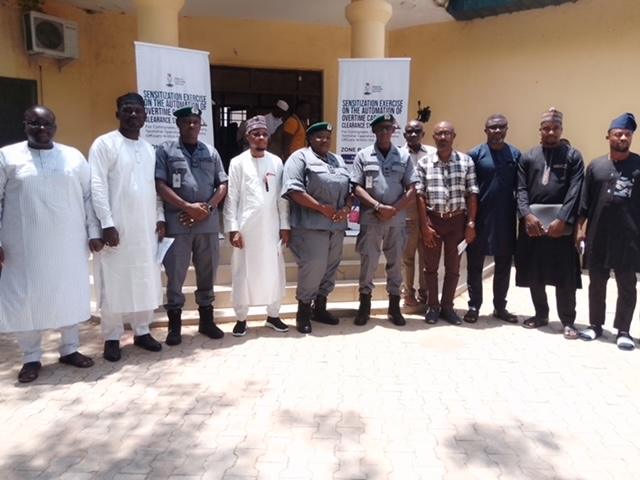
The initiative was introduced during a sensitisation exercise on the automation of overtime cargo clearance for consignees, customs brokers, terminal operators, and customs officers within Zones B and D.
Launched in Kano State, North-West Nigeria, the reform replaces decades of congestion, paperwork, and delays with an automated clearance and disposal process.
According to Comptroller-General of the Nigeria Customs Service, Bashiru Adewale, who was represented by Comptroller of Post-Clearance Audit, Zone B, Deborah Adeniyi, the platform guarantees transparency through time-stamped tracking, accelerates cargo movement, and enforces strict timelines for abandoned consignments, all backed by the Nigeria Customs Service Act 2023.
Read Also: Western Marine Customs Announces Seizures Worth N582bn
He said: “This is not just digitisation; it is a complete transformation of our culture from bottlenecks to efficiency.”
Adewale explained that the system enables traders to process applications and approvals online from anywhere, reducing legal disputes while freeing terminal space for quicker consignment turnover.
He urged stakeholders in key northern states — Kano, Kaduna, Niger, Kebbi, Kogi, Zamfara, Sokoto, Katsina, Kwara, Jigawa, and the FCT — within Zones B and D to embrace the new system and ensure their teams are properly trained for seamless integration.
Stakeholders in their contributions expressed optimism that the reform would strengthen Nigeria’s competitiveness, boost investor confidence, and enhance regional trade flows.
Also speaking, the Customs Area Controller for Kano/Jigawa Command, Dalhatu Abubakar, encouraged stakeholders to intensify awareness among their members to ensure improved service delivery.
Highlighting the processes, Chief Superintendent of Customs Aliyu Abdulkadir and Ibrahim Muhammed noted that the platform provides simplified management of cargo clearance by owners.
With the system now operational, Nigeria joins a growing list of countries digitising customs operations — a move seen as essential in an era where global commerce demands speed, trust, and data integrity.