


The Nigerian Government has disbursed ₦32.9 billion under the redesigned Basic Health CareProvision Fund (BHCPF 2.0) to strengthen service delivery, improve accountability, and enhance access to quality primary healthcare across the country.
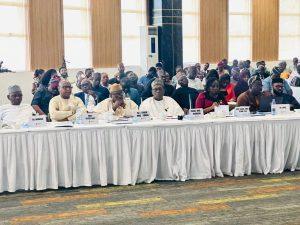
The Coordinating Minister of Health and Social Welfare, Prof. Muhammad Ali Pate disclosed this during the 12th Q3 Ministerial Oversight Committee (MOC) meeting on the BHCPF held in Abuja.

He said “the disbursement represents a key step in advancing the government’s health sector reforms aimed at achieving Universal Health Coverage (UHC).”
Prof. Pate explained that “the ₦32.9 billion released will help upgrade Primary Health Centres (PHCs), improve staffing, provide essential medicines, and expand emergency response services nation wide.”
According to him, “Nigeria’s healthcare system is undergoing a major transformation, with remarkable gains in immunisation, service utilisation, and data-driven accountability.”
He said that over 80 million visits were recorded in PHCs during the first half of 2025, marking a fourfold increase compared to 2023.
Read Also: Kwara Strengthens Drive For Quality Healthcare Delivery
“The number of BHCPF-supported facilities had expanded from 8,800 to 13,000, with plans to reach 17,000 in the next phase of implementation,” he said.
Pate further stated that “more than 21 million healthcare visits had been supported through the BHCPF framework, including over 11,000 emergency cases and 15,000 women reimbursed for obstetric care.”
He added that the country had achieved a 12 percent reduction in maternal mortality compared to 2023, reflecting the impact of ongoing reforms on women and children’s health outcomes.
Also speaking, the Director General, National Primary Health Care Development Agency(NPHCDA), Dr. Muyi Aina said Nigerians are showing renewed confidence in the health system, with PHC utilisation tripling compared to non-BHCPF facilities.
Aina noted that immunisation coverage had improved significantly, with the third dose of the pentavalent vaccine rising to 91 percent, nearly doubling the rate recorded two years earlier.
“More than 90 percent of children are now being reached in BHCPF-supported facilities,showing that the government’s investment is yielding tangible results,” he stated.
Aina said that “the agency, in collaboration with states, had added 247 new functional PHCs in the last quarter alone, bringing the total to 1,610 under the current work plan.”
Over 500 facilities, he said, have been equipped from the national level, while states have provided additional logistics, cold-chain equipment, and solar power systems to sustain service delivery.
Aina also highlighted the expansion of the National Emergency Medical Service and Ambulance System (NEMSAS), now operational in over 30 states.
“More than 11,000 patients were transported under NEMSAS-funded services in the last quarter, including neonatal, obstetric, and other critical emergencies,” he said, stressing that Nigerians can now access free emergency medical services by dialing 193
The Secretary of the Ministerial Oversight Committee, Dr. Oritseweyimi Ogbe said approval for the Q3 disbursement under BHCPF 2.0 had been granted, with modalities being finalised to ensure transparent and efficient fund release tostates
Ogbe explained that “the NPHCDA is scaling up the Direct Facility Financing initiative, while the National Health Insurance Authority (NHIA) is validating enrollee lists to strengthen fund utilisation and ensure value for money.”
He noted that outpatient attendance in BHCPF-supported facilities rose by 1.4 million between Q1 and Q2 2025, a 28 percent increase while skilled birth attendance grew by 18 percent, showing improved access to essential health services.
Ogbe described the official sign-off of the BHCPF 2.0 guideline by the Minister as amilestone that reinforces accountability, sustainability, and measurable results in fund utilisation.
Electronic copies of the new guideline, he said, will be distributed nationwide, with State Oversight Committees being onboarded in collaboration with partners such as the Bill & Melinda Gates Foundation, R4D, CHAI, and the Lafiya Project.