


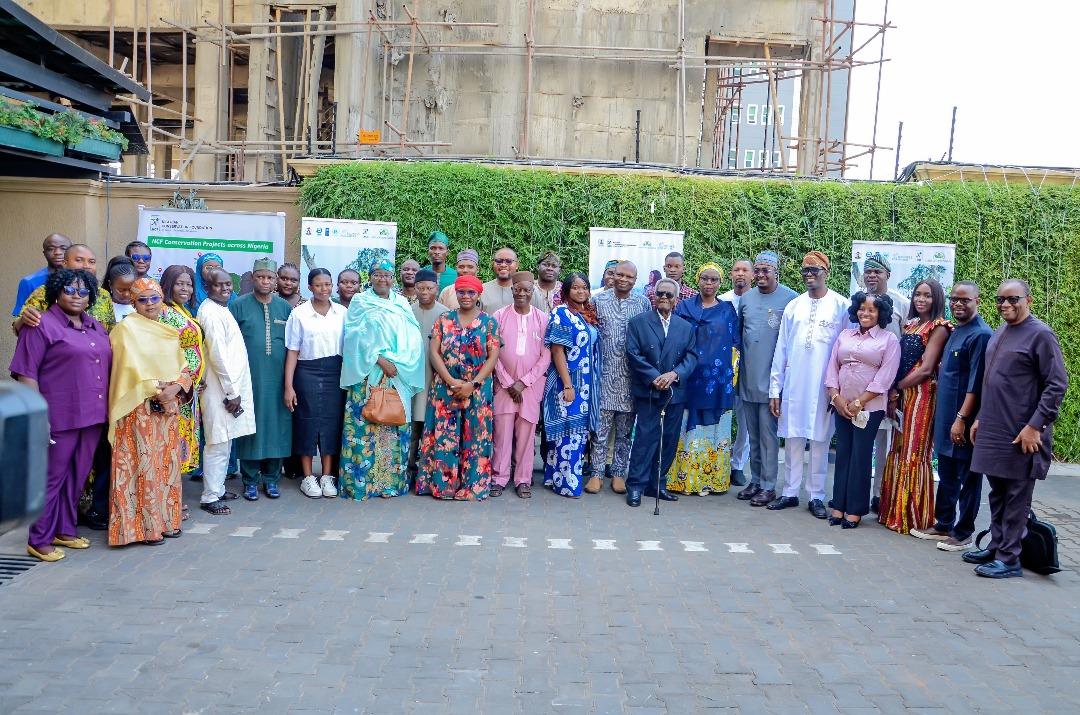
Nigeria has launched the Biodiversity Finance Initiative (BIOFIN), marking a decisive step towards safeguarding the nation’s forests, ecosystems, and biodiversity that underpin livelihoods across the country.
The initiative seeks to bridge the financing gap for biodiversity conservation while strengthening partnerships among government institutions, the private sector, civil society, and local communities.
Speaking at the launch in Abuja, the Director of Forestry at the Ministry of Environment, Mrs Halima Bawa-Bwari, said BIOFIN will support sustainable forestry practices that balance ecological integrity with economic growth, while empowering communities as custodians of biodiversity.
“The urgency to act has never been greater. The National Biodiversity Strategy and Action Plan (NBSAP) provides us with a clear roadmap to conserve, sustainably use, and equitably share the benefits of biodiversity.
“BIOFIN complements this vision by mobilising innovative financing solutions, ensuring that our commitments are not only aspirational but achievable,” she said.
Bawa-Bwari noted that Nigeria has consistently demonstrated its commitment to biodiversity conservation.
Through the NBSAP, she explained, “The country has pledged to integrate biodiversity financing into national development planning, strengthen institutional frameworks, and mobilise both domestic and international resources.”
This commitment, she stressed, is already reflected in:
- Increased budgetary allocations to forestry and conservation programmes
- Partnerships with development organisations to unlock innovative financing mechanisms
- Mainstreaming biodiversity into key sectors such as agriculture, energy, and infrastructure
- Community-driven initiatives that ensure local communities benefit directly from conservation efforts
She called on all stakeholders to collaborate in strengthening Nigeria’s biodiversity agenda.
“Let us commit to innovative thinking, collaborative action, and unwavering dedication to safeguarding our forests and biodiversity for generations to come.
“Together, we can ensure that the Biodiversity Finance Initiative becomes a beacon of hope and a model of sustainability, aligned with Nigeria’s commitments under the NBSAP and our broader national development and Renewed Hope agenda,” she emphasised.

The organisation’s mission is to activate and accelerate the transition towards a nature-positive global economy. “Businesses in Nigeria are increasingly paying attention to nature as part of their broader work on sustainability, but they are not yet all aware of how their work contributes to national plans to protect, restore and sustainably use nature,” she said.
She explained that collaboration will help accelerate progress for nature in Nigeria by connecting private sector leadership with national biodiversity and climate priorities—turning global goals into national action.
“In 2022, 196 countries made a historic commitment through the Global Biodiversity Framework (GBF), a global plan to halt and reverse nature loss by 2030. The government cannot achieve this alone.
“Businesses and financial institutions must play a central role in delivering the transition toward a nature-positive future. Through this partnership, the organisations will convene leading Nigerian companies and government representatives through a Business Advisory Group (BAG),” she explained.
Representatives from Natural Eco Capital, Rantiola Babatimehin, reaffirmed the organisation’s commitment to strengthening sustainability by helping public and private bodies build resilient, eco-conscious businesses and economies.
“As a member of the Capitals Coalition, we collaborate with governments, financial institutions, and investors to tackle issues around natural capital, climate change, low-carbon development, sustainable finance, and circular economy,” she said.

The Director-General of the Nigerian Conservation Foundation, Dr Joseph Onoja, stressed that conservation of biodiversity is everybody’s business.
“Every organisation and every individual involved in business should also play a role in safeguarding biodiversity. That is why we established the Business Advisory Group—so that together, we can develop a Business Action Plan for Biodiversity and identify practical steps to strengthen biodiversity conservation in Nigeria,” he added.
The Ministry’s Biodiversity Desk Officer, Sikeade Egbuwalo, explained that BIOFIN and Nigeria’s NBSAP can be adequately financed by mobilising more public and private sector investments, unlocking new revenue streams, and aligning economic incentives with conservation.