

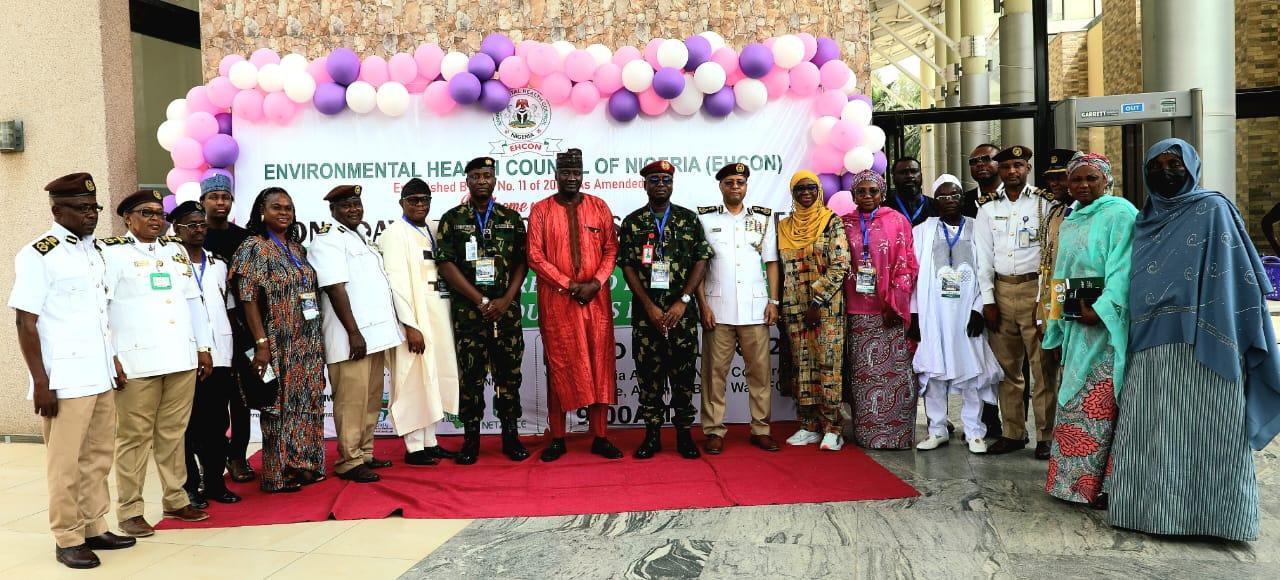
The Federal Ministry of Environment, in partnership with the Environmental Health Council of Nigeria (EHCON), has officially launched the National Emergency Response Initiative on Environmental Public Health Impact of Greenhouse Gas Emissions (NERI-EPHIGGE).
The initiative is designed to deliver both immediate and long-term interventions to address the growing threats posed by pollution and greenhouse gas emissions to public health across tNigeria.
The Minister of Environment announced the programme during the Stakeholder Engagement on National Emergency Response to Environment-Related Diseases Arising from Greenhouse Gas Emissions held in Abuja, the nation’s capital.
Represented at the event by the Permanent Secretary, Mr Mahmud Kambari, the minister explained: “The framework focuses on strengthening environmental health regulations and enforcement, deploying nationwide surveillance and response units, introducing mandatory emission testing and compliance certification, promoting cleaner energy and sustainable industrial practices, encouraging low-emission transport systems, and driving robust public awareness campaigns,” Kambari said.
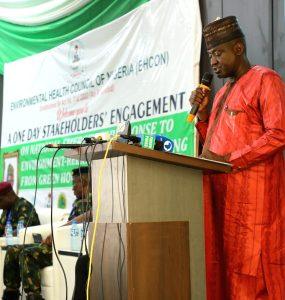
He stressed that NERI-EPHIGGE aligns with Nigeria’s environmental regulations, the Climate Change Act, the Nationally Determined Contributions (NDCs), the Sustainable Development Goals (SDGs), and the Renewed Hope Agenda of President Bola Ahmed Tinubu.
Provide Policy Leadership
He assured stakeholders of the Ministry’s commitment to providing policy leadership and driving climate and environmental reforms nationwide.
Kambari also emphasised that responsibility for protecting the environment does not rest on government alone.
“Regulatory agencies, industries, the transport and energy sectors, civil society, and development partners must all support this initiative. The cost of inaction is greater than the cost of intervention. The science is clear. The health evidence is undeniable. The risks are immediate. The time to act is now,” he said.
Highlighting the urgent need for coordinated action, Kambari noted that Nigeria is experiencing rapid urbanisation, industrial expansion, rising energy demand, and intensified transportation all signs of economic growth, but also major contributors to greenhouse gas emissions.
“Evidence from environmental surveillance and health statistics shows increasing cases of respiratory illnesses, cardiovascular diseases, and other environmentally linked health conditions. What we face today is no longer solely an environmental issue but a public health emergency,” he added.
Also Read: Nigeria Validates National Plan To Tackle Climate Change
The Registrar of the Environmental Health Council of Nigeria, Dr. Yakubu Baba, reaffirmed the Council’s commitment to implementing NERI-EPHIGGE.
He explained that the initiative would coordinate the deployment of licensed Environmental Health Practitioners (EHPs) across all 774 local government areas and the six area councils of the Federal Capital Territory.
“EHPs will receive continuous training and professional development, including modern surveillance tools, digital data collection systems, advanced risk assessment skills, and community engagement strategies,” he said.
Dr. Baba emphasised that environment-related diseases linked to greenhouse gas emissions now rank among Nigeria’s most pressing but under-recognised public health challenges.
He stated that EHCON will support the rollout of mandatory emissions testing, environmental health compliance certification, and standardised reporting mechanisms for industries and transport operators.
According to him, the success of this initiative depends largely on the dedication, professionalism, and competence of Environmental Health Practitioners across Nigeria.
“They will conduct field inspections, identify high-risk emission sources, educate communities on environmental health risks, enforce compliance in collaboration with regulatory agencies, and serve as the bridge between government policy and grassroots implementation. EHCON will ensure that every EHP engaged in this initiative is duly licensed, trained, and empowered to deliver on this national mandate,” he said.
Brigadier General Innocent Enwuchula, Corps Commandant Medical, Nigerian Army, representing the Chief of Army Staff, highlighted the military’s commitment to environmental health.
“Environmental health is taken seriously across all levels of the Nigerian Army medical system, from battalion medical reception stations to brigade and division hospitals. Given the military’s constant interaction with diverse environments on land, sea, and air, environmental health is not optional but essential,” he said.
The National President of the Environmental Health and Public Health Practitioners Association of Nigeria, Mr. Akingbehin Samuel, urged Nigerians to take greater responsibility for protecting the environment.
He called on individuals, communities, and institutions to do more than they have in the past, noting that safeguarding the environment is a collective duty that directly impacts public health, national development, and the well-being of future generations.
Mr. Obirki Tamarankro Jullano, CEO of Oxytane Africa Investment, warned that greenhouse gas emissions pose serious environmental and public health threats.
He reaffirmed Oxytane Africa’s commitment to working with the Federal Government and the National Clean Air Programme to reduce emissions and protect public health.
“Nigeria depends heavily on hydrocarbon-refined fuels about 90 percent for industry and transport. This reliance is linked to rising respiratory illnesses, lung cancer, and heart diseases among people who have never smoked or consumed alcohol. The air we breathe has become a silent but dangerous threat,” he said.
It is expected that, at the conclusion of the stakeholder engagement and capacity-building exercises for Environmental Health Practitioners, there will be: formal endorsement of the national emergency response framework, stronger enforcement and compliance mechanisms, improved coordination among MDAs, increased private sector accountability, enhanced public awareness, and a clear roadmap for nationwide implementation.
The event was organised by EHCON with support from the Federal Ministry of Environment, NNPC, ACReSAL, the National Council on Climate Change (NCCC), NESREA, and NetZence.
The initiative aligns with the Nigerian government’s unwavering commitment to environmental governance and public health protection.