


Nigeria has launched its maiden Twinning Project to strengthen food security and build sustainable food systems through climate-smart technologies and improved agricultural value chains.
The initiative forms a strategic partnership between Nigeria and the European Union, alongside member states including the Czech Republic, Austria, and Latvia, to support a more resilient and sustainable agricultural ecosystem.
The project aims to advance climate-smart agriculture, enhance institutional capacity, and align Nigeria’s agricultural policies with global best practices.
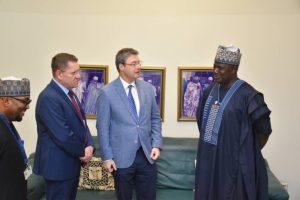
Speaking at the launch in Abuja, the Minister of Agriculture and Food Security, Senator Abubakar Kyari, says the initiative will deepen efforts to strengthen sustainable food systems across the country.
Represented by the Minister of State for Agriculture and Food Security, Dr Aliyu Sabi Abdullahi, Kyari describes the project as a milestone in Nigeria’s agricultural transformation, adding that it aligns with government efforts to position agriculture as a driver of economic growth, job creation and food security.
He revealed that “ongoing government interventions include investments in irrigation, dry-season farming, mechanisation, and improved access to inputs such as fertilisers and climate-resilient seeds. The government is also scaling digital agriculture and strengthening pest control systems to safeguard productivity across value chains.”
He pointed out that “the Twinning Project is expected to play a critical role in strengthening Nigeria’s agribusiness ecosystem by supporting a comprehensive review of the National Agricultural Resilience Framework (NARF) and aligning policies with global best practices. It will also facilitate capacity building for Nigerian institutions through training programmes, study visits, and technical exchanges.”

In his remarks, the European Union Ambassador to Nigeria and ECOWAS, Gautier Mignot, stated that the initiative is designed to bridge the gap between policy and implementation in Nigeria’s agricultural sector.
Mignot added that “addressing food insecurity requires not only investment but strong institutions and effective policies. This project will identify key gaps and provide practical recommendations that translate into real improvements for farmers, agribusinesses, and rural communities.”
He noted that “by strengthening institutional frameworks and promoting climate-smart practices, the initiative is expected to improve productivity while reducing post-harvest losses and environmental risks’’.
He emphasised that the programme aligns with its broader priorities of supporting climate-resilient agriculture, job creation, and inclusive growth, especially for youth and women engaged in agribusiness.
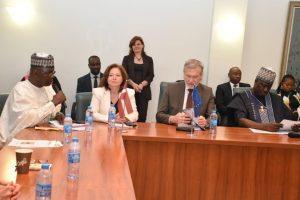
During his welcome address, the Director, Planning and Policy Coordination, Mr. Ibrahim Tanimu said that “the Twinning Project is especially significant because it brings together technical expertise from European institutions and Nigerian professionals to work on critical areas of agricultural policy and climate-smart development, which will translate into resilient agriculture for food security in the country’’.
He added that “this initiative comes at a very crucial time. Nigeria is actively working to strengthen its agricultural systems in response to emerging challenges, particularly those posed by climate change, food security and evolving global food systems transformation.”