



Nigerian Government has launched the Entrepreneurship, Innovation and Business Incubation Certification (EIBIC) programme aimed at transforming Nigerian students from job seekers to job creators and driving innovation-led economic growth.
The Minister of Education, Dr Tunji Alausa, stated this while unveiling the programme in Abuja, Nigeria.
Alausa said the initiative marked a major shift in Nigeria’s education system toward entrepreneurship, innovation and enterprise development.
He described the programme as a strategic response to evolving global realities where technology continues to reshape industries and traditional employment opportunities decline.
“Today marks not just the launch of a programme, but the beginning of a new paradigm in Nigeria’s education system.
“This programme will shift our young people from passive learners to active innovators and from graduates to nation builders,” he said.
He commended universities, the National Universities Commission (NUC), TETFund, industry partners and directors of entrepreneurship centres for supporting the initiative.
According to him, Nigeria’s youthful population remains both a major asset and responsibility. He stressied that conventional academic models alone could no longer address unemployment and employability challenges.
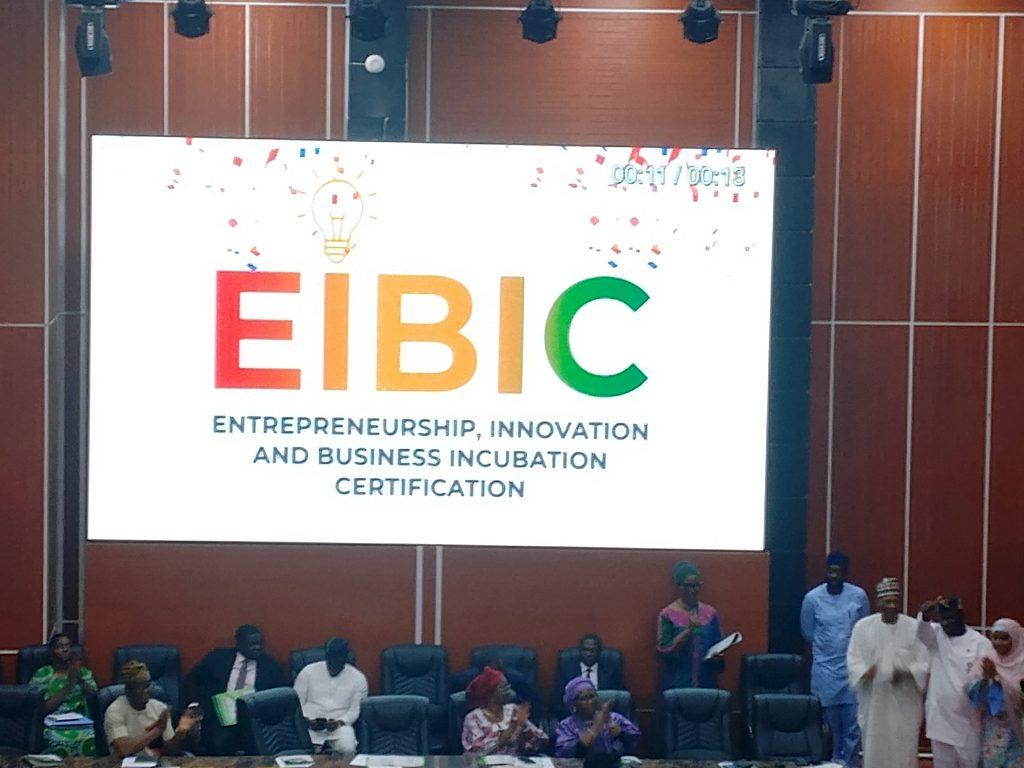
He explained that EIBIC was designed to embed entrepreneurship training across disciplines including engineering, medicine, law, sciences and the creative arts, stressing that it will be learnt side by side the original course without interference thus enabling students to acquire practical skills in innovation, business planning, financial literacy and venture development while still in school.
The minister said that the programme aligned with President Bola Tinubu’s Renewed Hope Agenda which prioritizes youth empowerment
Read Also: Minister Urges Global Support for Youth Innovations
Education Minister Calls for Increased Funding to Address Sector Challenges
Education Reforms Create Opportunities for Young Nigerians – Minister
The EIBIC programme according to the minister had already been introduced in 14 universities in its first phase, adding that all federal universities, alongside selected federal polytechnics and colleges of education, would be onboarded by 2027 and all federal tertiary institutions would be onboard by 2028.
He directed vice-chancellors of participating universities to secure Senate approval for full integration of the programme before the end of April.
The minister expressed optimism that the programme would accelerate Nigeria’s transition toward an innovation-led economy.
Strengthening the Link Between Education and Industry
The EIBIC Subject Matter Expert, Prof. Sunday Adebisi, said the initiative would strengthen the link between education and industry by providing practical skills aligned with real-world economic and business needs.
“The programme would encourage students to transform hobbies, talents, interests and academic knowledge into viable enterprises through structured incubation pathways.
“it will also provide mentorship opportunities, innovation support systems and access to funding mechanisms to help students launch sustainable businesses before graduation,” he said.

He added that the initiative is expected to support wealth creation by encouraging sustainable enterprises capable of generating income and expanding opportunities across communities.
The Chief Executive Officer, EMADEB Energy, Mr Debo Olujimi pledged an investment of N200 million across universities in the six geopolitical zones to support the growth of young people.
The 14 universities to offer EIBIC programme includes: University of Lagos; Ahmadu Bello University, Zaria; Bayero University, Kano; Uthman Danfodio University, Sokoto; University of Benin; University of Port Harcourt; Obafemi Awolowo University, Ile-Ife, University of Ibadan; University of Maiduguri; Abubakar Tafawa Balewa University, Bauchi; University of Nigeria, Nsukka; Nnamdi Azikiwe University, Awka; and University of Abuja.