


Elizabeth Christopher, Abuja
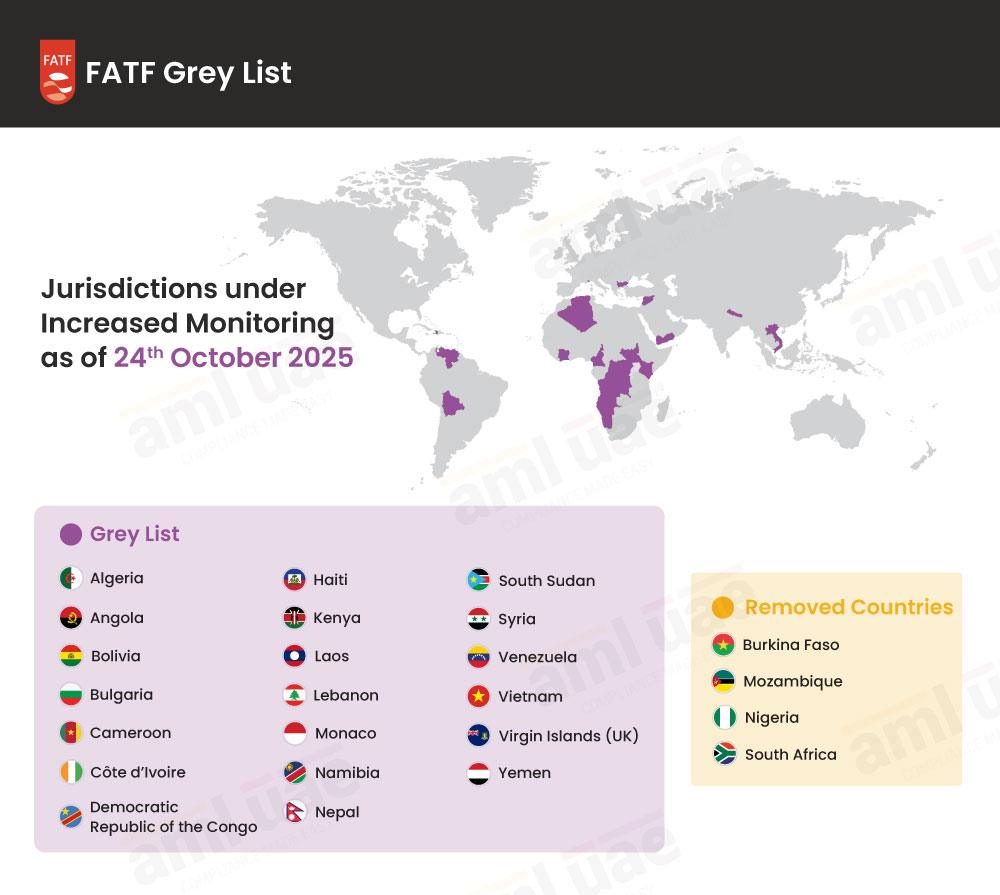
Nigeria’s removal from the Financial Action Task Force (FATF) grey list marks a significant milestone in the country’s ongoing efforts to combat money laundering, terrorist financing, and proliferation financing.
The FATF announced the decision at its October 2025 Plenary in Paris, France, following Nigeria’s successful implementation of a comprehensive reform plan that addressed strategic deficiencies in its Anti-Money Laundering and Countering the Financing of Terrorism (AML/CFT) framework.
Nigeria was placed on the grey list in February 2023. Over the past two years, it implemented a rigorous 19-point Action Plan developed in collaboration with the FATF and the Inter-Governmental Action Group Against Money Laundering in West Africa (GIABA).
Key reforms that facilitated Nigeria’s delisting include:
- Enactment and enforcement of the Money Laundering (Prevention and Prohibition) Act, 2022, and the Terrorism (Prevention and Prohibition) Act, 2022.
- Operationalisation of the Beneficial Ownership Register to enhance corporate transparency and accountability.
- Strengthening of intelligence, law enforcement, and regulatory agencies to detect and prosecute complex financial crimes.
- Enhanced supervisory measures for both financial institutions and Designated Non-Financial Businesses and Professions (DNFBPs).
- Increased international cooperation and intelligence sharing with regional and global partners.
The Nigerian delegation to the Plenary included the Attorney-General of the Federation and Minister of Justice, the Minister of Finance and Coordinating Minister of the Economy, the Minister of Interior, and the Chief Executive Officer of the Nigerian Financial Intelligence Unit (NFIU).
Read Also: House Committee Chair Lauds Nigeria’s FATF Grey List Exit
Speaking on behalf of the delegation, Minister of Finance Wale Edun reaffirmed Nigeria’s ongoing commitment to upholding financial integrity.
“Nigeria’s ambition was never limited to simply completing the Action Plan and exiting the grey list. Our focus has been on driving reforms and strengthening institutions to ensure Nigeria effectively counters money laundering and terrorist financing. For us, the Action Plan was not the ceiling, but the floor of our aspirations,” he said.
Attorney-General Prince Lateef Fagbemi announced that Nigeria has been invited to join the FATF Guest Jurisdictions Initiative, enabling the country to participate under its own flag in FATF meetings for the next year—a recognition of Nigeria’s growing global credibility in AML/CFT matters.
The CEO of the NFIU, Ms. Hafsat Abubakar Bakari, who coordinated the reform process, described the delisting as “a true test of Nigeria’s resilience, coordination, and commitment to reform.”
She expressed gratitude to President Bola Ahmed Tinubu for his leadership and to all branches of government, law enforcement agencies, and private-sector stakeholders for their collective effort.
“This is not the end of our journey, but the beginning of a stronger, more transparent financial ecosystem,” Ms. Bakari said, urging stakeholders to sustain the momentum and maintain Nigeria’s compliance with global standards.
The NFIU also congratulated Burkina Faso, Mozambique, and South Africa, which were similarly removed from the FATF grey list during the same Plenary—an achievement that marks significant progress for financial integrity across Africa.