

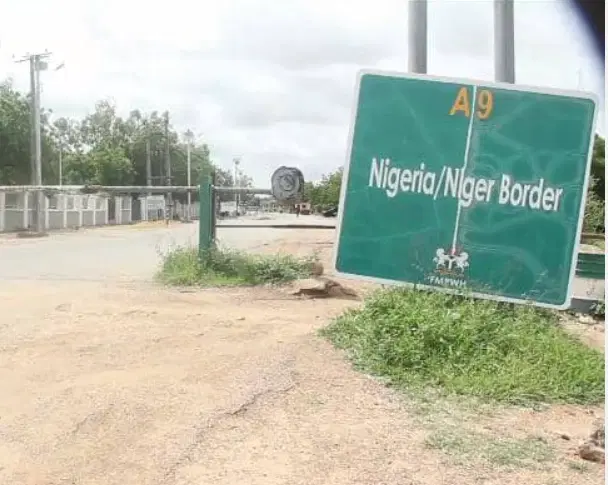
The Nigerian Government and the Republic of Niger have concluded a high-level session of the Joint Standing Committee of Experts (JSC) in Zinder, reaching firm agreements on boundary re-demarcation, security coordination, and enhanced cross-border engagement.
The three-day meeting, held from 8 to 10 December in Zinder, brought together senior officials, technical experts, and field operatives under the Nigeria/Niger Joint Commission (NNJC) to review progress on the ongoing boundary re-demarcation exercise and to adopt a new programme of activities for the 2025/2026 cycle.
A major outcome of the meeting was the formal adoption of the technical report on boundary re-demarcation activities undertaken since the last JSC session in Abuja in 2023.
The meeting revealed that 60 intermediate pillars were constructed between main pillars 79–80 and 80–81 in the Kongolam axis of Katsina State.
During the same period, 40 intermediate pillars were constructed between pillars 108–109 and 109–110. Additionally, 17 intermediate pillars were re-evaluated between pillars 125–126 along the Maigatari/Machina corridor.
The JSC acknowledged that some critical activities remained outstanding due to funding and security constraints in the area. These include joint inspection missions in the Dosso/Katsina sector, re-evaluation of main pillars 1–4 in Gaya, and the construction of 45 intermediate pillars in Kangiwa, Kebbi State. Both countries agreed to prioritise these tasks in the new 2026 work plan.
Strengthening Cross-border Cooperation
The meeting also considered ways of strengthening cross-border cooperation in line with the African Union’s Niamey Convention and the Integrated Border Governance Strategy.
Delegates reviewed existing cooperation corridors including Kano/Katsina/Maradi, Kano/Jigawa/Katsina/Zinder, Kebbi/Sokoto/Tahoua/Dosso, Zamfara/Katsina/Jigawa/Maradi/Zinder, and Yobe/Borno/Diffa, with a view to adopting global best practices. They assessed persistent challenges in these borderlands, including weak infrastructure, security gaps, socio-economic disruptions, and unregulated spaces.
After extensive deliberations, the experts adopted new proposals, including reviving cultural and socio-economic ties between border communities, enhancing joint use of infrastructure in border corridors, strengthening local governance collaboration between Local Government Areas and communes, and expanding security coordination across shared border zones.
Also Read: Nigeria, Niger Republic company sign $1.959b rail agreement
The meeting further recommended local cross-border workshops, joint socio-cultural and sporting activities, improved borderland infrastructure, and enhanced security presence.
Speaking at the closing session, the Director-General of Nigeria’s National Boundary Commission, Surv. Adamu Adaji, commended the experts for their diligence and expressed satisfaction with the quality of engagements.
He reaffirmed Nigeria’s resolute commitment to peaceful relations and deeper cooperation with Niger, stating that the Zinder resolutions would “enhance boundary stability, reinforce peace and security, and stimulate socio-economic development across the borderlands.”
The Head of the Niger delegation and Permanent Secretary of the National Boundary Commission of Niger, Mr Boubacar Amadou, described the deliberations as sincere, productive, and forward-looking. He emphasised the need for greater financial support to accelerate outstanding demarcation tasks.
On his part, the Secretary-General of the Nigeria–Niger Joint Commission (NNJC), Ambassador Musa Saban Mamman, acknowledged the technical depth of the discussions and reiterated the Commission’s commitment to facilitating future engagements.
He also announced plans for a Cross-Border Security Meeting in early 2026 to address emerging threats along the frontier.