

The Nigerian Government has intensified efforts to transition Agricultural sector from subsistence to commercial farming as part of a broader strategy to enhance food security, create jobs, and drive sustainable economic growth.
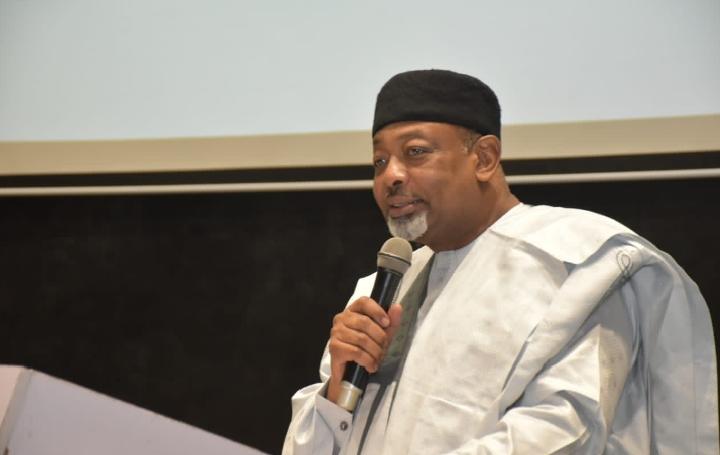
The Minister of Agriculture and Food Security, Sen. Abubakar Kyari made this disclosure at the Ministerial Sectoral Retreat themed “Performance Improvement and Strategic Alignment,” held at the African Trade Centre, Onomo Allure, Abuja.
Kyari stated that “the Nigerian Government has intensified efforts to reposition agriculture as a major driver of economic growth, job creation, and investment, with renewed policy emphasis on mechanization, value-chain development, agribusiness financing, and market expansion, among others.”
He said, “The Ministry is committed to leveraging technology, innovation, and climate-smart agriculture to boost productivity and resilience. Let us commit to the mission of feeding Nigeria, creating jobs, and driving economic growth through sustainable agriculture.”
The Minister said that “the Ministry is working with several international partners to secure funding and expertise to support our agricultural initiatives. Specifically, the Nigerian Government’s commitment is to ensure farmers’ safety, manage agricultural landscapes, provide rural infrastructure, intensify research innovation, facilitate extension services, and undertake agribusiness ventures across the country.”
He reaffirmed that “the policy direction is aimed at unlocking agriculture’s full business potential by transforming farming into a scalable, profitable enterprise. Our focus is to transit from subsistence to commercial farming. Agriculture must deliver productivity, income, jobs, and wealth creation.”
Kyari further disclosed that “the Nigerian Government is implementing mechanisation partnerships with international equipment manufacturers from Belarus, Brazil, and global firms such as John Deere and Origin, in a bid to close Nigeria’s long-standing tractorisation gap.”
According to him, the initiative will reduce production costs, increase yields, and attract private investment into farming and agro-processing.
He explained that the ministry is expanding Public-Private Partnerships (PPPs) through the establishment of Special Agro-Industrial Processing Zones, Agro-Industrial Estates, Agro-Processing Centres, and Cottage Processing Mills.
“These facilities are designed to boost value addition, reduce post-harvest losses, and deepen agro-industrial activities nationwide,” he said.
Kyari also noted that “to improve market stability and reduce price volatility, the ministry is implementing a National Food Reserve Programme to mop up excess production during peak seasons, ensuring a steady supply and predictable pricing for both farmers and consumers.”
Other market-oriented initiatives, he said, include the development of Commodity Market Hubs, Farmers’ Markets, and Rural and Cooperative Markets to expand consumer demand and improve farmers’ access to profitable outlets.
Kyari stressed that the ministry has specific programmes targeting youth and women in agribusiness, describing them as critical to unlocking Nigeria’s demographic dividend and stimulating rural economies.
In his remarks, the Minister of State for Agriculture and Food Security, Sen. Dr. Aliyu Sabi Abdullahi, said the ministry is deliberately restructuring to support private sector participation, data-driven decision-making, and performance management.
He disclosed that new departments have been created, Agricultural Mechanization, Agricultural Data and Analytics, Agricultural ICT, Horticulture, Plant Health, and Development Partners Projects to sharpen the ministry’s focus and improve efficiency.
Abdullahi added that “the Ministry is strengthening financing windows through the Bank of Agriculture and the National Agricultural Development Fund to support farmers, processors, and agribusiness investors across the value chain.”
In her goodwill message, the Head of the Civil Service of the Federation, Didi Esther Walson-Jack represented by the Senior Special Assistant to the President on Civil Service Matters, Alfred Abba said the retreat would deepen leadership cohesion, reinforce institutional discipline, and chart a clear and unified pathway for the ministry and its agencies in line with public service reform policies.
In his welcome address, the Permanent Secretary of the ministry, Dr. Marcus Ogunbiyi, said “the retreat provides us with a valuable opportunity to pause, reflect, and strategically reposition the ministry and its agencies for greater effectiveness in the discharge of our mandate.”
He revealed a key institutional milestone forming part of the retreat’s focus: “the validation of the Performance Management Systems (PMS) Automation and the Electronic Content Management (ECM) Platform, in preparation for the go-live of the ECM Platform on 18th December, 2025.”
Dr. Ogunbiyi added that “the go-live was planned to be after this retreat, where all of us will have the opportunity to jointly carry out the validation exercise for the two platforms. This exercise is both strategic and transformational for the Ministry.”