


The Nigerian Government has reaffirmed its commitment to creating an enabling environment that supports financial innovators and small businesses, particularly within the nation’s vast informal economy.
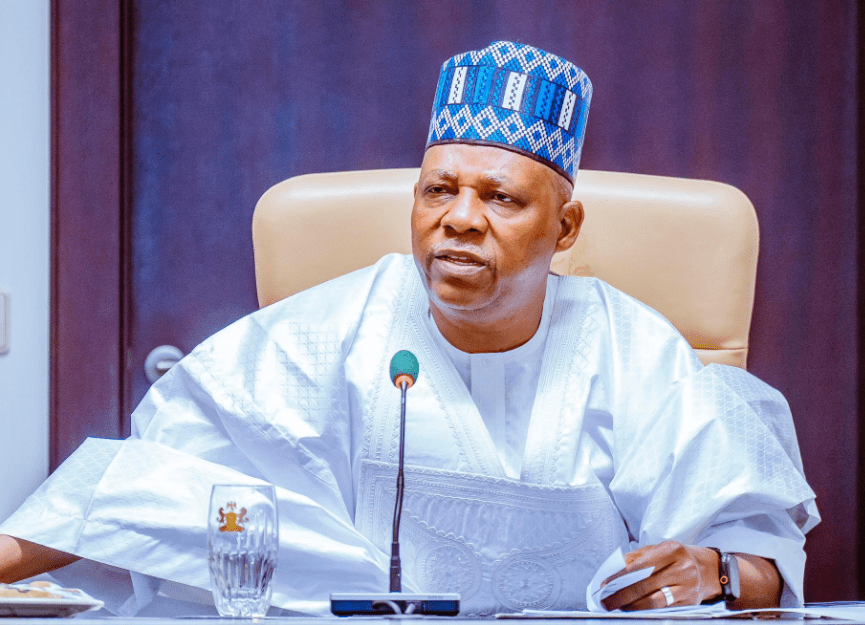
Speaking at the unveiling of Moniepoint’s 2025 Informal Economy Report in Abuja, Vice President Kashim Shettima said the administration remains focused on enhancing the ease of doing business to enable small enterprises to grow and expand across local and African markets.
“The informal economy lies at the heart of Nigeria’s story of resilience, creativity, and enterprise,” Shettima said.
While noting the fintech sector’s contribution to economic growth, he commended MoniePoint’s economic inclusion and job creation efforts.
He said that the administration’s policies were designed to foster favourable business conditions, promote access to finance, and build investor confidence in Nigerian innovation.
VP Shettima explained that “With over 10 million active businesses and individuals served, MoniePoint is Nigeria’s largest business payment platform by volume and the leading merchant acquirer,”he noted. “This growing cross-border presence reflects strong investor and consumer confidence in Nigerian innovation.”
VP Shettima was represented by the Minister of Industry, Trade and Investment, Dr. Jumoke Oduwole.
MoniePoint Microfinance Bank Managing Director, Mr. Babatunde Olofin, said the bank’s mission is to build a society where everyone can achieve financial happiness and economic empowerment regardless of status.
He therefore called for evidence-based policies to drive inclusion, adding that the new report provides critical data to guide policy decisions that enhance business operations and reduce structural barriers in the informal economy.
“This report is more than just a study; it mirrors Nigeria’s economic reality, especially for millions who make their living outside the formal system,” Olofin said.
He emphasised that inclusive growth requires simplified taxation, affordable credit, and sustained efforts to formalise businesses without overburdening them.
The Special Adviser to the President on Job Creation and MSMEs, Temitola Adekunle-Johnson, praised MoniePoint’s role in financing small businesses through low-interest loans, noting that such interventions improve entrepreneurs’ capacity to operate sustainably.
He urged other financial institutions to emulate MoniePoint in supporting small businesses with flexible financing.
Also, the Director-General of the Small and Medium Enterprises Development Agency of Nigeria (SMEDAN), Charles Odii, disclosed that Nigeria has over 39 million small and medium enterprises, many of which remain informal.
He noted that simplifying tax and registration processes is crucial to improving compliance and formalisation.
“Most small business owners cite taxes as the main reason for remaining informal. We appreciate President Bola Tinubu for signing the new tax bill into law to address these concerns,” Odii said.
The MoniePoint Informal Economy Report 2025 reveals persistent structural barriers affecting business performance despite resilience in the sector.
According to the report, the informal economy is still largely youth-driven, with 73 per cent of business owners aged between 18 and 44.
“Businesses owned by people aged 35–44 increased to 35 per cent, compared to 29 per cent in 2024,” it noted.
However, the report stated that women-owned enterprises declined slightly to 35 per cent, while men controlled 65 per cent.
“Forty-four per cent of informal businesses make less than ₦20,000 daily in revenue,” while “70 per cent earn below ₦50,000 in profit.
“For most informal businesses, digital payments are an option and typically not the full story. One in four of them says that digital payments account for less than 10 per cent of their total business revenue. Only 16 per cent of them say that digital transactions account for over 50 per cent of their business revenue,”the Report reads
The findings highlight other constraints, including low profits, multiple levies, and limited access to large loans, which keep most operators reliant on offline transactions despite the rising use of transfers for supplier payments.
The report stated that “the number of businesses in retail and trade increased to 44 per cent, followed by other services (33 per cent), agriculture (7 per cent), and arts, entertainment, and recreation (4 per cent).”
Under “Credit, Taxation, and Financial Behaviour,” the report indicates that 70 per cent of informal businesses depend on informal credit sources such as family and friends, while digital payments are gradually replacing cash transactions, signalling improved financial inclusion.
On the policy front, experts emphasised the need for simplified registration systems, gender-sensitive financial products, and digital literacy support.