

Nigeria’s revenue collection surged by 411% over the past 16 months, reaching ₦3.64 trillion as of September 2025, even as borrowing remains an integral part of the country’s economic strategy and fiscal framework.
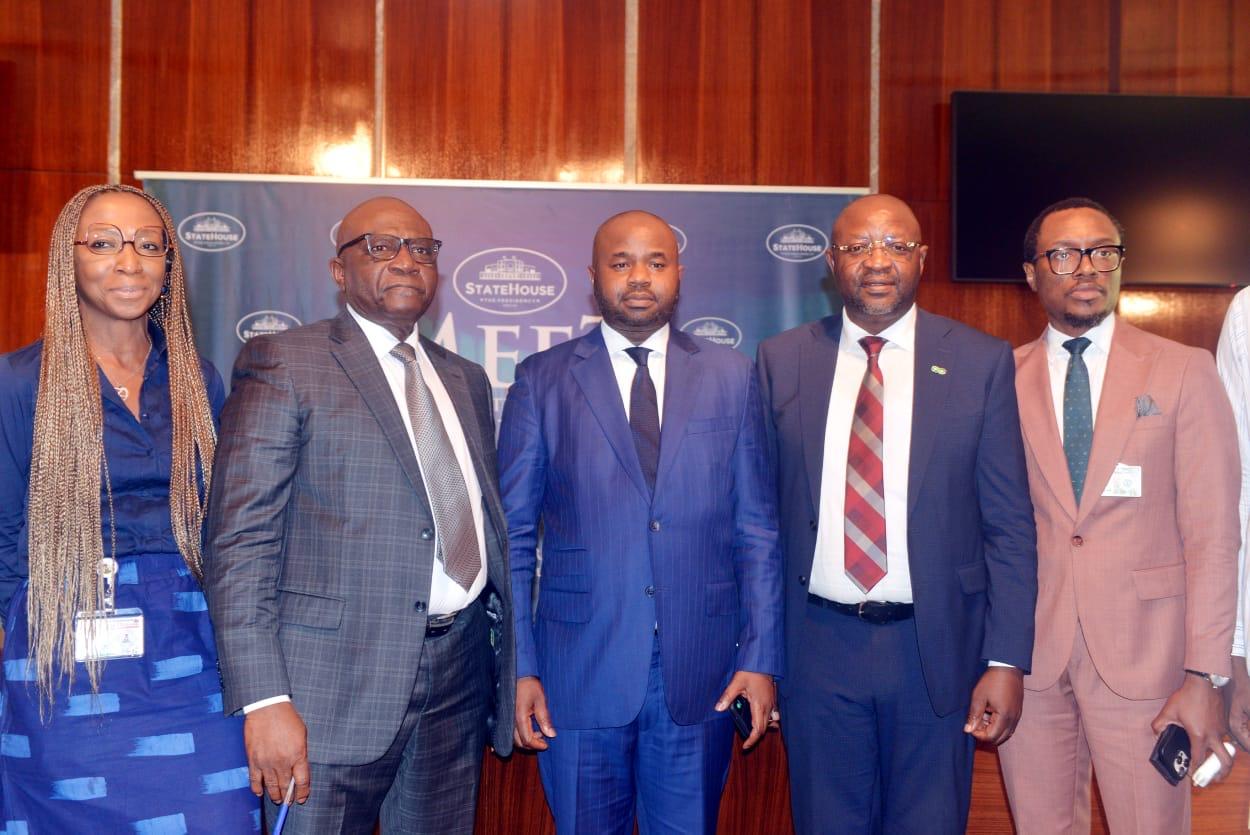
Special Adviser to the President on Revenue and Chairman of the Nigeria Revenue Service, Zacch Adedeji, stated this on Tuesday while speaking on Nigeria’s fiscal landscape during a press briefing organised by the Presidential Media Team at the State House, Abuja, Nigeria’s capital.
According to Adedeji, the federal government under President Bola Ahmed Tinubu is not borrowing beyond the 2025 budget approved by the National Assembly.
Rather, the borrowing is strategically aimed at mitigating future cost escalations, ensuring continuity, and adhering to the principle of fiscal matching.
“Borrowing is not a problem. Banks are part of our economic ecosystem. There is no country or individual in the world that survives based on its own income.
“When the government borrows from banks, we pay interest. It is from that interest that they pay their salaries; it is from the salaries that they pay taxes to state governments.
“So you borrow to beat higher costs for the future. You borrow because of the matching concept to sustain continuity. And when you borrow to fund road infrastructure, you recover it in the future through taxes from anybody using that road to pay their fair share.
“Borrowing is part of the economic plan, and any country that will grow has to borrow because it is part of the ecosystem of a viable nation.
“So when Mr President says we have met our target or we are doing well in revenue, and they ask why we are borrowing, is borrowing not part of the budget we submitted to the National Assembly? Is it not what we submitted to NASS? Are we borrowing outside what is approved?” Mr Adedeji added.

Speaking on the 2025 revenue, Adedeji revealed that revenues increased from ₦711 billion in May 2023 to ₦3.64 trillion in September 2025.
He further mentioned that non-oil tax collections experienced the sharpest rise, increasing from ₦151 billion to over ₦1 trillion during that period.
Oil revenue also increased considerably, with receipts rising from ₦96 billion to ₦644 billion.
Value Added Tax (VAT) receipts more than tripled to ₦723 billion from ₦218 billion, while customs revenue surged to ₦322 billion from ₦106 billion.
The Nigerian Upstream Petroleum Regulatory Commission, he said, also reported remittances jumping to ₦745 billion from ₦125 billion, and the Nigerian National Petroleum Company contributed ₦111 billion in September 2025.
Adedeji attributed this revenue surge to tax reforms initiated under President Bola Tinubu’s administration.
He listed measures such as streamlining tax systems, reducing burdens on SMEs, harmonising levies, and deploying new technology platforms like e-invoicing and data-driven audits, which have closed tax leakages and expanded the tax base.
“Our goal is to fund development from internally generated revenues and borrow only to support investments that can pay for themselves,” he said,
Additionally, the FIRS Chairman stated that the government is also actively settling inherited debts to stabilise Nigeria’s fiscal position, including obligations related to the Central Bank’s overdraft facilities, thereby strengthening investor confidence in the country’s finances.
“We have stopped, if you remember, one of the decisions of Mr President, which is to collateralise Ways and Means. We stopped printing, and the whole loan is taken as a Federal Government loan. We are paying principal and interest, and that is why you have stability in the system and no pressure on the exchange rate.
“Because all pillars of the real economic indices are firmly grounded, it is not about how much, but it is well recognised in the Federal Government books as part of the loan that has interest. We are paying back, servicing the loan, paying capital, and paying interest, depending on the approved tenure.” Adedeji added.
On intended reforms, Adedeji said the FIRS targets boosting fiscal efficiency and competitiveness.
These include harmonising subnational levies to reduce multiple taxation, introducing a presumptive tax system for the informal sector, and progressively lowering corporate tax rates.
Adedeji emphasised that constitutional reforms are underway to clearly define revenue allocation between the federal and state governments, reinforcing a more robust framework of fiscal federalism.