

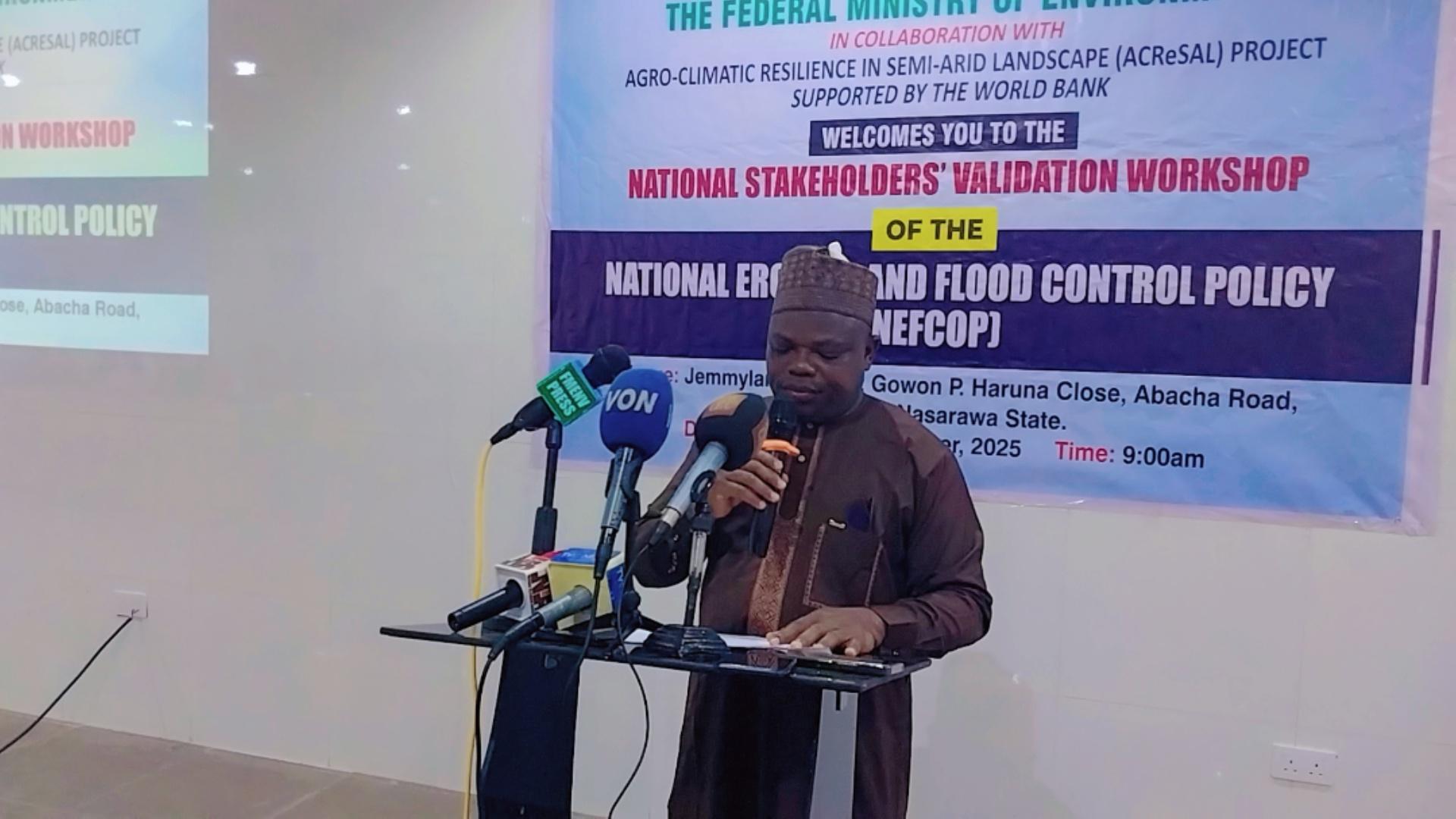
The Federal Ministry of Environment has validated the National Erosion and Flood Control Policy (NEFCOP), reaffirming its commitment to addressing the growing threats of erosion, flooding, and environmental degradation across Nigeria.
The updated policy framework seeks to prevent and mitigate the impacts of erosion and flooding, promote integrated land and water resource management, and strengthen institutional coordination across all levels of government.
Officially launched in 2005 to address the challenges of erosion, flooding, and coastal degradation, the Federal Ministry of Environment is embarking on the review of the NEFCOP to strengthen the national framework for erosion and flood management.
Speaking during the National Stakeholders Validation Workshop held in Nasarawa State, North central Nigeria, the Permanent Secretary Ministry of Environment, Mahmud Kambari, emphasized that the revised policy will provide a comprehensive and evidence-based approach to managing erosion and flood risks while enhancing community resilience and aligning Nigeria’s environmental management efforts with global best practices.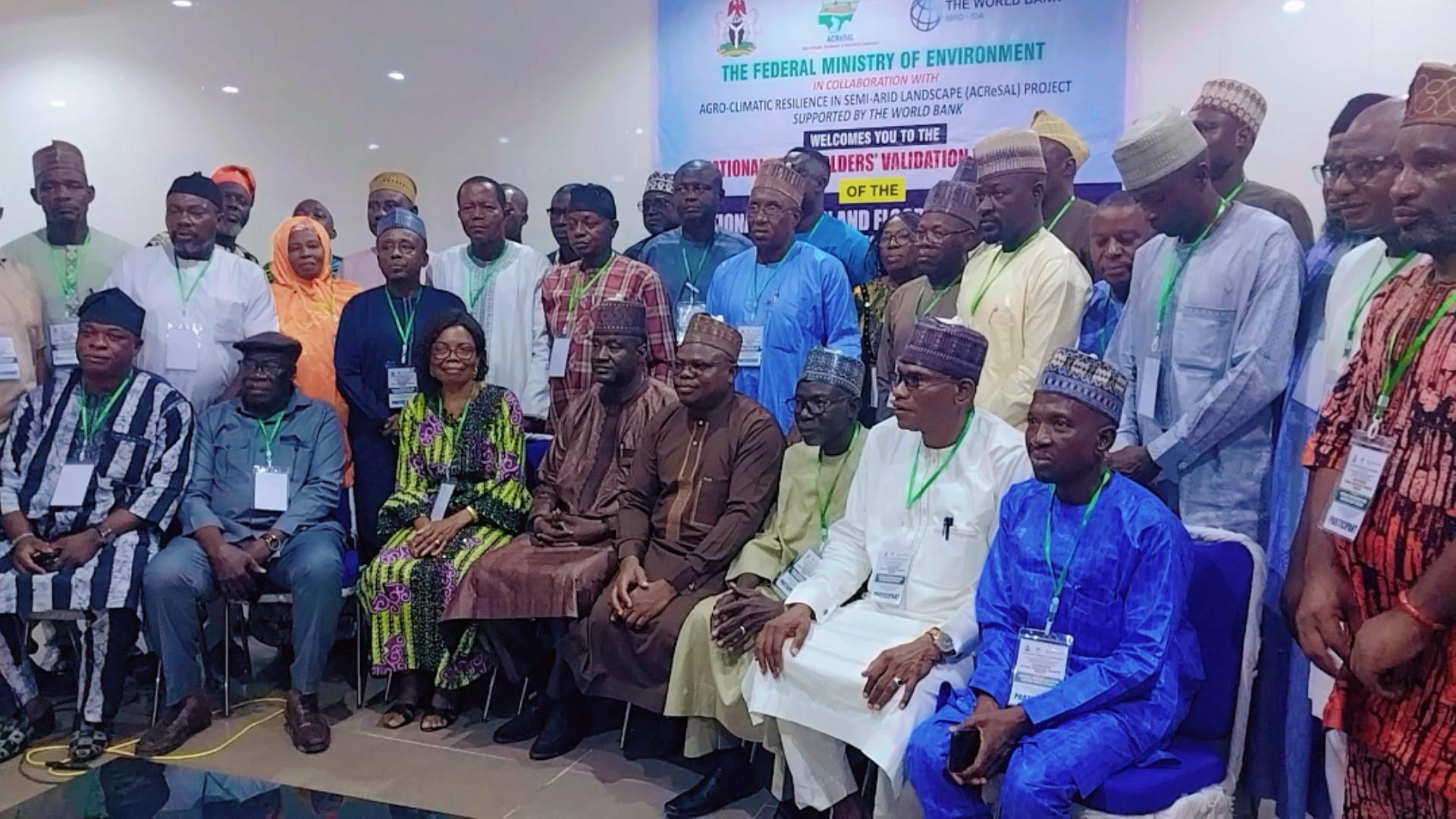
He noted that environmental sustainability is not an option, it is an imperative for survival and national development.
“As we validate these critical policy instruments today, we must also commit to their full implementation, monitoring, and periodic review. The Federal Ministry of Environment will continue to provide leadership and coordination in this regard, while ensuring that all stakeholders at the federal, state, and local levels play their respective roles effectively,” he said.
He reiterated the Ministry’s resolve to ensure effective implementation, monitoring, and periodic review of the policy in collaboration with relevant stakeholders, development partners, and sub-national governments to achieve a sustainable and climate-resilient environment for all Nigerians.
“The documents before you today are the products of extensive technical consultations and stakeholder inputs at various levels. This workshop presents the opportunity for you, as key actors and experts to validate them. I therefore urge you to approach this exercise with diligence and open-mindedness. Let us ensure that the policy and accompanying documents truly reflect our national realities, address the identified gaps, and offer practical solutions that can be implemented across the different ecological and administrative contexts of Nigeria.”
The Director, Erosion, Flood and Coastal Zone Management Department in the Ministry, Mr Usman Bokani, said the workshop marks another critical milestone in the collective efforts by government to strengthen Nigeria’s resilience against the impacts of erosion and flooding across the country.
He noted that the validation workshop provides a platform for inclusive dialogue and consensus-building among stakeholders, to examine the reviewed policy, validate its provisions and ensure that it adequately addresses the needs and aspirations of all relevant sector.
Mr Bokani further explained that the insights and feedback generated from this engagement will form the final inputs that will strengthen the policy before its formal adoption and implementation.
“The Federal Ministry of Environment, through the Department of Erosion, Flood, and Coastal Zone Management, initiated the process of reviewing the National Erosion and Flood Control Policy and its associated documents.’
‘’This review was undertaken with broad technical consultations and the active participation of experts, institutions, and stakeholders from across the Federation. The aim was to ensure that the policy reflects current knowledge, integrates modern technologies, aligns with national and international frameworks, and provides practical solutions for erosion and flood risk management, ’’ he explained
National Project Coordinator of the Agro-Climatic Resilience in Semi-Arid Landscapes (ACReSAL) Mr Mr. Abdulhamid Umar, represented by Mr Musa Shuaibu reaffirmed ACReSAL’s support for the project, emphasizing the importance of the document’s consideration for both structural and non-structural interventions.
While reviewing the document the Dr Mrs M.A Oyeleke, said the validation of the document is to ensure that the policy is clear to all stakeholders in terms of information, Data amongst others.
The workshop was organised by the Federal Ministry of Environment in collaboration with Agro-Climatic Resilience in Semi-Arid Landscape (ACReSAL) Project, supported by the World Bank.