

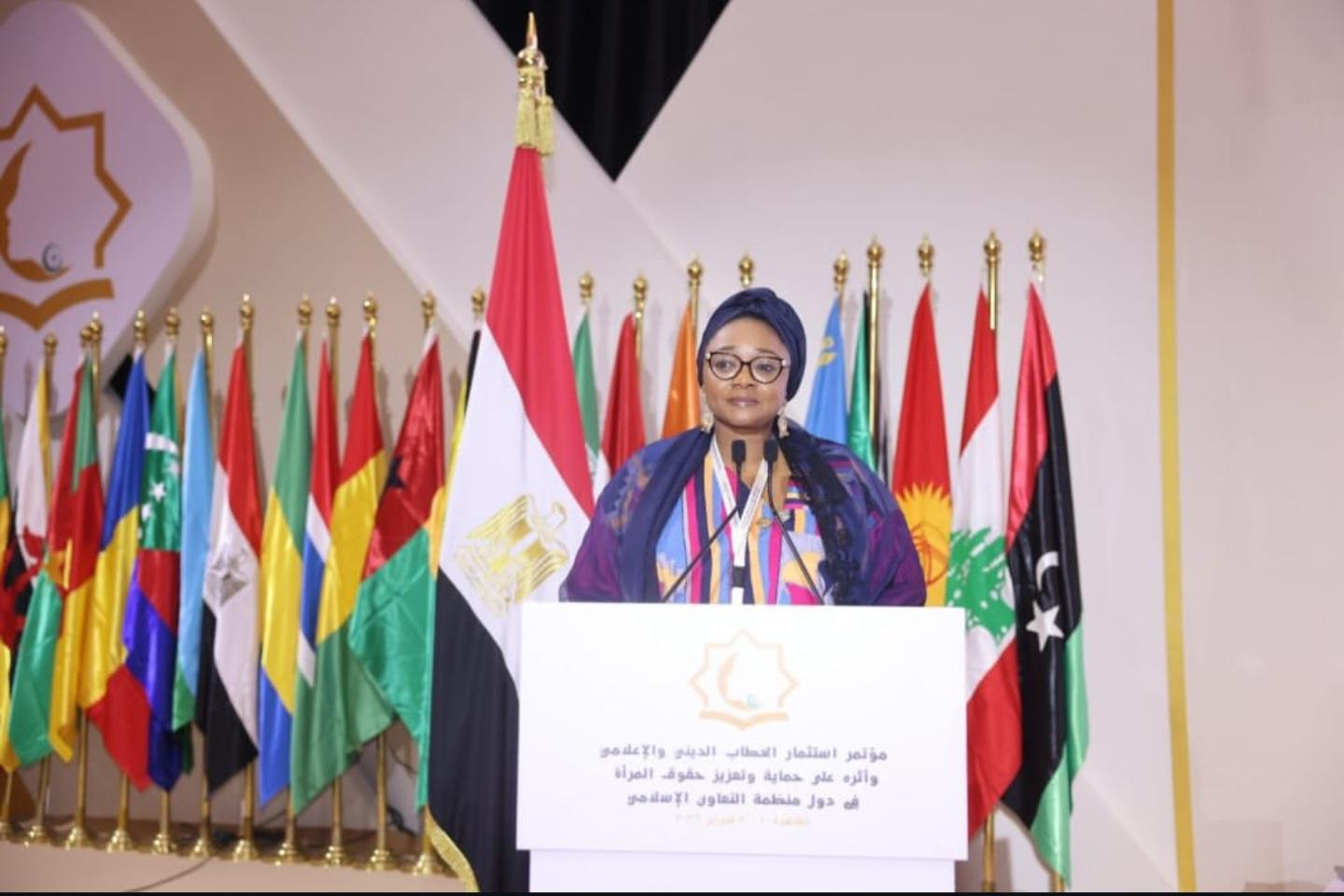
Nigeria has showcased laudable, transformative framework to empower women under President Bola Tinubu’s Renewed Hope Agenda at a high level international conference tagged Cairo Conference organised by the Organisation of Islamic Cooperation, OIC held in Egypt.
With the theme:”Harnessing Religious and Media Discourse and Its Impact on the Protection and Promotion of Women’s Rights,” the conference among others, aims to modernise women’s rights discourse among member nations of the OIC.
Center of Development
In her presentation the Minister of Women Affairs and Social Development, Hajiya Iman Suleiman-Ibrahim, outlined Nigeria’s comprehensive six-pillar strategy that positions women at the centre of development and reframes women’s rights as both a divine mandate and national duty.
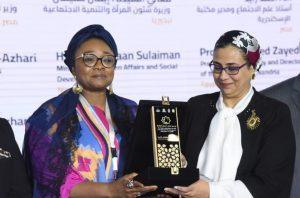
The strategies showcase include: SECURE (Safe Schools Initiative protecting 42,000 mapped schools through a N144.8 billion financing plan); and SUPPORT (Project AGILE providing Conditional Cash Transfers to 466,000 vulnerable girls and renovating 8,900+ WASH facilities).
Others are REACH (Alternative School Programs achieving 100% pass rates for out-of-school girls in conflict zones); DIGNIFY (formalising the care economy to address girls’ time poverty); DRIVE (strengthening social workforce across all 774 LGAs while advancing advocacy that reduced FGM prevalence from 25% to 19.5%); and PROTECT (insulating youth from radicalization by making education the first line of defense).
Survivor Rehabilitation
Highlighting the administration’s zero-tolerance stance, she announced that the Violence Against Persons Prohibition (VAPP) Act has undergone comprehensive review and is currently before the nation’s Parliament, while Nigeria develops its first National Action Plan on GBV to provide essential coordination for prevention, response, and survivor rehabilitation.
The Minister said that through the Renewed Hope Social Impact Interventions 774, the Ministry is driving community-led transformation by creating energy access, supporting agro-enterprises, strengthening child protection systems, and ensuring family cohesion.
“By combining the moral authority of faith with the reach of media, the teeth of the law, and the infrastructure of education,” she declared, adding “we are transforming the protection of women from a policy goal into a shared, sacred national mission—ensuring women and girls no longer live in fear, but in dignity, safety, and hope.”
Values of Islamic Mandates
The Minister emphasised Nigeria’s unique bottom-up coordination framework that bridges the Ministry of Women Affairs and Social Development, Ministry of Education, religious leaders, subnational governments, NGOs, CSOs, and media experts to develop culturally grounded content, rooted in shared spiritual values of Islamic mandates for seeking knowledge and Christian principles of equal dignity.
This unified approach would ensure that the pulpit, classroom, and radio speak with one voice, particularly during the 16 Days of Activism against Gender-Based Violence.
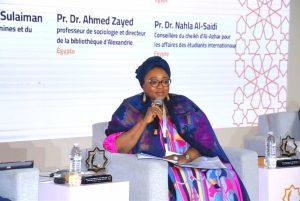
Speaking at the Economic Rights of Women and Girls panel session, Suleiman-Ibrahim conveyed the goodwill of President Tinubu, commending the conveners for elevating religion and media discourse to the center of global efforts and prevention, which she said reflects “a shared awareness and responsible influence”.
Strategic Security
Emphasising the strategic place and role of mothers, she stated that early guidance provides strategic security.
“Women occupy the earliest and decisive space in shaping perceptions, conscience and identity. When women are equipped with sound, peace centered religious knowledge, faith becomes a moral anchor not an ideology.”
“Extremism does not begin with violence, it begins with distortion, it grows in environment where values are weak, guidance is absent, and critical thinking is underdeveloped. To prevent extremism we must begin before ideology takes roots at the level of childhood awareness,” she explained.
Wellbeing of Women
The Minister submitted that every institution has a role to play when it comes to addressing issues of abuse, welfare, and wellbeing of women and children.
“Religious discourse is central to this responsibility. in coordination we must ensure that those resources are made available not just to the lead actors but also to the supporting actors like the media and also our religious actors because sometimes it is a major constraint when the funds are not there to be able to achieve all of these advocacy efforts.” she explained.
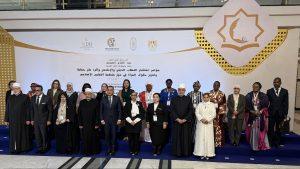
The conference was co-organised by the National Council for Women, the Women’s Development Organisation (WDO), and Al-Azhar al-Sharif.
The international conference aims to highlight the role of responsible religious and media discourse in correcting misconceptions, promoting respect for women’s rights, and supporting their active participation in various fields.