

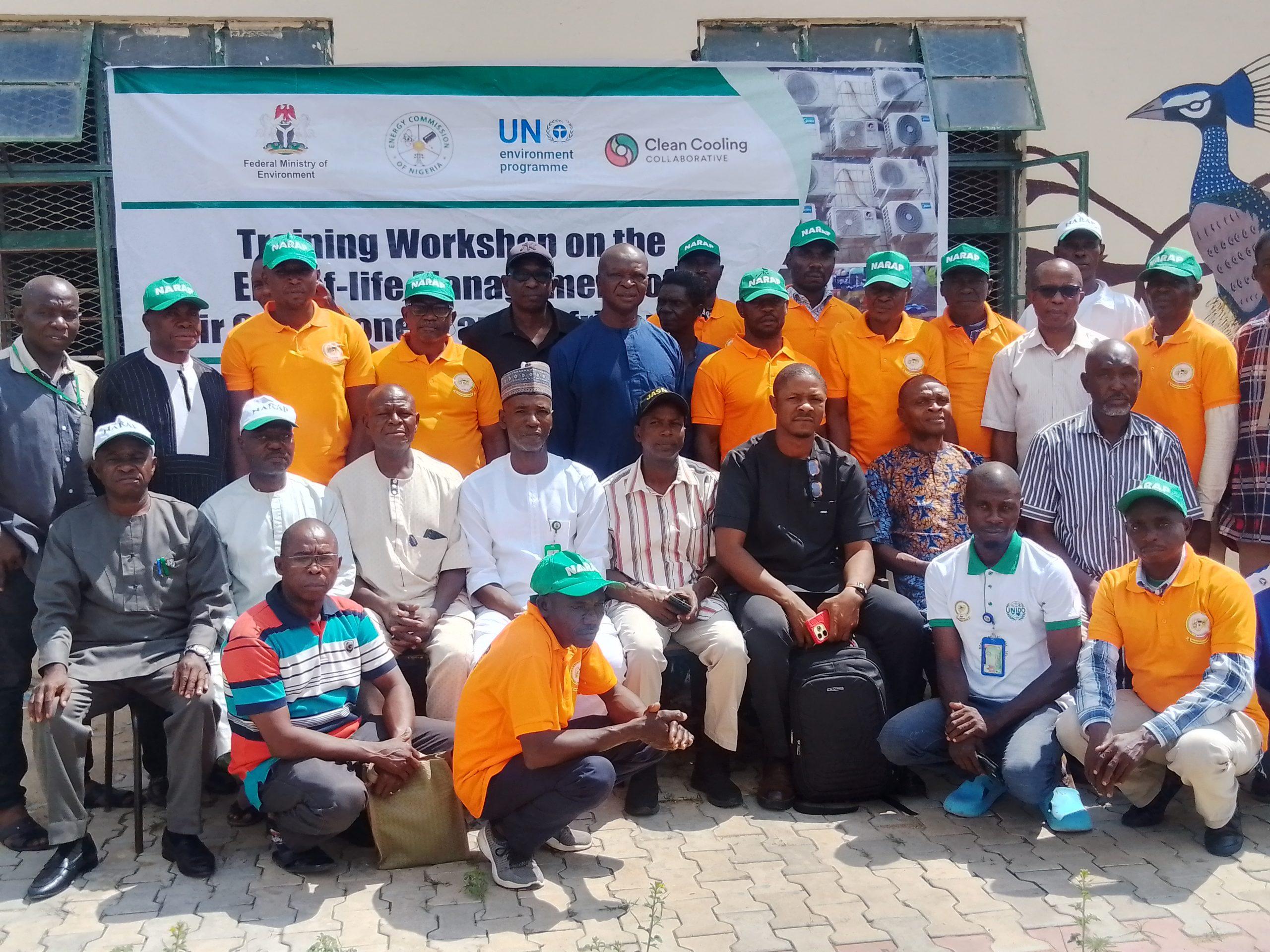
Nigeria’s Federal Ministry of Environment, through its National Ozone Office, in collaboration with the Sustainable Research and Action for Environmental Development (SRADeV), has trained refrigeration and air-conditioning (RAC) technicians on the safe handling of natural refrigerants.
The training, held in Kano under the Hydrochlorofluorocarbon Phase-out Management Plan (HPMP) project, drew participants from across the North West zone.
It focused on equipping technicians with practical skills to handle climate-friendly refrigerants such as Hydrocarbons among others.
In a goodwill message, the Director of the Ministry and National Ozone Officer, Engr. Idris Abdullahi, said the initiative will boost safety in the RAC sector while supporting Nigeria’s transition from ozone-depleting substances to environmentally friendly alternatives.
READ ALSO:Kaduna Government Trains Farmers on Land Restoration Techniques
He reminded participants that, Nigeria ratified the Kigali Amendment in 2018, signaling its commitment to reducing hydrofluorocarbon (HFC) emissions in line with global standards.
“The Kigali Amendment targets the phase-down of HFCs, potent greenhouse gases widely used in refrigeration and air conditioning systems.
“Certifying technicians is crucial to ensuring safe handling of low-global warming potential alternatives,” Abdullahi stated.
Executive Director of SRADeV Nigeria, Dr. Leslie Adogame represented by Mr. Jeremiah Ato, described the amendment as a bold global step against climate change.
He reaffirmed SRADeV’s commitment to policy advocacy, awareness, and capacity-building, particularly through its project on reducing emissions of fluorinated greenhouse gases and ozone-depleting substances in Nigeria.
“Nigeria’s transition to safer alternatives depends on well-trained technicians. Your expertise directly impacts performance, safety, and environmental outcomes of cooling systems,” Adogame noted.
The National Association of Refrigeration and Air-conditioning Practitioners (NARAP), represented by Deputy National Secretary Adelodum Adesola, also conducted safety training sessions for the participants.
Some trainees described the programme as inspiring and timely, as it prepares them to meet both national and international certification standards in the RAC industry.