

Nigeria is determined to attain 95% digital literacy by the year 2030.
This was disclosed by the President and CEO of the Digital Bridge Institute (DBI), Mr David Daser, who stated that the target aligns with the present administration’s Renewed Hope Agenda.
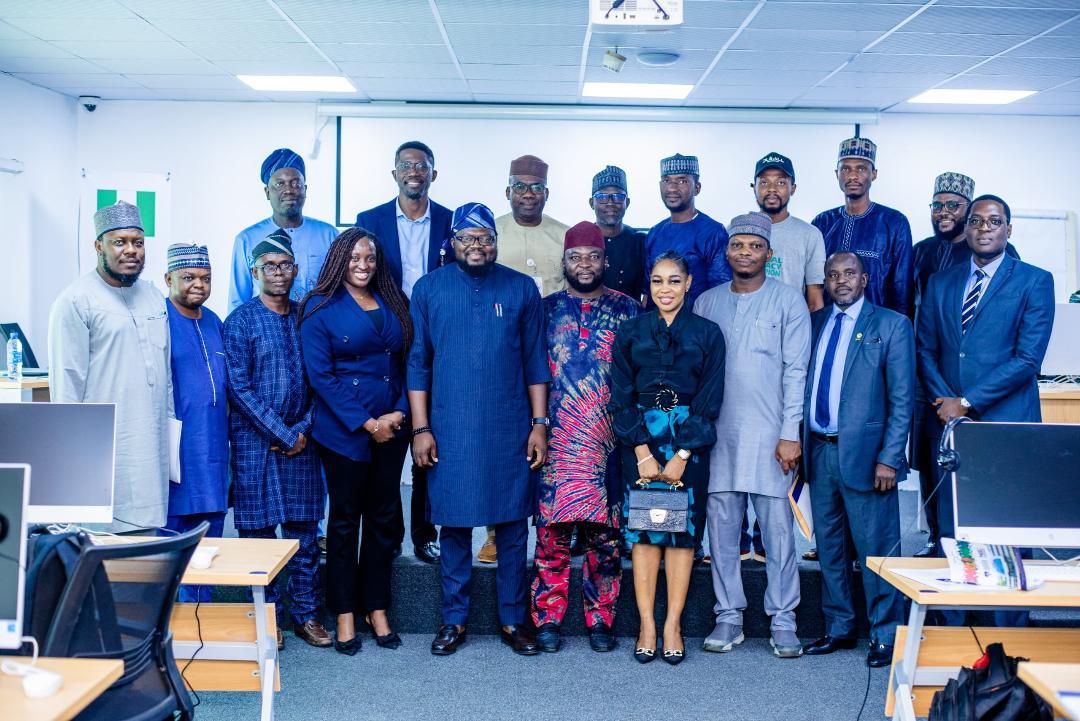
Speaking at the inaugural meeting of the National Digital Literacy Technical Working Group (NDL-TWG) on Tuesday, Mr Daser described the inclusion of digital literacy as a cornerstone of President Bola Ahmed Tinubu’s Renewed Hope Agenda and the recently launched Digital Literacy for All (DL4ALL) initiative as significant steps towards achieving the 95% target.

Mr Daser, who is also the Chairman of the Technical Working Group, in an address titled “Big Steps Towards Our Path to 95% Digital Literacy by 2030 in Nigeria,” commended President Tinubu and the Minister of Communications, Innovation, and Digital Economy, Dr Bosun Tijani, for what he termed “their unwavering commitment to advancing Nigeria’s digital economy and fostering widespread digital literacy.”
He added: “I also want to acknowledge the visionary leadership of His Excellency, Senator Bola Ahmed Tinubu, GCFR, President of the Federal Republic of Nigeria, and the Minister for Communication, Innovation, and Digital Economy, Dr Bosun Tijani, for their unwavering commitment to advancing Nigeria’s digital economy and fostering widespread digital literacy.”
“The inclusion of digital literacy as a cornerstone of the Renewed Hope Agenda underscores a profound understanding of its critical role in national development, empowering our citizens, and positioning Nigeria for a prosperous future in the global digital landscape.”
“This strategic focus is not merely about technology adoption; it is about human capacity building, job creation, and unlocking the vast potential within our vibrant populace,” he said.
Stressing the importance of the Digital Literacy for All initiative and the technical group, he noted that the nation has grappled with significant digital literacy gaps. He regretted that although individual initiatives have emerged across the country to address these challenges, their fragmented nature—combined with persistent infrastructure issues and inconsistent data collection—has hindered collective progress.
He warned that in today’s rapidly evolving global economy, digital literacy is no longer a luxury but a fundamental necessity, serving as a gateway to economic prosperity, social inclusion, and improved governance.
According to him, the National Information Technology Development Agency (NITDA) launched the Digital Literacy for All initiative to confront this critical challenge. He said the NDL-TWG represents a strategic and unified response to ensure that the goals of the initiative and the Nigeria Digital Literacy Framework become lived realities for every Nigerian.
“Our mandate, therefore, is clear and compelling. We are tasked with coordinating, standardising, and scaling digital literacy initiatives nationwide.”
“This involves a meticulous approach to harmonise existing programmes, identify and bridge infrastructure gaps that impede access, and establish robust, consistent data practices to accurately measure our progress. We must ensure that our efforts are cohesive, efficient, and impactful, reaching every corner of our vast and diverse nation.”
“The ultimate vision driving our work is Nigeria’s unwavering commitment to achieving 95% digital literacy by the year 2030. This is not merely an ambitious target; it is a declaration of our intent to build a future where every Nigerian, regardless of age, gender, or location, possesses the essential digital skills to thrive in the 21st century.”
“It is about empowering our citizens, boosting our economy, and fostering a society that can fully harness the transformative power of technology,” the DBI boss stated.
Mr Daser also commended the Head of Service of the Civil Service of the Federation, Mrs Didi Esther Walson-Jack, and the Director General of NITDA, Mr Kashifu Inuwa, for their visionary leadership and their efforts in inaugurating the committee and committing to a digitally empowered civil service.
“As President/CEO of the Digital Bridge Institute (DBI), an institution dedicated to building human capacity for the digital economy through specialised training, research, and consultancy, I am particularly honoured to lead this group.”
On the group’s mission, Mr Daser stated: “This journey will demand unprecedented collaboration from government agencies, the private sector, academia, civil society organisations, and indeed, every Nigerian who understands the imperative of digital inclusion.”
“We must pool our resources, share our expertise, and unite under a common purpose. The NDL-TWG is committed to fostering an environment where innovation flourishes, best practices are shared, and every stakeholder plays a vital role in this national endeavour.”
“I urge all of us to approach this task with dedication, foresight, and a deep understanding of the profound impact our success will have on the lives of millions.”
The Executive Secretary of the National Board for Technical Education (NBTE), Professor Idris Bugaje, described the initiative as a very smart move by the government, the ministry, and other stakeholders within the ecosystem.
He assured that the NBTE was ready to support the initiative and contribute meaningfully to the success of the technical working group, noting that its importance cannot be overemphasised.
“Let me update you that the NBTE has already embraced digital technology. We are trying our best; even in our accreditation today, we are doing it digitally.”
“There is no physical accreditation, and this has reduced cost, ensured the safety of our staff, and addressed the so-called ‘Nigerian factor’ in accreditation, which has been mitigated by eliminating human interface.”
“We are also linking all our polytechnics to a common digital database where all data on students, staff, and other matters are uploaded and accessible to both the NBTE and the Federal Ministry of Education,” he added.