

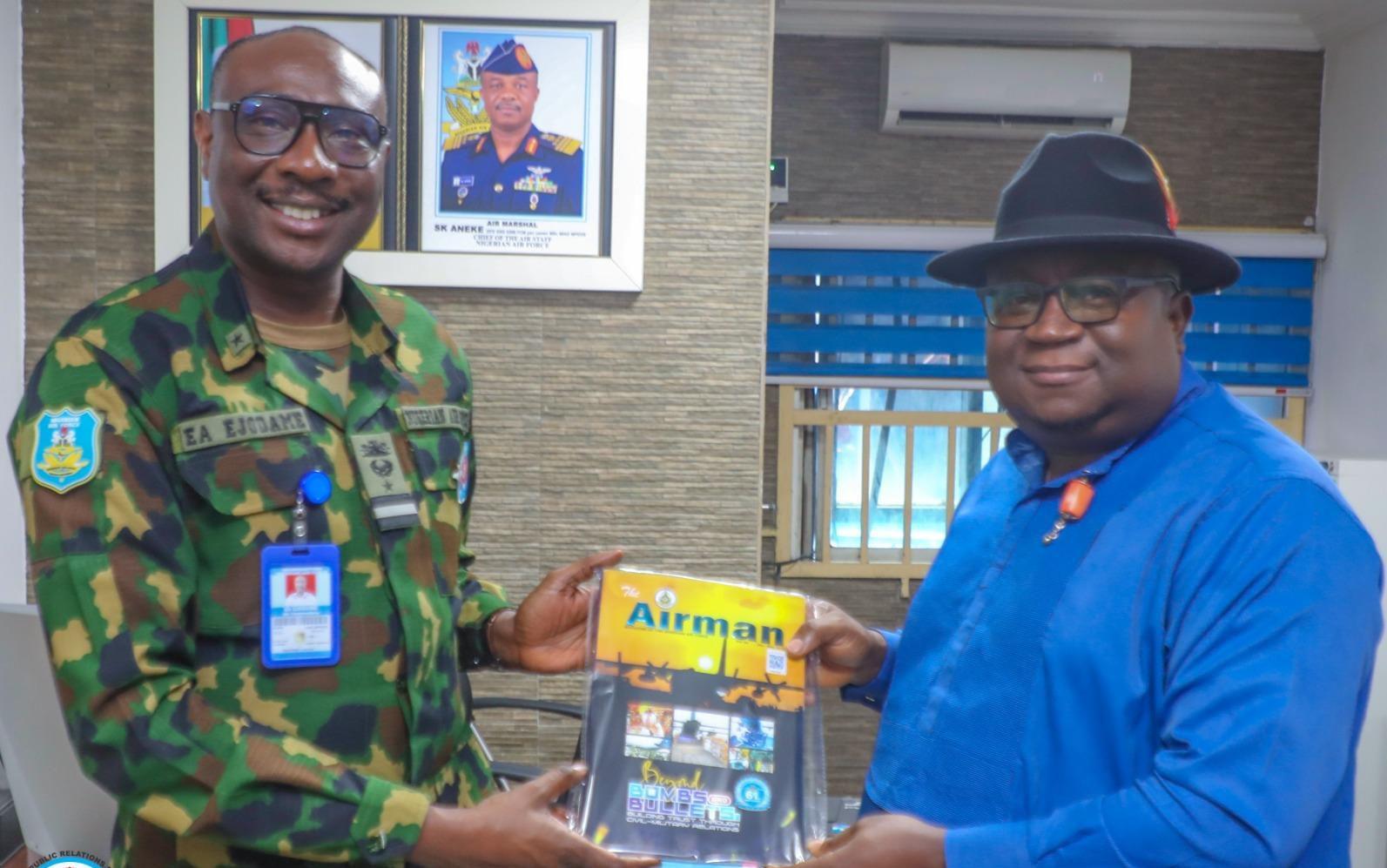
Nigeria’s Ministry of Foreign Affairs (MFA) and the Nigerian Air Force (NAF) have reiterated commitment to closer inter-agency coordination and strengthened strategic communication.
This was the highlight of a familiarisation and synergy visit aimed at enhancing collaboration between diplomatic and military communication structures.
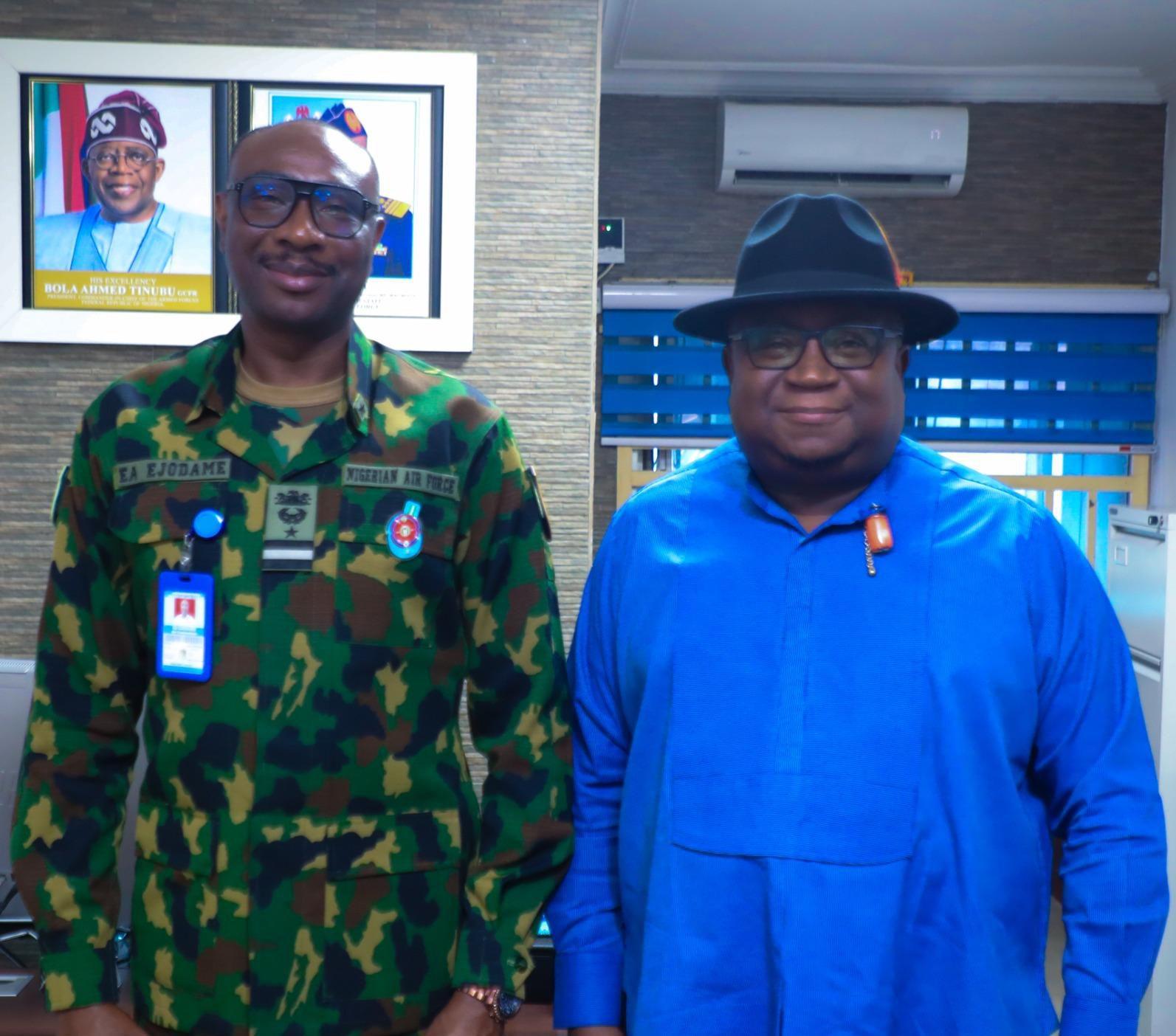
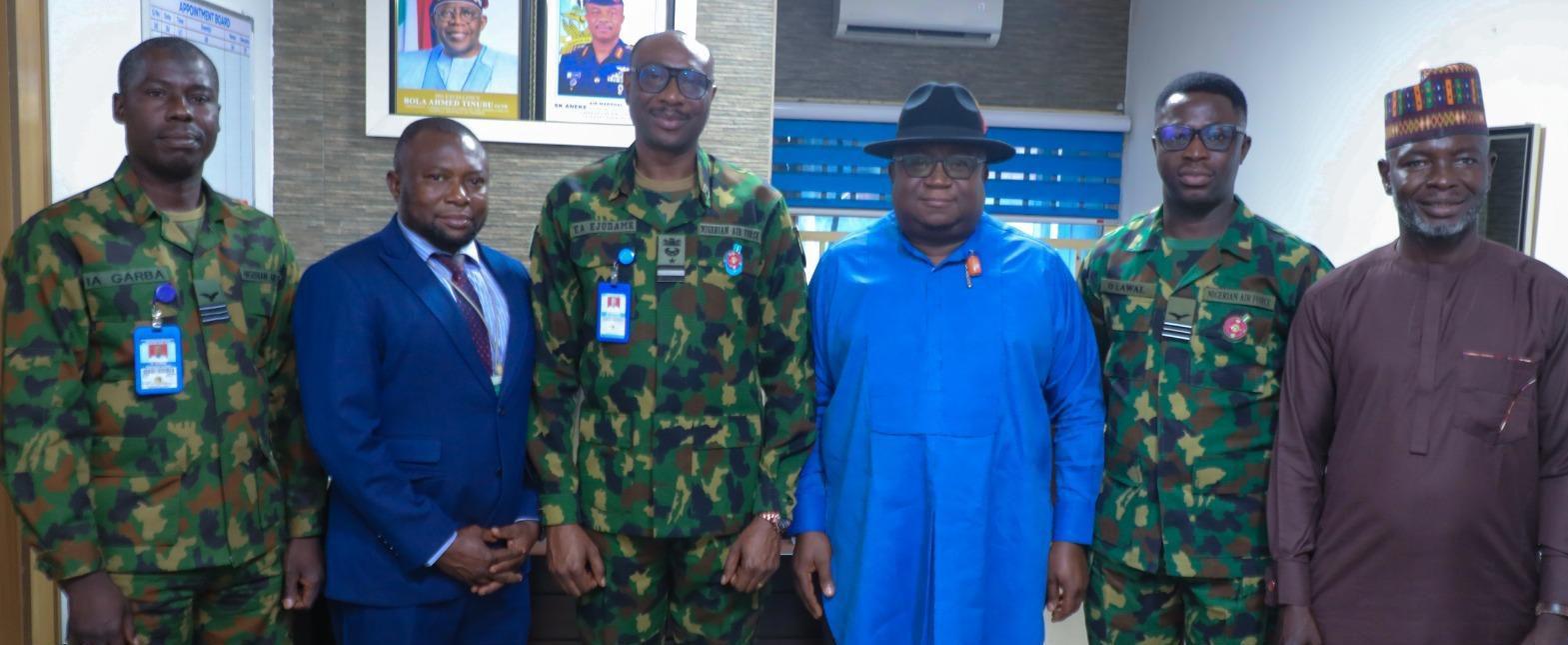
The visit was led by the Spokesperson of the Ministry of Foreign Affairs, Mr. Kimiebi Ebienfa, to the Director of Public Relations and Information of the Nigerian Air Force, Air Commodore Ehimen Ejodame, in Abuja, Nigeria.
It provided a platform for open, professional, and forward-looking discussions on the intersection of diplomatic communication and military public information, particularly in the context of Nigeria’s evolving security landscape and increasing international media attention.
Both institutions acknowledged that contemporary security challenges require not only effective operational responses but also carefully coordinated messaging that protects national interests, preserves sovereignty, and maintains public confidence.
Air Commodore Ejodame outlined the operational realities confronting the Nigerian Air Force, noting that Nigeria is largely faced with asymmetric and guerrilla-style threats.
He explained that hostile actors often operate within civilian populations, blurring the lines between combatants and non-combatants.
This reality, he said, complicates both military operations and public communication, as sensitive information must be handled carefully to avoid jeopardising missions, intelligence assets, or the safety of personnel.
Read Also: Minister Urges Broadcasters to Safeguard Nigeria’s Sovereignty
Nigeria’s Foreign Affairs Minister Advocates Strategic Economic Diplomacy
From the diplomatic perspective, Mr. Ebienfa underscored the critical importance of calibrated and coordinated public messaging, especially in situations involving international partners, foreign military actions, or sensitive security operations.
He cautioned that uncoordinated, speculative, or premature statements during rapidly evolving situations could escalate operational matters into diplomatic challenges before all facts are fully established.
Drawing from recent experiences, he noted that gaps in inter-agency communication have, in some cases, fuelled media speculation, heightened public anxiety, and generated avoidable diplomatic pressure.
Both spokespersons acknowledged the growing role of information warfare in modern conflict, stressing that information vacuums created by delayed or insufficient communication are often exploited by misinformation and hostile narratives.
They agreed on the need for Nigeria to remain vigilant against narratives capable of undermining the professionalism, capability, or legitimacy of its Armed Forces, while also reaffirming that Nigeria’s military continues to command regional and international respect despite the complexities of asymmetric warfare.
The discussions also touched on broader strategic and geopolitical considerations, including public perceptions of foreign partners involved in counterterrorism cooperation, the risk of mischaracterising collaboration as dependency, and the potential for poorly framed narratives to deepen social divisions or fuel radicalisation.
Emphasis was placed on evidence-based communication and sensitivity to religious, regional, and political contexts, particularly in communities affected by conflict, displacement, or prolonged insecurity.
The meeting concluded with a shared understanding that sustained synergy between the communication structures of the Ministry of Foreign Affairs and the Nigerian Air Force is essential for effective national security management.
Both parties reaffirmed the importance of early consultation on incidents with diplomatic implications, alignment of messaging to reflect both operational realities and diplomatic positions, and continuous professional engagement to build trust and institutional familiarity.
They also agreed that capacity-building initiatives, including joint media response simulations and regular spokesperson engagements, would further strengthen whole-of-government coherence in crisis communication.
Described as timely, constructive, and forward-looking, the familiarisation visit reflects a shared commitment to integrated national response mechanisms in addressing Nigeria’s security and diplomatic challenges, with coordinated strategic communication recognised as a vital asset in safeguarding sovereignty, maintaining public trust, and enhancing Nigeria’s international standing.