

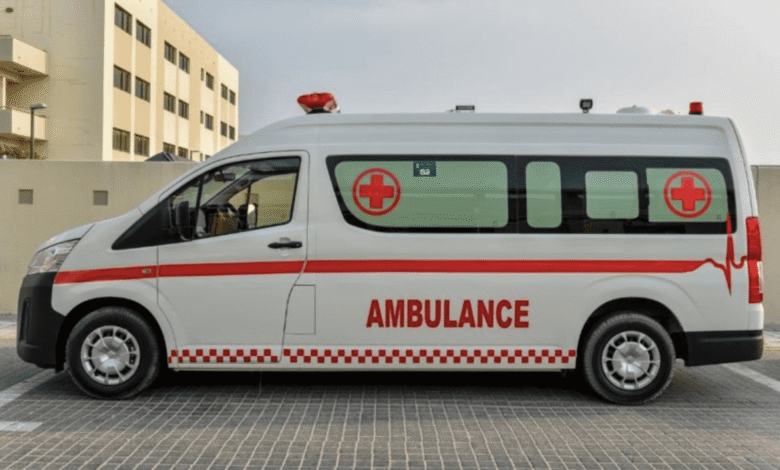
The Nigerian Government through the National Emergency Medical Service and Ambulance System (NEMSAS), has strengthened emergency medical response across Nigeria by supporting states in establishing functional emergency medical service structures to improve access to life-saving care.
The National Programme Manager of NEMSAS, Dr Emuren Doubra, disclosed this while responding to issues raised in a recent academic publication on emergency medical services in Nigeria. He noted that although the journal provided an overview of NEMSAS’ mandate, it did not fully reflect the extent of federal support to states.
According to him, NEMSAS has assisted states in establishing Emergency Medical Service and Ambulance Systems designed to coordinate ambulance operations and provide free emergency care, particularly fopr vulnerable and indigent populations, through public, private, and federal tertiary health facilities.
He explained that NEMSAS-supported structures currently exist across the 36 states and the Federal Capital Territory, with 33 states and the FCT already operating emergency medical service systems. Of these, 21 states are fully operational, while others are at advanced stages of commencement.
Dr Doubra acknowledged that ambulance distribution across the country has yet to reach equitable levels but emphasised that operational ambulances are already serving residents in several states.
He added that in three states where emergency systems are yet to be established, selected federal tertiary hospitals have been empanelled to serve as interim coordinating centres pending full state implementation.
He further revealed that all states have access to emergency medical treatment funding opportunities under the Basic Health Care Provision Fund (BHCPF). However, some states are yet to commence utilisation despite having NEMSAS-supported structures in place.
“To improve access to emergency response services, NEMSAS has also adopted multiple emergency communication numbers due to challenges associated with the national emergency line.
Findings from a nationwide survey conducted with National Health Fellows showed that about 80 per cent of states can access the national emergency number, 112, though connectivity challenges and low public awareness persist”.
The NEMSAS Programme Manager therefore called on the Nigerian Communications Commission to scale up awareness and ensure seamless functionality of the 112 emergency number across all telecommunications networks.
Dr Doubra also advocated the enactment of a Good Samaritan Law in Nigeria to protect citizens who voluntarily assist accident victims and other emergency cases, noting that many well-meaning Nigerians have faced harassment from law enforcement agencies while attempting to help victims.Good Samaritan Law
Highlighting efforts to address maternal and newborn emergencies in rural communities, he stated that NEMSAS is implementing the Rural Emergency Service and Maternal Transport (RESMAT) programme to reduce delays in accessing healthcare during obstetric emergencies.
“The RESMAT initiative, currently operational in 123 local government areas, has transported more than 40,000 pregnant women from hard-to-reach communities to health facilities for safe delivery as of December 2025”.
“Additionally, over 11,200 women experiencing obstetric emergencies and about 1,680 newborns requiring urgent care have been successfully transported and managed at accredited Comprehensive Emergency Obstetric and Newborn Care facilities”.
He emphasised the need for stronger collaboration among emergency response agencies nationwide and urged stakeholders and the public to maintain confidence in ongoing efforts to build an efficient and responsive emergency medical service system in Nigeria.