
 has urged journalists in the)

By Jack Acheme, Ibadan
The Nigerian Government in collaboration with the United Nations Children’s Fund (UNICEF) has urged journalists in the country to use their various platforms to protect children’s rights by ethically reporting issues concerning them with care and sensitivity.
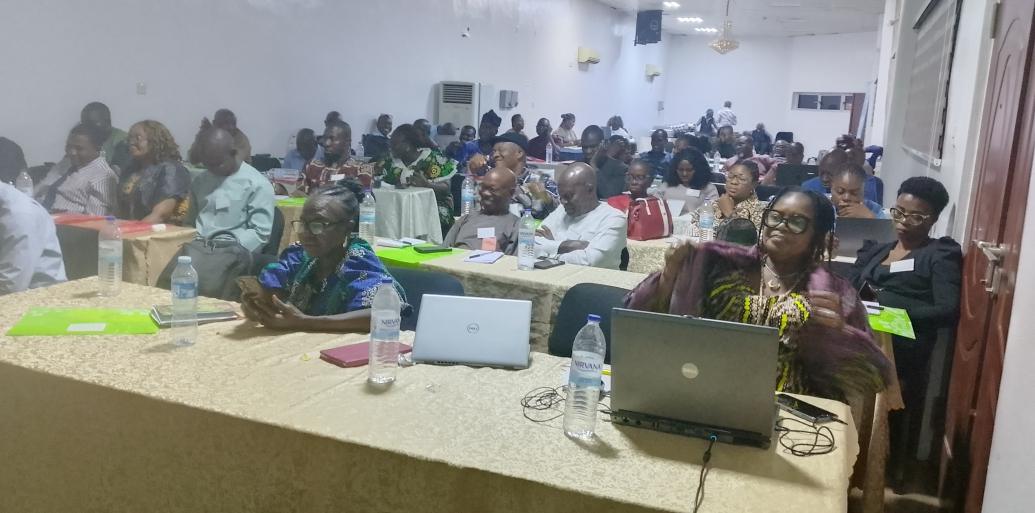
The call was made at a two-day training for journalists on Ethical Journalism and Child’s Right Reporting held in Ibadan, Oyo State south west Nigeria. The training was organised by the Child Rights Information Bureau (CRIB) of the Federal Ministry of Information and National Orientation in partnership with UNICEF.
The Permanent Secretary, Federal Ministry of Information and National Orientation, Mr. Ogbodo Chinasa Nnam said the call became necessary because journalists play a vital role in shaping public understanding, influencing attitudes, and protecting the most vulnerable members of the society, especially the children.
He stressed that the media holds immense power to inform, inspire, and hold institutions accountable. But with that power comes a profound responsibility: to report with integrity, sensitivity, and respect for human dignity.
‘’When it comes to stories involving children, that responsibility becomes even greater. Every image, every word, and every frame we publish can have lasting consequences on a child’s life, safety, and future,’’ he said.
According to him, the training was designed to help journalists reflect on their ethical obligations, explore best practices for reporting on children’s issues, and strengthen understanding of child rights as enshrined in national laws and international conventions.
‘’Through open discussion, case studies, and shared experiences, we aim to build a media culture that protects children’s identities, amplifies their voices responsibly, and upholds the highest ethical standards.”
He urged participants to engage fully, ask questions, and challenge assumptions because ethical journalism is not static, as it evolves with society.
The Permanent Secretary was represented by Mr. Falayi Temitoye, the Assistant Director/ Head, Child Rights Information Bureau (CRIB) Federal Ministry of Information and National Orientation, Abuja.
Ethical Reporting
The UNICEF Chief of Lagos Field Office, Celine Lafoucriere, in her address said that there was the need for ethical reporting about children as it will ensure that children stories are covered and reported with care, sensitivity and dignity without compromise.
She said that current media reports on children shape the kind of society being built for tomorrow and as such choosing ethical reportage is choosing a better future for a Nigerian Child.
‘’Ethical reporting is not just a professional standard; but it is a moral imperative. At UNICEF, we believe that every child has the right to be seen, heard, and protected. It is about ensuring that children are portrayed with dignity, that their stories are told with care, and that their rights are never compromised in the pursuit of headlines or money-making.”
READ ALSO: UNICEF Plans Investments to Fight Neglected Tropical Diseases in Nigeria
She said expectation of UNICEF after the training is that a new skill would have been acquired with a renewed commitment to uphold the highest standards of journalism, especially when it comes to children.
“We hope you will become champions of ethical reporting in your newsrooms and communities, setting an example for others to follow,” she said.
UNICEF Acting Chief of Communication, Susan Akila, said ethical reporting about children’s rights is not just about journalism, but about justice, adding that when journalists report children’s stories with care and sensitivity, they can help protect the children’s dignity in society.
‘’If it is an abuse of their rights, let it be fought in a way that justice will be done because it is one thing to say we are fighting for the rights of children, it is another thing also to put their lives at risk while fighting for them.,’’ she said.
She said journalists needed to be equipped with necessary knowledge about children rights because they are reputational, reliable and partners of trust for children.
Dr Geoffrey Njoku, a UNICEF Communication Consultant in a presentation said it is imperative for journalists to have adequate knowledge of current child rights issues, rights-based language, the use of data in reporting, and knowledge of the social, legal, and political contexts affecting children’s rights in Nigeria, hence the training.
‘’In interviewing and reporting on children, special attention should be paid to each child’s right to privacy, confidentiality, and opinions; participating in decisions affecting them, and being protected from harm and retribution,’’ he said.
He cautioned journalists to refrain from publishing stories or images that could potentially endanger a child, their siblings, or peers, even if their identities are not disclosed.