

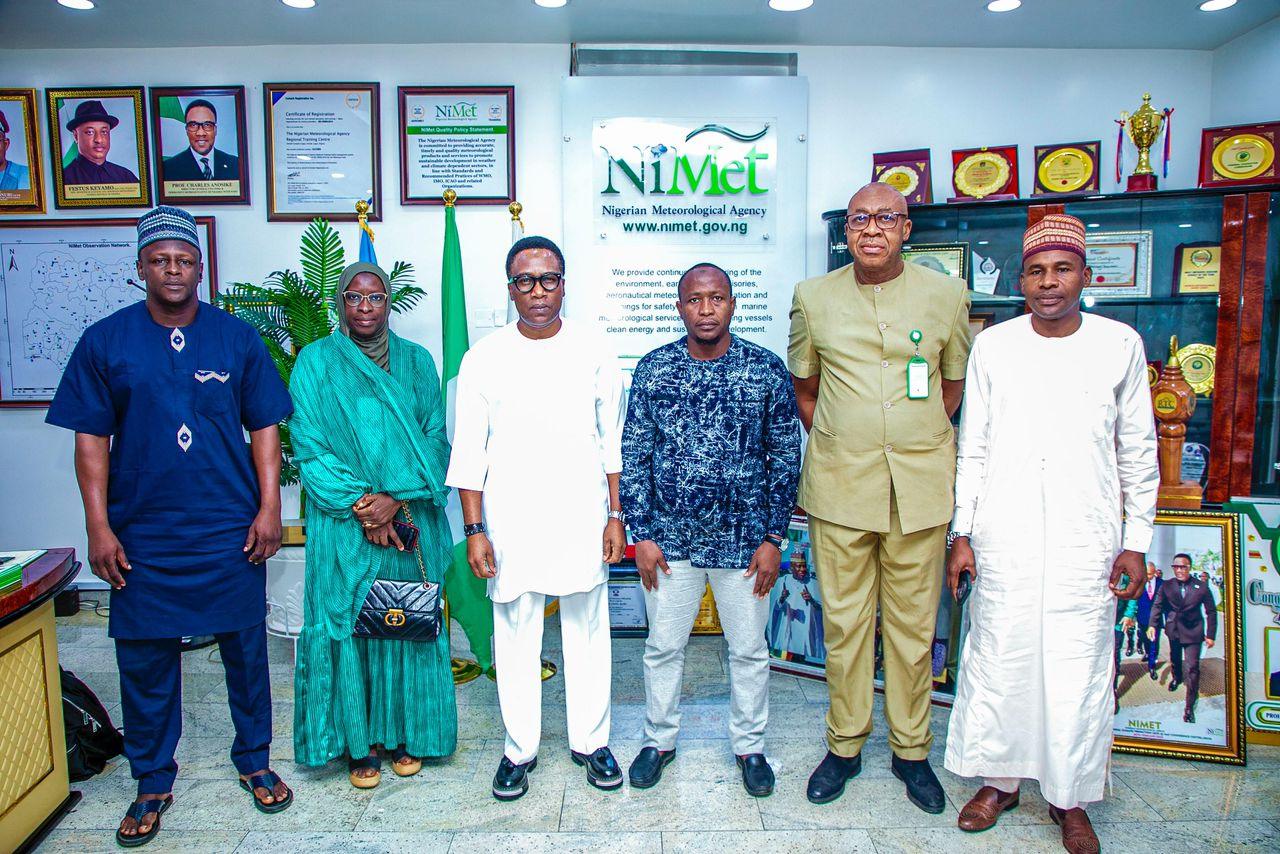
The Nigerian Meteorological Agency (NiMet) has reaffirmed its commitment to supporting the Food and Nutrition Security Information System (FNSIS) in Nigeria.
This assurance was given by the Director-General and Chief Executive Officer of NiMet, Professor Charles Anosike, during a courtesy visit by a delegation from the Permanent Interstate Committee for Drought Control in the Sahel (CILSS) to NiMet’s headquarters in Abuja.
Prof. Anosike outlined NiMet’s critical contributions to early warning systems, disaster risk reduction, and food security, particularly through its collaboration with the Federal Ministry of Agriculture and Food Security.
He noted that NiMet has been instrumental in downscaling seasonal climate forecasts to enable farmers to make informed decisions that enhance agricultural productivity.
He stressed the need for a coordinated, science-based approach to anticipate and respond to both food- and climate-related shocks.
Read Also: Gombe Reaffirms Commitment to Sanitation, Sustainability Goals
As part of its commitment, Prof. Anosike introduced the National Framework for Early Warning and Early Action, developed by NiMet with guidance from the World Meteorological Organisation (WMO).
The framework is designed to improve coordination among institutions engaged in disaster risk management, food security, and climate resilience.
He assured the delegation that “the framework would be shared with all relevant stakeholders to foster synergy, eliminate duplication of efforts, and strengthen national response systems to food and climate-related emergencies.”
Prof. Anosike also emphasised the importance of multi-stakeholder collaboration, calling for a coordinated, data-driven, and integrated food security information system that can support evidence-based decision-making and promote long-term resilience to food insecurity.
CILSS Commends NiMet’s Role in Climate Services
The CILSS delegation, led by Mr Williams Massaoud, commended NiMet for its critical role in providing climate services, particularly in the area of food security.
He stated, “The PRISISAN Project (Project for Strengthening and Innovating Food and Nutrition Security Information Systems), under which the current mission is being undertaken, aims to support countries in the Sahel and West Africa in building robust and sustainable information systems for effective food crisis management.”
Mr Massaoud stressed the importance of integrating meteorological data into the broader framework of the FNSIS, describing it as essential for effective and sustainable solutions to food and nutrition challenges.
The delegation also included representatives from key development organisations such as the Food and Agriculture Organisation (FAO), the World Food Programme (WFP), the Federal Ministry of Agriculture and Food Security (FMAFS), the Cadre Harmonisé Taskforce, and other partners committed to tackling food and nutrition insecurity across the region.