

The government of Ogun State in Southwest Nigeria has expanded its 2026 budget by 58 percent, with the view to positioning the State as Nigeria’s leading industrial and logistics hub.
According to the government, the expansion is based on the rising Internally Generated Revenue (IGR) and economic reforms.
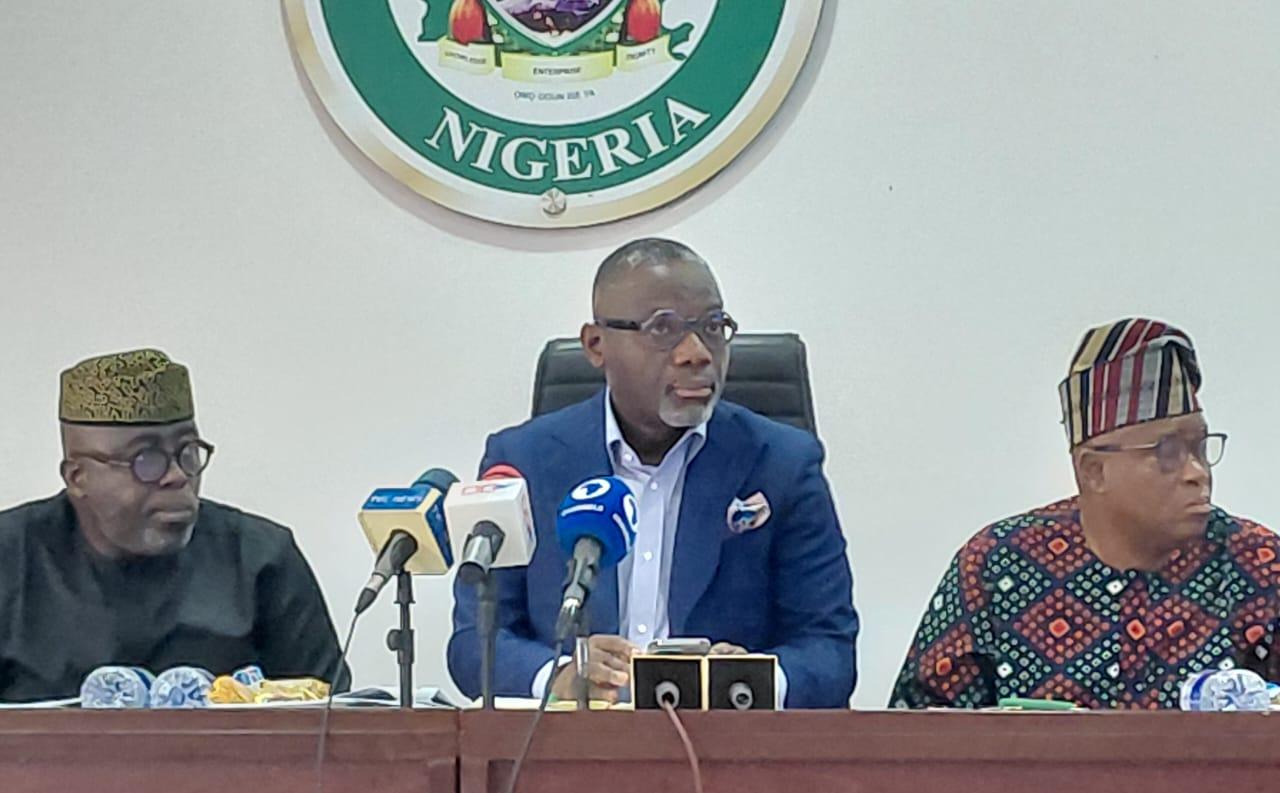
At a media parley on the breakdown of the 2026 budget titled “Budget of Sustainable Legacy” in Abeokuta, Ogun state capital, the Finance Commissioner and Chief Economic Adviser, Dapo Okubadejo, said the scale of ongoing and proposed capital projects necessitated a significantly larger fiscal framework.
Okubadejo linked the growth of the 2026 budget, which rises from ₦1.054 trillion in 2025 to ₦1.668 trillion, to major logistics and industrial infrastructure projects, including two dry ports currently being developed.
“One of the dry ports is being funded by the federal government, and the other is under a public-private partnership arrangement.”
The Economic Adviser said the dry ports are expected to ease cargo movement, reduce logistics costs, and support exports for more than 80 manufacturing factories operating in the Gateway state.
“The projects align with Ogun State’s ambition to consolidate its reputation as Nigeria’s industrial capital, attracting new investments and strengthening trade competitiveness.
“Budget expansion is also tied to renewed activity around the Olokola Free Trade Zone and the proposed Olokola Deep Sea Port,” Okubadejo said.
Officials say a recent oil discovery in the area, pending commercial evaluation, could unlock new revenue streams and potentially position Ogun as an oil-producing state.
Rail, Roads and Industrial Growth
In the same vein, the Commissioner for Transport, Olugbenga Dairo, announced plans to extend the Lagos Red Line and Lagos Blue Line rail systems into Ogun state, improving commuter mobility and integrating the state more closely into regional transport networks.
“Road infrastructure remains central to capital spending. The reconstructed 42-kilometre interchange, linking Lagos and Abeokuta, has already stimulated industrial and commercial growth along the corridor. Key roads connecting border towns such as Ikorodu, Ogijo, and Sagamu have also been upgraded to facilitate trade and cross-border movement”.
Okubadejo added that improved infrastructure has accelerated inward migration, increased housing demand, and strengthened what he described as a growing housing and power sector transformation.
Revenue Growth and Debt Position
Internally Generated Revenue rose from ₦50 billion in 2019 to ₦240 billion in 2025, with projections of ₦512 billion in 2026. The state economy, officials say, has expanded significantly over the same period.
On debt sustainability, Okubadejo said the state maintains careful loan structuring. Domestic debt stands at approximately ₦194 billion as of 2025, up from ₦133 billion in 2019, while foreign debt levels have been influenced largely by exchange rate depreciation.
Pension and Social Sector Reforms
Alongside infrastructure expansion, the administration of Governor Dapo Abiodun announced it has cleared pension and gratuity arrears owed to workers who retired between 2012 and 2020.
Okubadejo said the backlog was inherited under the Defined Benefits Scheme, but confirmed that no monthly pension payments have been missed since the current administration took office.
Between 2019 and mid-2025, the state disbursed over ₦93 billion in pensions under the scheme and nearly ₦95 billion to local government pensioners. More than ₦23 billion in gratuities has been paid to affected retirees, alongside ₦32.8 billion for local government retirees.
The government also approved an Additional Pension Benefits scheme and is gradually transitioning toward a fully operational contributory pension system.
Education and Human Capital
Education receives 17 per cent of the 2026 budget, with large-scale rehabilitation of public schools under a programme known as “Ogun Rehabs.”
The Education Commissioner, Prof. Abayomi Arigbabu, said new classroom blocks will be built across four educational divisions, while five Special Needs Schools will be remodelled into Centres of Excellence.
Scholarship schemes for high-performing and economically disadvantaged students will continue, alongside the distribution of 20,000 desks and chairs. Two thousand teachers under the “Ogun Teach” initiative will also be converted to permanent employment, bringing the total to 6,000.
For local and international observers, Ogun State’s 2026 budget signals a strategy that pairs large-scale infrastructure and logistics investment with pension reform and expanded social spending as the state seeks to strengthen its position in Nigeria’s industrial economy.