


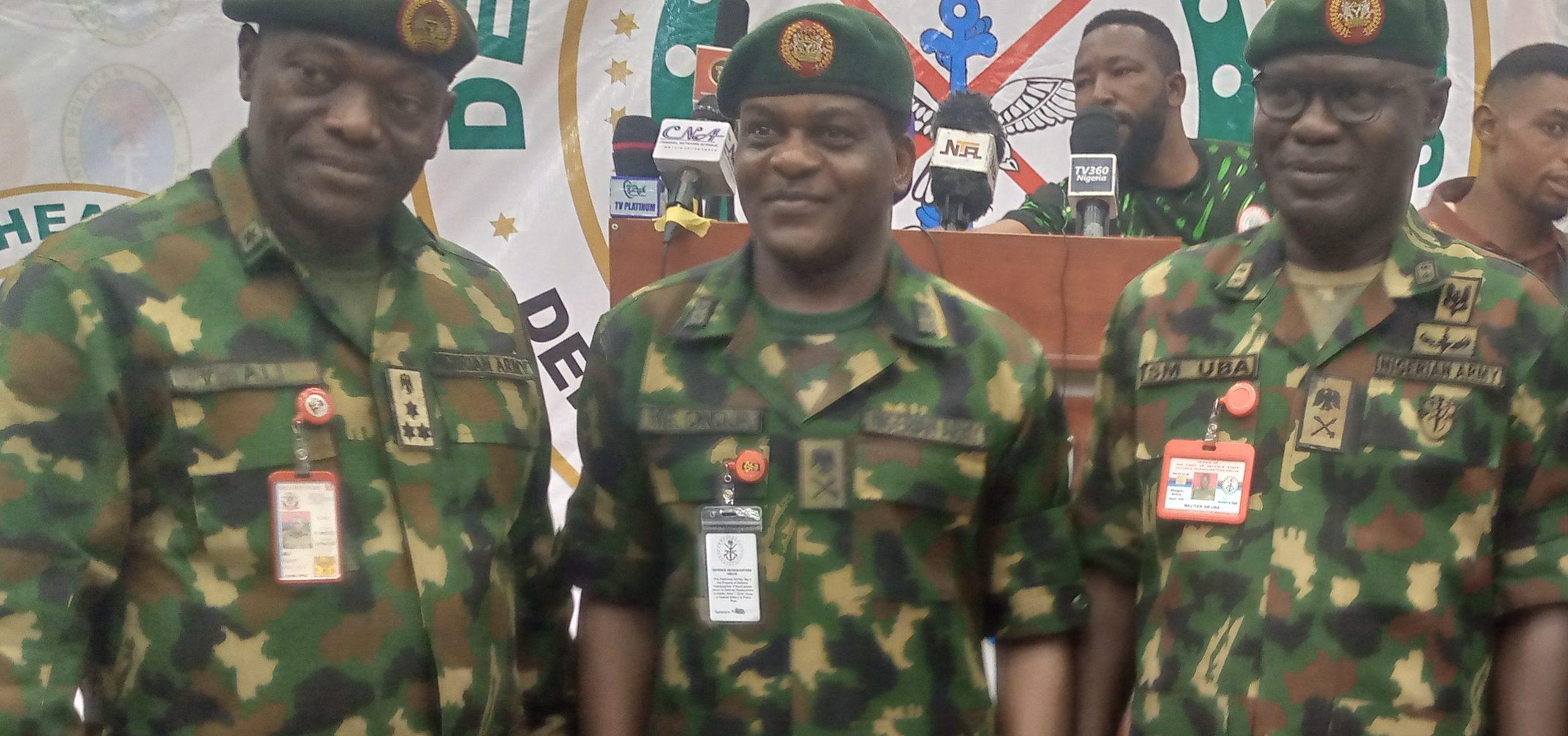
The Coordinator of Operation Safe Corridor, Brigadier General Yusuf Ali has emphasized Operation Safe Corridor as a non-kinetic response to manage and rehabilitate low-risk individuals who voluntarily surrendered after being coerced into insurgent groups.
General Ali made this known in Abuja while briefing Journalists on the core mandate of Operation Safe Corridor (OPSC) in Nigeria is to provide pathways for willing and repentant insurgents and other low-risk armed actors to disengage from violence and embrace peace.
According to him, OPSC was established at the height of Nigeria’s insurgency around 2015–2016.
Operation Safe Corridor emerged as military offensives intensified across insurgent-held areas such as Gwoza, Madagali, and Bama, where many civilians were forcibly conscripted by terrorist elements.
He stated that as these territories were liberated, several abducted or coerced individuals seized the opportunity to escape and surrender, prompting the need for a structured rehabilitation programme.
The initiative specifically targets individuals classified as “low-risk,” a designation determined not by the programme itself but through a rigorous screening process led by the Ministry of Justice and supported by relevant government agencies and international partners.
These individuals are largely considered victims who were forced into insurgent activities.
Rather than returning them immediately to their communities, authorities channel them through Operation Safe Corridor to address psychological trauma, exposure to violence, and, in some cases, substance abuse acquired during captivity.
“This process ensures they are mentally and socially prepared for reintegration”, he added.
The program is structured around four key components: Disengagement, Deradicalisation, Rehabilitation, and Reintegration (DDRR).
This comprehensive approach aims to restore dignity, create livelihoods, and enhance resilience at both individual and community levels.
OPSC is not only a mechanism for disarming and transforming ex-combatants but also a central driver of regional peace building, contributing to stability and lasting peace across the Lake Chad Basin and wider Sahel region.
The programme incorporates psychosocial therapy, deradicalisation, and vocational training.
Agencies such as the Nigerian Correctional Service handle deradicalisation, while the National Directorate of Employment provides skills acquisition in trades like tailoring, barbing, and carpentry to foster self-reliance.
Additionally, the National Drug Law Enforcement Agency supports efforts to treat and rehabilitate individuals struggling with drug dependency.
This multi-agency collaboration underscores the comprehensive nature of the initiative in addressing both behavioural and socio-economic reintegration challenges.
In contrast, individuals identified as medium- or high-risk, core members of insurgent groups are processed through the criminal justice system.
He noted that these individuals are typically captured during military operations, prosecuted, and, upon conviction, sentenced to serve prison terms.
He said that “Operation Safe Corridor is neither a recruitment channel for the Armed Forces nor a reward system for criminality. Instead, it complements ongoing military operations and judicial processes, forming part of a broader transitional justice framework aimed at promoting peace, reconciliation, and long-term national security”.