


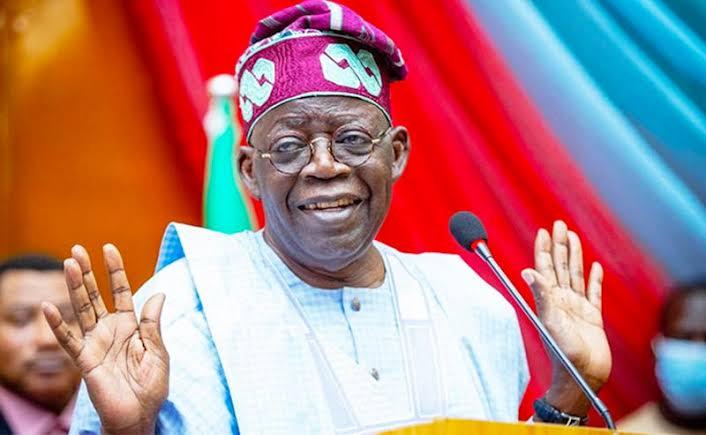
President Bola Tinubu has reiterated his administration’s commitment to equitable development across all regions of the country, stressing that no part of Nigeria will be left behind.
He made this known at the opening ceremony of a two-day interactive session on government-citizens’ engagement held in Kaduna, Northwest Nigeria, and organised by the Sir Ahmadu Bello Memorial Foundation.
The President emphasized that no part of Nigeria would be left behind in his government’s development agenda, stressing the importance of inclusive policies, unity, and grassroots engagement in driving national progress.
The President’s remarks come against the backdrop of recent comments by Rabiu Musa Kwankwaso, a 2023 opposition presidential candidate, who alleged that the current administration has neglected the northern region in its developmental agenda.
President Tinubu, however, maintained that his government is focused on delivering inclusive growth, national unity, and balanced infrastructure development, irrespective of political or regional considerations.
The Ministers serving in Tinubu’s administration used the interactions with stakeholders at the event to unveil empirical facts and figures that the North was not neglected.
President Tinubu was represented by the Secretary to the Government of the Federation, Senator George Akume.
Akume led a high-powered Federal Government delegation made up of Ministers, Director-Generals of many agencies and top political aides from the North to the event.
President Tinubu, who highlighted key achievements under the Renewed Hope Agenda, spoke on several interventions of the present administration including economic reforms, education, health, security, Infrastructure and food security.
Economic Reforms
On economic reforms, the President said his administration had implemented bold reforms to stabilise and grow the economy, including unifying the exchange rate and restructuring debt profiles.
He stressed that investments had been made in modernising security equipment and upskilling personnel
Infrastructure
He listed major projects to include the Lagos-Calabar Coastal Highway, Sokoto-Badagry super highway, ongoing rail projects; Kaduna, Port Harcourt-Maiduguri, and housing initiatives.
President Tinubu also highlighted the Renewed Hope Agenda’s priorities to include reforming the economy for sustained growth, strengthening national security, boosting agriculture for food security, unlocking energy and natural resources and enhancing infrastructure.
Others are focusing on education, health and social investment, accelerating diversification through industrialisation and innovation as well as improving governance for effective service delivery.
“The removal of fuel subsidy, though painful, has been a necessary reform that saved trillions of Naira. The Palliative Measures Plan and interventions through state governments, MSME support, and public transportation upgrades are mitigating the impacts. The savings are now being redirected into critical infrastructure and human development while states are receiving increased allocations for development,” President Tinubu said.
Enhancing Pragmatic Vision
Reflecting on the theme of the event, ‘Assessing Electoral Promises: Fostering Government-Citizen Engagement for National Development,’ he said the renewed hope agenda has been a pragmatic vision built on pillars of good governance.
They, he said, include transparency, accountability, participation, responsiveness, equity, rule of law, and inclusivity, going beyond just a campaign slogan.
“The economic reform strategies are designed to create a robust, diversified, and resilient economy by fostering an environment conducive to investment and innovation, the administration aims to stimulate growth across all sectors, reduce unemployment, and ensure equitable wealth distribution.
“Security is the bedrock of national development. The focus here is on enhancing the capabilities of our security forces, promoting peace and stability, and ensuring that every Nigerian feels safe and protected, no matter where they reside.
“Agriculture holds the key to our nation’s self-sufficiency and economic empowerment.”
According to President Tinubu, this is by modernising farming practices, increasing access to finance, and expanding market opportunities for farmers.
“This administration places Nigeria on a path to achieving food security and transforming our country into an agricultural powerhouse.
“Through reforms, the government is unlocking the potential of Nigeria’s vast natural resources and energy sector.
“Through sustainable management, increased investments, and the adoption of modern technologies, the goal remains to drive economic growth and ensure environmental sustainability,” the President added.
According to him, over 400,000 students in tertiary institutions had so far benefited from the Students’ Loan Programme, while an estimated N53billion had been disbursed.
He also highlighted the importance of patience and collective efforts in achieving the agenda’s goals.
Glowing Tributes
Tinubu extolled the virtues of the late Premier of Northern Nigeria, Sir Ahmadu Bello, describing him as a phenomenal being who promoted national cohesion and unity in Nigeria.
He also saluted the courage, sincerity and patriotism of other leaders such as Chief Solomon Lar, Malam Adamu Ciroma, Shehu Dan Musa, Abubakar Rimi, Prof. Suleman Kumo, Issac Shaahu, Prof. Jerry Gana and others.
NAN