

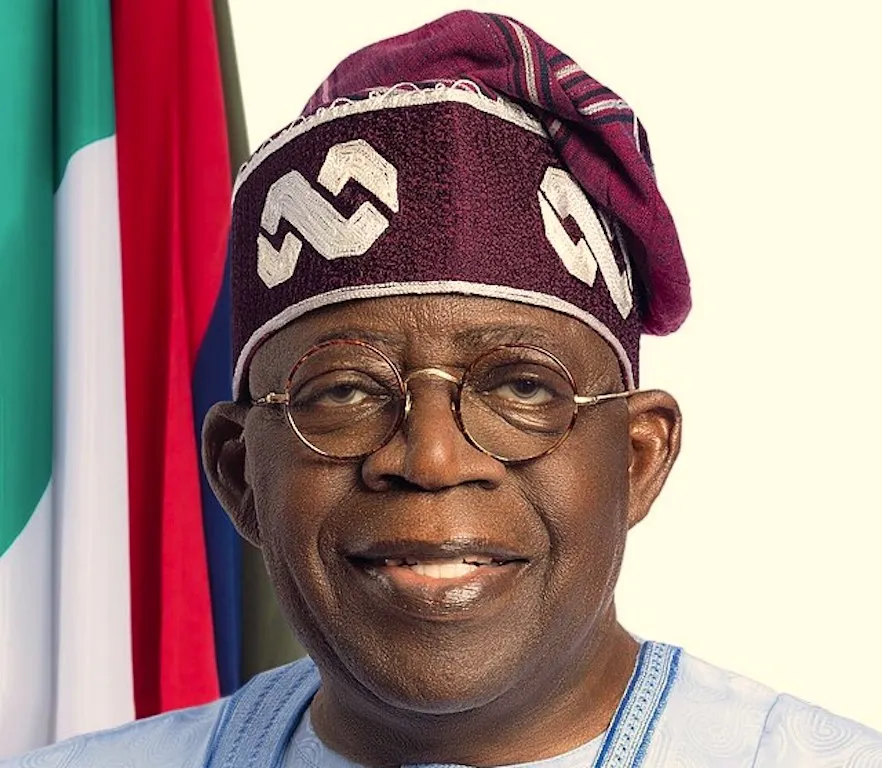
President Bola Tinubu has submitted the 2026–2028 Medium-Term Expenditure Framework (MTEF) and Fiscal Strategy Paper (FSP) to the National Assembly for approval, a foundational step in the 2026 budget process.
The documents were contained in a letter from the President and read by the Deputy Senate President Senator Jibrin Barau during Thursday’s plenary.
The letter is titled: ‘Submission of the Federal Government of Nigeria’s 2026–2028 Medium-Term Expenditure Framework and Fiscal Strategy Paper.’
President Tinubu explained that the MTEF and FSP were approved by the Federal Executive Council (FEC) on 3 December 2025 and urged lawmakers to expedite legislative action, as the 2026 budget will be prepared on their basis.
“It is with pleasure that I forward the 2026–2028 Medium-Term Expenditure Framework and Fiscal Strategy Paper, MTEF and FSP, for the kind consideration and approval of the distinguished Senate.
The 2026–2028 MTEF and FSP was approved during the Federal Executive Council meeting of 3 December 2025. And the 2026 budget of the Federal Government will be prepared based on parameters and fiscal assumptions of the approved 2026–2028 MTEF and FSP. I seek the cooperation of the National Assembly for expeditious legislative action on the submission,” the President’s letter read.
After reading the letter, Senator Barau referred the documents to the Senate Committee on Finance for detailed scrutiny and possible legislative approval.
Also Read: FEC Approves 2026–2028 MTEF, Sets Nigeria’s Fiscal Direction
The Federal Executive Council last Wednesday approved the 2026–2028 MTEF/FSP, outlining revenue projections, fiscal assumptions, and spending priorities for the next three years.
At the FEC session presided over by President Tinubu, the economic management team, led by the Budget Office of the Federation in collaboration with the Ministry of Budget and Economic Planning, presented the draft MTEF/FSP.
The council approved the framework that will guide Nigeria’s fiscal and budgetary direction from 2026 through 2028.
Key macroeconomic and fiscal assumptions adopted include an oil production target of 2.06 million barrels per day (mbpd) for 2026, with a more conservative 1.8 mbpd benchmark for actual budget planning; a crude oil price benchmark of US$64.85 per barrel; and an exchange rate assumption of N1,512 to the dollar for the 2026 budget.
The federal government also projects total revenue of N34.33 trillion in 2026 under this framework.
In approving the MTEF/FSP, the FEC also endorsed a Medium-Term Fiscal Expenditure Ceiling, a cap on how much the government can spend intended to enforce fiscal discipline.
Other decisions at the FEC meeting included the approval of a US$100 million facility from the African Development Bank for the Nigeria Youth Investment Fund, aimed at supporting entrepreneurs aged 18–35 across micro, small and medium enterprises (MSMEs).
The council also approved a development loan from the Islamic Development Bank (IsDB) for an integrated agricultural project in Yobe State.
The MTEF/FSP is a three-year planning tool that defines in broad terms how the federal government intends to raise revenue, allocate expenditure, and deploy resources across ministries and sectors over a medium-term horizon.
It is required under the Fiscal Responsibility Act, 2007. The document presents assumptions behind revenue projections (such as oil price, production, and exchange rate), outlines strategic expenditure priorities, and forecasts overall fiscal stance, including debt servicing, transfers, recurrent, and capital spending.
By approving the MTEF/FSP, the government essentially sets the fiscal envelope within which annual budgets starting with 2026 will be prepared.
This framework provides a roadmap for fiscal discipline, resource allocation, and policy consistency over multiple years rather than leaving budget decisions ad hoc or reactive.
With the MTEF/FSP submitted to the National Assembly, attention now shifts to how lawmakers, especially the Committee on Finance, will scrutinise the document.
Their approval is required before the 2026 Appropriation Bill can be prepared and presented.